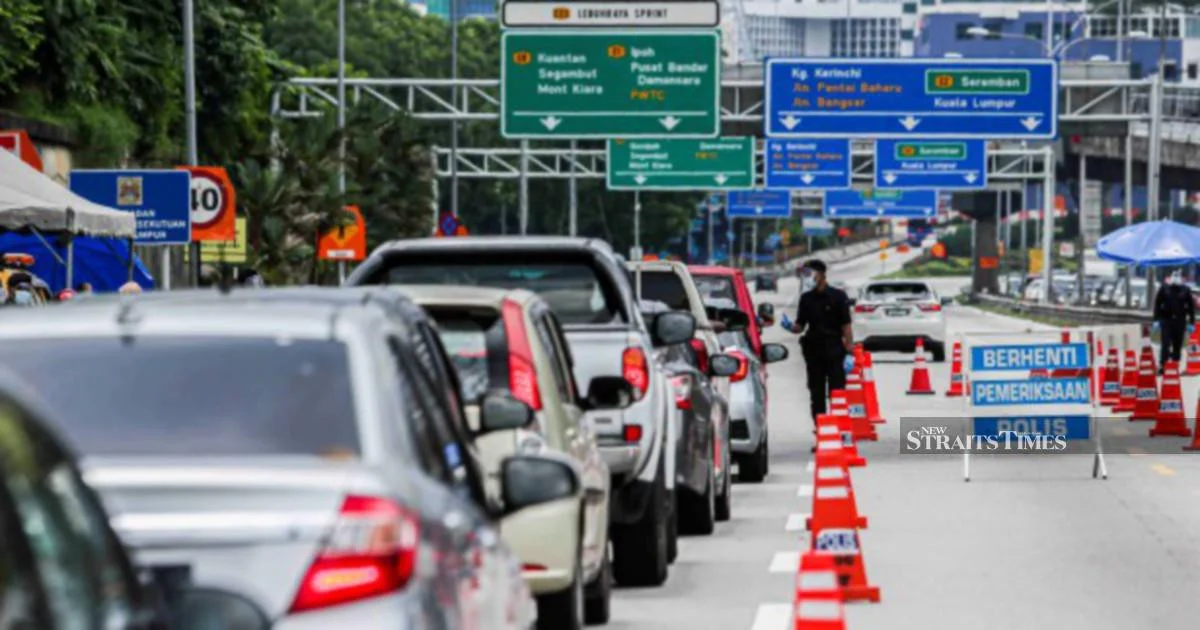
Malaysia is preparing to substantially escalate penalties for road traffic violations, with authorities planning to increase the maximum compound rate to RM500 for more than 700 classified offences. The move hinges on parliament passing proposed amendments to the Road Transport Act 1987, which governs the country's enforcement mechanisms for traffic law breaches. This anticipated adjustment represents a significant tightening of financial consequences for motorists and represents one of the most comprehensive penalty revisions in recent road safety policy.
The Road Transport Act 1987 currently establishes the legal framework for all traffic-related enforcement across Malaysia. Compounds—fixed penalties issued by enforcement officers—serve as the primary mechanism through which authorities address minor to moderate traffic infractions without requiring court proceedings. The breadth of violations potentially affected by the increase spans numerous categories, from speeding and improper lane usage to vehicle maintenance defects and documentation failures. By consolidating penalties under a higher ceiling, lawmakers intend to create a more proportionate deterrent against reckless driving behaviours that continue to plague Malaysian roads.
The current penalty structure was last substantially revised years ago, and the gap between nominal fines and actual road safety outcomes has widened considerably. Advocates for the increase argue that existing penalty levels have become insufficiently punitive in an era of rising vehicle ownership and increasingly congested urban centres. With compound rates failing to keep pace with general inflation and growing public safety concerns, the proposed RM500 threshold aims to restore meaningful financial consequence as a behaviour-modification tool. This aligns with regional trends, where several neighbouring countries have adopted similar escalation strategies to combat persistent traffic violations.
For Malaysian drivers, particularly those commuting in Kuala Lumpur and other major urban areas, the implications are substantial. Frequent violations—such as failing to maintain safe following distances, illegal parking, or equipment breaches—could result in significantly higher out-of-pocket expenses. Commercial drivers and delivery operators, who accumulate violations across multiple trips, face potentially dramatic increases in operational costs. However, proponents contend that the deterrent effect justifies the burden, especially given mounting evidence linking behaviour modification to reduced accident rates in comparable jurisdictions.
The proposed amendments carry considerable implications for Malaysia's broader road safety agenda. The country has struggled with some of the region's highest fatality rates per vehicle, with human factors—recklessness, inattention, and non-compliance with traffic laws—consistently cited as primary contributors. Increasing financial penalties targets the economic incentive structure that influences driver behaviour, particularly among repeat offenders who may view existing fines as negligible business costs. When combined with complementary enforcement initiatives, heightened penalties can shift attitudes toward compliance, though effectiveness ultimately depends on consistency of enforcement throughout the country.
From a revenue perspective, the increase will substantially augment traffic enforcement income for relevant authorities, though this remains a secondary consideration to the safety imperative. Local governments and federal enforcement bodies currently depend on compound collections to fund operational expenses, including officer training, equipment maintenance, and vehicle fleet upkeep. However, a well-designed penalty system should theoretically reduce violations over time, eventually stabilizing or even reducing total enforcement revenue as compliance improves—a dynamic that distinguishes effective regulatory policy from mere revenue extraction.
The upcoming parliamentary vote will require careful deliberation, as critics raise legitimate concerns about regressive impacts on lower-income motorists, who bear proportionally heavier burdens from fixed penalty increases. Some argue that alternative approaches—such as tiered penalties based on offence severity, driver history, or vehicle type—might achieve safety objectives while minimizing hardship for vulnerable road users. Additionally, questions persist about ensuring equitable enforcement across different regions and demographic groups, as inconsistent application could undermine the policy's intended deterrent effects while generating perceptions of unfairness.
Implementation logistics also merit attention. Enforcement agencies must be adequately trained to recognize and appropriately classify the 700-plus offences under the revised system, requiring substantial officer retraining and updated digital infrastructure. Public communication campaigns will be essential to ensure drivers understand the new penalties well before implementation, allowing adjustment of behaviour patterns and budgeting for increased costs. Without such preparation, the transition could prove chaotic and generate significant public backlash.
Regionally, Malaysia's approach will be closely monitored by neighbouring countries considering similar reforms. Singapore and Thailand have employed progressively stringent penalties as part of comprehensive road safety frameworks, and Malaysian policymakers may draw on their experiences. The success or challenges encountered in implementing RM500 compounds could influence future policy decisions throughout Southeast Asia, making this not merely a domestic matter but potentially a bellwether for the region's evolving approach to traffic law enforcement and public safety governance.