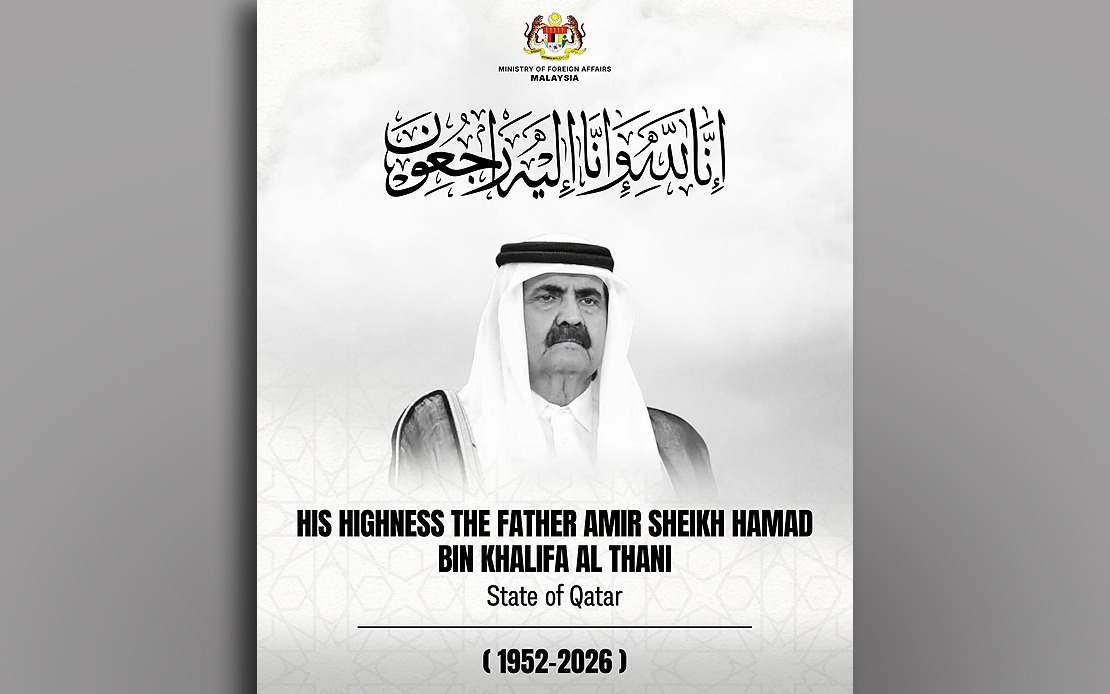
Malaysia has dispatched Higher Education Minister Datuk Seri Dr Zambry Abdul Kadir to Qatar to represent the Malaysian government at official state mourning ceremonies for the late Amir Sheikh Hamad bin Khalifa Al Thani, who passed away recently. The minister will attend condolence proceedings between July 13 and 14, during which foreign dignitaries and representatives will pay their final respects at Lusail Palace in the capital.
Qatar's current Amir Sheikh Tamim bin Hamad Al Thani will receive delegations and well-wishers at the palace from July 13 through July 15 as part of the formal mourning proceedings. The reception of condolences represents a significant diplomatic occasion, attracting heads of state and senior officials from nations across the globe who wish to express solidarity with the Gulf nation during this period of national grief.
The Malaysian government expressed profound sadness over the death of the late Amir through an official statement released by the Foreign Ministry on Monday. The statement emphasised Malaysia's deep sympathy for Qatar's leadership and its population, underscoring the strong bilateral relationship between the two nations and Malaysia's commitment to standing alongside Qatar during this solemn time. Such formal expressions of condolence at the highest governmental level reflect the importance of Malaysian-Qatari diplomatic ties and shared regional interests.
Qatar has declared four days of official national mourning beginning from Sunday, July 12, following the Amir's passing. Throughout this period, all government ministries, state entities, and public institutions across the country have suspended their normal operations. The comprehensive shutdown of governmental functions across Qatar signals the magnitude of the occasion and demonstrates the profound respect accorded to the late Amir within Qatari society and the broader Arab world.
The late Amir Sheikh Hamad bin Khalifa Al Thani holds historic significance as the architect of modern Qatar. His reign transformed the nation from a relatively modest oil and gas producer into a global economic and political powerhouse over several decades. During his leadership, Qatar undertook massive infrastructure development, hosted major international events, and expanded its diplomatic influence throughout the Middle East and beyond, positioning the small peninsula state as a significant player in regional and world affairs.
Sheikh Hamad's tenure saw Qatar establish itself as a leading energy exporter while simultaneously diversifying its economy through massive sovereign wealth investments and the development of cultural institutions. His vision and strategic initiatives laid the groundwork for Qatar's contemporary status as a wealthy and influential nation, with investments spanning the globe and hosting world-class sporting venues and educational institutions.
The selection of Datuk Seri Dr Zambry Abdul Kadir as Malaysia's representative reflects the diplomatic protocols typically observed at such occasions. While top-tier state funerals might draw the attendance of prime ministers or heads of state, ministerial-level representation remains customary and appropriate for international mourning ceremonies, particularly when considering logistical factors and the large number of delegations typically expected.
From a Southeast Asian perspective, Malaysia's participation in Qatar's mourning ceremonies reinforces the region's ties with the Gulf Cooperation Council states. Qatar maintains significant economic and investment interests throughout Southeast Asia, and bilateral relationships with countries like Malaysia extend beyond commerce to include educational partnerships, tourism, and cultural exchanges. The formal representation thus serves to strengthen these multifaceted connections.
The diplomatic gesture also reflects Malaysia's broader foreign policy approach of maintaining balanced and respectful relationships across the Islamic world. Qatar, as a predominantly Muslim nation with considerable soft power within international Islamic circles, holds particular significance for Malaysia's geopolitical positioning. Attending state ceremonies demonstrates Malaysia's alignment with shared values and mutual respect principles that characterise the Organisation of Islamic Cooperation, of which both nations are members.
For Malaysian businesses and investors operating in Qatar or the broader Gulf region, the continuation of strong government-to-government relations carries practical implications. Stable diplomatic channels facilitate commercial transactions, protect expatriate communities, and enable the resolution of disputes through established governmental protocols. Malaysia's presence at such high-profile state occasions reinforces the credibility of bilateral relationships that underpin economic activities.
Qatar's economy, heavily dependent on hydrocarbon exports and sovereign wealth management, presents ongoing opportunities for Malaysian enterprises in sectors ranging from construction and engineering to financial services and tourism. The maintenance of cordial diplomatic relations through proper ceremonial representation helps ensure a favourable business environment for Malaysian companies operating within Qatar's jurisdiction.

