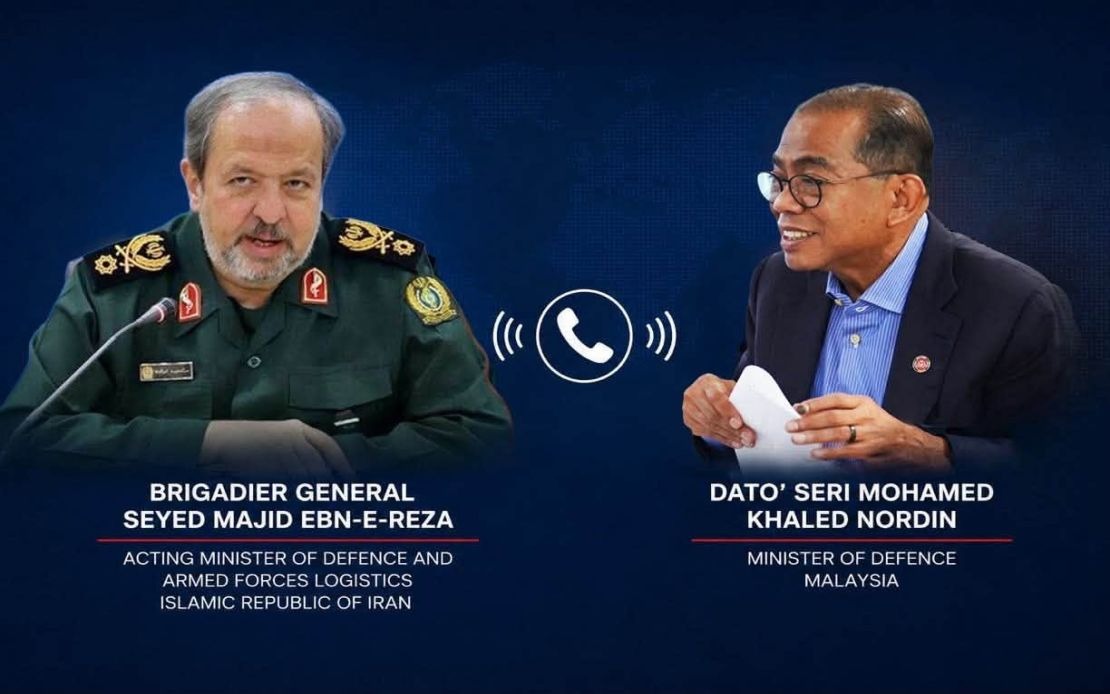
Malaysia has signalled its intention to formalize and expand defence collaboration with Iran, marking a deepening of military-to-military relations between the two nations. Defence Minister Datuk Seri Mohamed Khaled Nordin conveyed this message during a telephone discussion with Iran's Acting Minister of Defence and Armed Forces Logistics, Brigadier General Seyed Majid Ebn-e-Reza, emphasizing the strong historical bonds underpinning bilateral ties.
The Malaysian defence establishment is pursuing a comprehensive framework to institutionalize cooperation between the two countries, with a formal Memorandum of Understanding serving as the proposed instrument to solidify these commitments. Such an agreement would represent a significant milestone, moving beyond informal exchanges toward structured military engagement that could encompass training, technology sharing, and joint operational planning across multiple defence domains.
A pivotal platform for advancing this partnership will be the Langkawi International Maritime and Aerospace Exhibition, scheduled for next year. Datuk Seri Mohamed Khaled expressed enthusiasm about Iran's participation in this prestigious forum, which attracts defence industry stakeholders, military officials, and technology providers from across the globe. The exhibition provides both nations with an opportunity to showcase capabilities and identify concrete avenues for deeper industrial and technological collaboration.
Beyond military mechanics, Malaysia's outreach reflects broader strategic considerations regarding regional stability and geopolitical balance in the Indo-Pacific. By cultivating closer defence ties with Tehran, Kuala Lumpur is positioning itself as a bridge-builder in an increasingly fragmented regional architecture, capable of maintaining constructive relationships across ideological and geopolitical divides. This approach aligns with Malaysia's longstanding non-aligned foreign policy tradition, which emphasizes dialogue and multilateral engagement over bloc-based alignments.
The timing of this overture carries particular significance given the volatile security environment in West Asia. Datuk Seri Mohamed Khaled extended Malaysia's sympathies to Iran regarding the loss of military personnel, government officials, and civilians caught in the ongoing conflict, framing this compassion within Malaysia's broader commitment to humanitarian principles and respect for national sovereignty. This gesture demonstrates Malaysia's willingness to maintain diplomatic engagement despite regional tensions that complicate relations for many nations.
Malaysia's statement reinforces its conviction that sustainable peace in West Asia demands continuous dialogue rather than escalation. The Defence Minister explicitly advocated for maintaining ceasefires and creating space for diplomatic resolution, positioning Malaysia as a voice for restraint and negotiation. Such advocacy reflects Kuala Lumpur's assessment that military solutions alone cannot address the underlying grievances and instabilities plaguing the region, a perspective increasingly shared by non-aligned and regional powers seeking to buffer themselves from great-power competition.
The strategic importance of maritime security features prominently in Malaysia's calculus. The Strait of Hormuz, through which approximately one-third of the world's seaborne traded oil passes, remains critical to global energy security and regional prosperity. Malaysia's emphasis on safeguarding these shipping lanes reflects not merely abstract principles but concrete economic interests, given the country's reliance on predictable maritime commerce and stable energy supplies. By engaging Iran on maritime cooperation, Malaysia aims to ensure that naval operations and commercial shipping can proceed without disruption.
Malaysia's recognition of Iran's indigenous defence capabilities signals respect for the country's technological advancement and self-sufficiency in military production. Iran has invested heavily in developing domestically produced weapons systems, aircraft, and naval platforms, achievements that Malaysia acknowledges as demonstrating resilience and strategic autonomy. This recognition may form the basis for future technology transfer discussions or joint development initiatives in specific defence sectors where Iran possesses demonstrated expertise.
Malaysia's appreciation for Iran's role in facilitating safe maritime passage during regional conflicts underscores the practical cooperation already occurring between the two nations. Such assistance has enabled commerce and humanitarian operations to continue despite wider instability, illustrating the mutual benefits of stable bilateral relations even amid regional turbulence. This foundation of existing goodwill provides a sturdy launching point for formalizing defence cooperation through structures like the proposed MoU.
From a Malaysian perspective, deepening engagement with Iran offers several strategic advantages. First, it diversifies Malaysia's defence partnerships beyond traditional Western allies, reducing structural dependence and enhancing strategic autonomy in an era of shifting power dynamics. Second, it positions Malaysia as a credible intermediary capable of dialogue with all parties, enhancing its diplomatic influence and soft power in regional forums. Third, it acknowledges the reality that Iran, despite international sanctions and isolation, remains a consequential regional actor with whom constructive engagement serves Malaysian interests better than distance or hostility.
For Southeast Asia more broadly, Malaysia's outreach to Iran carries implications for regional cohesion and the bloc's collective approach to major-power competition. As great powers increasingly weaponize economic and diplomatic tools to constrain rivals, smaller nations like Malaysia must carefully calibrate their international relationships to preserve autonomy while maintaining security. Malaysia's balanced approach—strengthening ties with Iran while maintaining crucial partnerships with Western nations and regional neighbors—exemplifies the delicate equilibrium required in contemporary geopolitical conditions.
The proposed defence cooperation framework also reflects evolving security challenges that transcend traditional bilateral relationships. Transnational threats such as maritime piracy, terrorism, and weapons smuggling require coordinated responses from regional states sharing sea lanes and strategic interests. By institutionalizing defence cooperation, Malaysia and Iran can establish mechanisms for intelligence sharing, joint training, and coordinated operations addressing these shared vulnerabilities, thereby enhancing security for both nations and the broader maritime community.

