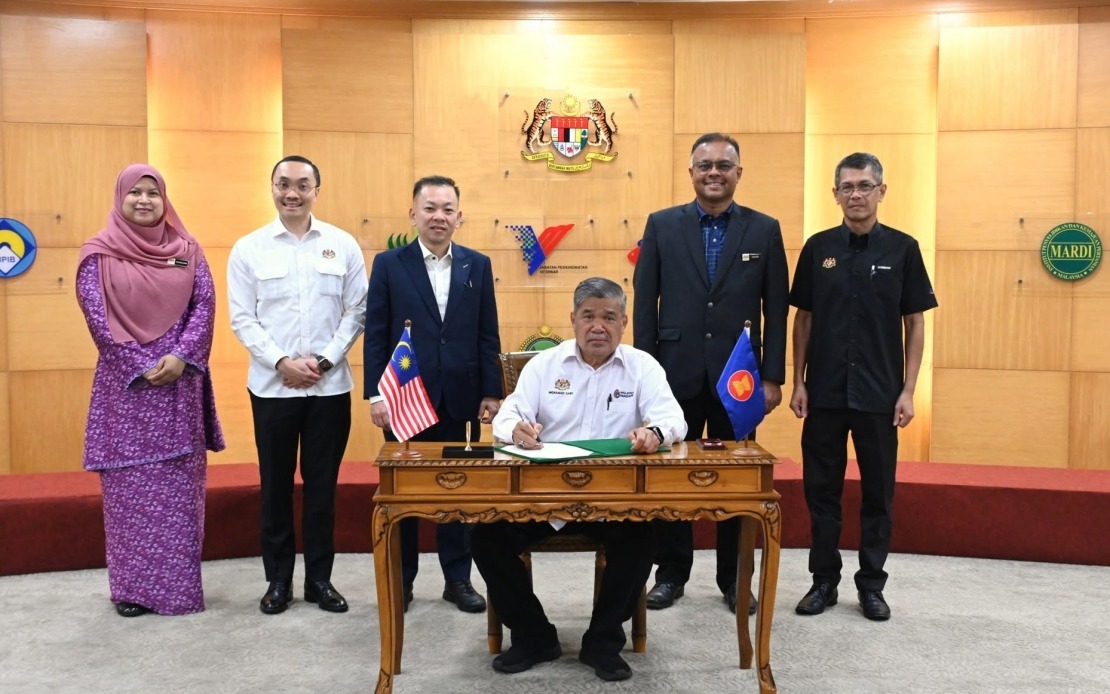
Malaysia has positioned itself to unlock substantial export opportunities for agricultural and forest products while gaining access to advanced climate-resilient farming technologies through two landmark agreements signed at the ASEAN Ministers on Agriculture and Forestry meeting held in Putrajaya. Agriculture and Food Security Minister Datuk Seri Mohamad Sabu executed both memoranda on behalf of the Malaysian government, with the Ministry of Agriculture and Food Security confirming the strategic importance of these accords for the nation's agricultural sector.
The first agreement, the ASEAN Cooperation in Agriculture and Forest Products Scheme, represents a comprehensive framework binding ASEAN member states around five interconnected policy areas. Malaysia's role extends beyond mere participation; the Ministry of Plantation and Commodities has been designated as the Lead Country for palm oil and cocoa, while the Ministry of Agriculture and Food Security will champion the nation's agri-food products throughout the region. This leadership structure reflects Malaysia's established position as a major agricultural producer and exporter within Southeast Asia.
Through this first MoU, ASEAN member states gain the capacity to coordinate joint international campaigns defending the commercial interests of palm oil and regionally-produced food items in global markets. This collective approach proves particularly valuable given international scrutiny surrounding sustainable palm oil production and rising protectionist trade barriers. The framework also facilitates reciprocal market access for industrial crops, livestock merchandise, medicinal herbs, specialty products, and forest-derived items such as mushrooms, tree nuts, and wild honey, substantially diversifying export pathways for Malaysian producers.
Regional food security constitutes a fundamental pillar of the agreement, addressing vulnerabilities that have become increasingly apparent throughout Southeast Asia. The cooperation mechanism enables participating nations to construct more resilient supply chains capable of withstanding environmental shocks including flooding, prolonged droughts, and transboundary pest and disease outbreaks. For Malaysia, which faces its own seasonal flooding challenges and agricultural pest pressures, this coordinated approach strengthens domestic food availability by distributing production risks across multiple countries and agricultural systems.
The second MoU, negotiated between ASEAN as a bloc and China, establishes an eighteen-point cooperation agenda spanning five years with particular emphasis on sustainable agricultural advancement and competitive positioning. The partnership encompasses low-carbon climate-smart agriculture—a critical area given Malaysia's commitment to environmental sustainability and carbon reduction targets. Additional focus areas include scientifically-managed forestry operations, coordinated disaster response mechanisms, and agricultural insurance schemes designed to fortify supply chain durability against unexpected disruptions.
Climate-smart agricultural technology represents one of the most substantive gains for Malaysian farmers and agribusinesses. The ASEAN-China arrangement explicitly facilitates the transfer of advanced technologies supporting Malaysia's transition toward low-carbon production systems and environmentally sustainable resource management. This technological cooperation includes capacity-building initiatives, policy coordination mechanisms, and collaborative research and development projects that position Malaysian agricultural enterprises to meet increasingly stringent international environmental standards while maintaining productivity and profitability.
The cooperation framework also addresses cross-border challenges that individual nations cannot effectively manage independently. Coordinated pest and disease surveillance and control measures reduce the likelihood of agricultural epidemics spreading across borders, protecting Malaysia's livestock and crop sectors from regional biological threats. Conversely, Malaysia's agricultural expertise contributes to regional capacity, creating reciprocal benefits that strengthen ASEAN's collective agricultural resilience and competitiveness.
Trade information-sharing mechanisms embedded within the ASEAN-China cooperation improve market transparency and enable Malaysian exporters to make more informed decisions regarding product positioning and market timing. Real-time data about commodity prices, demand patterns, and regulatory requirements across Chinese markets—increasingly important given China's role as a major agricultural importer—provides Malaysian producers significant competitive advantages in accessing and retaining market share.
For Malaysia specifically, these agreements address longstanding strategic priorities. The nation faces mounting pressure to diversify agricultural exports beyond traditional commodities while simultaneously adopting more sustainable production methods. The ASEAN framework leverages regional scale to negotiate more favorable market access terms than individual nations could achieve independently. Collectively, ASEAN represents a substantial economic bloc with considerable negotiating power, enabling Malaysian producers to benefit from coordinated positioning in international markets and technology partnerships.
The climate-smart agriculture component holds particular significance for Malaysian agriculture's future trajectory. Rising global temperatures, increasingly erratic precipitation patterns, and shifting pest populations pose direct threats to productivity. Access to proven low-carbon technologies and management practices tested across diverse Asian agricultural systems accelerates Malaysia's agricultural sector adaptation, reducing transition costs and implementation timelines compared to developing solutions independently.
The agreements also reflect broader strategic positioning within the region. By securing leadership roles in palm oil, cocoa, and agri-food product coordination, Malaysia reinforces its prominence in regional agricultural governance while creating institutional mechanisms to defend Malaysian interests during international negotiations over commodity standards and sustainability requirements. This proactive engagement shapes policy frameworks rather than merely responding to external pressures.
Looking forward, the success of these agreements depends substantially on implementation capacity within both Malaysian institutions and ASEAN member states. Translating MoU commitments into tangible market access, technology transfer, and coordinated supply chain improvements requires sustained political will, adequate funding, and technical expertise. However, the framework establishes clear institutional pathways for these developments while positioning Malaysia to capitalize on emerging opportunities in climate-resilient and sustainably-produced agricultural products.

