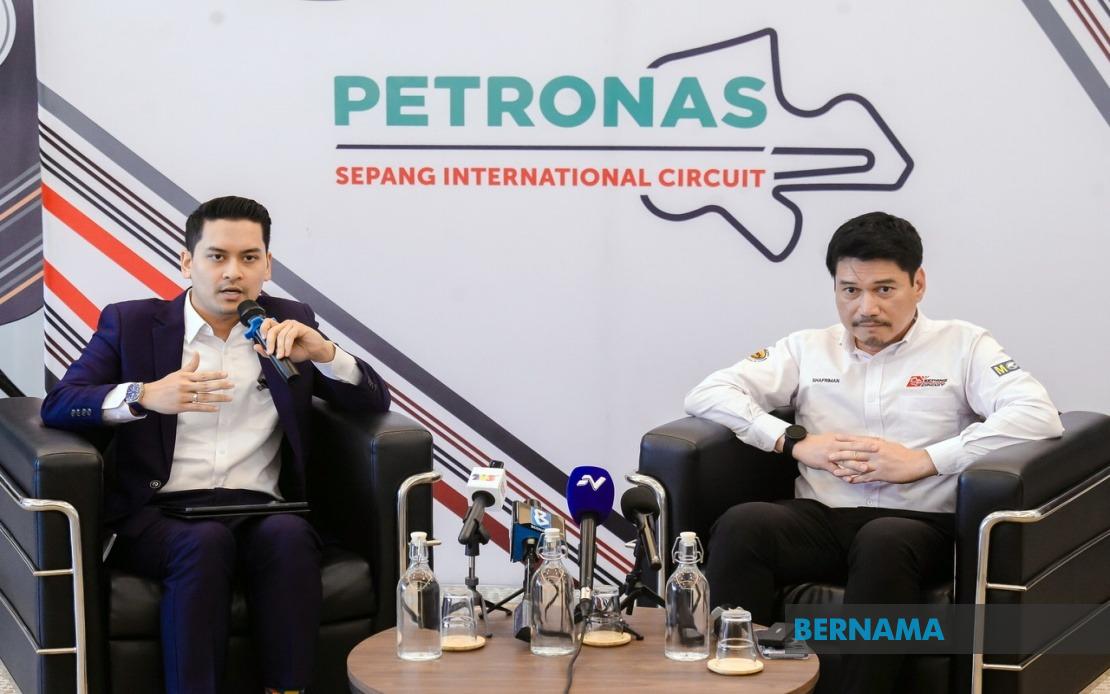
Malaysia will continue hosting the prestigious Motorcycle Grand Prix through 2031 following formal Cabinet approval of a contract extension announced by Youth and Sports Minister Dr Mohammed Taufiq Johari at the Sepang International Circuit. The new agreement, commencing next year, represents a strategic commitment to maintaining the nation's position within the global motorsport landscape and signals government confidence in the event's long-term viability and return on public investment.
The current hosting arrangement spans from 2024 through this year, meaning the fresh five-year extension will ensure continuity of the premier motorcycle racing championship at the country's premier venue. Dr Mohammed Taufiq characterised the renewal as far more than a simple administrative renewal of an international sporting fixture, instead positioning it as a deliberate policy decision to reinforce Malaysia's competitive standing among world-class motorsport destinations.
Beyond the sporting spectacle itself, the Minister emphasised that Malaysia's MotoGP functions as a comprehensive economic engine benefiting multiple interconnected sectors. The 2024 edition alone generated approximately RM694 million in overall economic activity, a figure that underscores the event's substantial contribution to national prosperity. Job creation figures prove equally compelling, with the most recent edition responsible for establishing over 4,400 employment opportunities across various industries and skill levels.
The return-on-investment metric further validates government backing for the hosting arrangement. Officials calculated that the 2024 race delivered a return multiple of 6.3 times the initial investment, suggesting that each ringgit committed to staging the event returned substantially more through taxes, spending, and economic activity. Such figures provide concrete justification for ongoing public expenditure and contractual obligations, particularly important when Malaysia's budget requires careful allocation across competing priorities.
The tourism and hospitality sectors emerge as primary beneficiaries of the MotoGP calendar fixture. The international attention generated by the event, combined with the influx of fans, teams, corporate delegations, and media personnel, creates significant demand for accommodation, dining, entertainment, and ground transportation services. Beyond headline tourism revenue, smaller enterprises including local retailers, transportation providers, and service suppliers capture incremental business opportunities that might otherwise remain unrealised.
Dr Mohammed Taufiq highlighted an often-overlooked dimension of the contract extension: its role in nurturing domestic motorsport talent and building technical expertise within Malaysia's racing ecosystem. Rather than merely hosting foreign competitors, the government has structured the MotoGP as a catalyst for developing indigenous capability and international competitiveness. This longer-term strategic vision positions the event as more than entertainment, instead treating it as a platform for national skill development and industry advancement.
The Malaysian Motorsport Development programme exemplifies this talent-cultivation approach. Through structured pathways and investment in local riders, Malaysia has produced international competitors including Hakim Danish and Qabil Irfan, who are carving out recognition on the worldwide stage. These individuals represent success stories demonstrating that investment in grassroots motorsport development can yield globally competitive athletes, creating ripple effects throughout the domestic racing industry and inspiring younger generations to pursue racing careers.
Historically, Malaysia's relationship with the MotoGP extends back three decades. The country first welcomed the championship in 1991, though the race operated at various venues before establishing permanent residency at the Sepang International Circuit in 1999. This quarter-century presence demonstrates sustained government and private sector commitment to hosting standards and operational excellence, attributes that likely influenced MotoGP's willingness to extend the contract beyond 2025.
From a regional perspective, Malaysia's continued hosting of MotoGP reinforces Southeast Asia's significance within global motorsport architecture. The championship rotates across continents, yet Malaysia's continued presence alongside established European venues suggests recognition of the circuit's quality and the region's growing importance as a motorsport consumer market. The contract extension therefore carries implications beyond Malaysia's borders, affirming the country's standing as a serious motorsport destination within Asia-Pacific.
Looking forward, the 2026-2031 period will present opportunities to build upon existing foundations. Enhanced fan experiences, expanded hospitality facilities, and strengthened partnerships with circuit operators could further boost economic returns and international visibility. The extension also provides stakeholders—from hotel operators to local transport providers—with planning certainty, encouraging investment in infrastructure and services that enhance the overall visitor experience.
For policymakers, the MotoGP renewal exemplifies how international sporting events can serve as vehicles for broader national objectives: economic diversification, talent development, sector competitiveness, and soft power projection. Rather than viewing the event in isolation as an entertainment product, government positioning reflects sophisticated economic reasoning about how scheduled international fixtures contribute to multiple policy objectives simultaneously.
The Cabinet's approval process, while not detailed in the announcement, likely involved rigorous assessment of financial sustainability, competing budget priorities, and alignment with national economic strategies. That approval came through signals confidence that continued MotoGP hosting remains justified despite Malaysia's broader budgetary constraints and competing development needs.
As the country enters a fresh chapter of MotoGP hosting, success will hinge on maintaining operational excellence, delivering positive experiences for international visitors and competitors, and ensuring economic benefits extend broadly across Malaysian communities rather than concentrating among large corporate interests. The extension through 2031 provides the temporal runway necessary for such sustained achievement.

