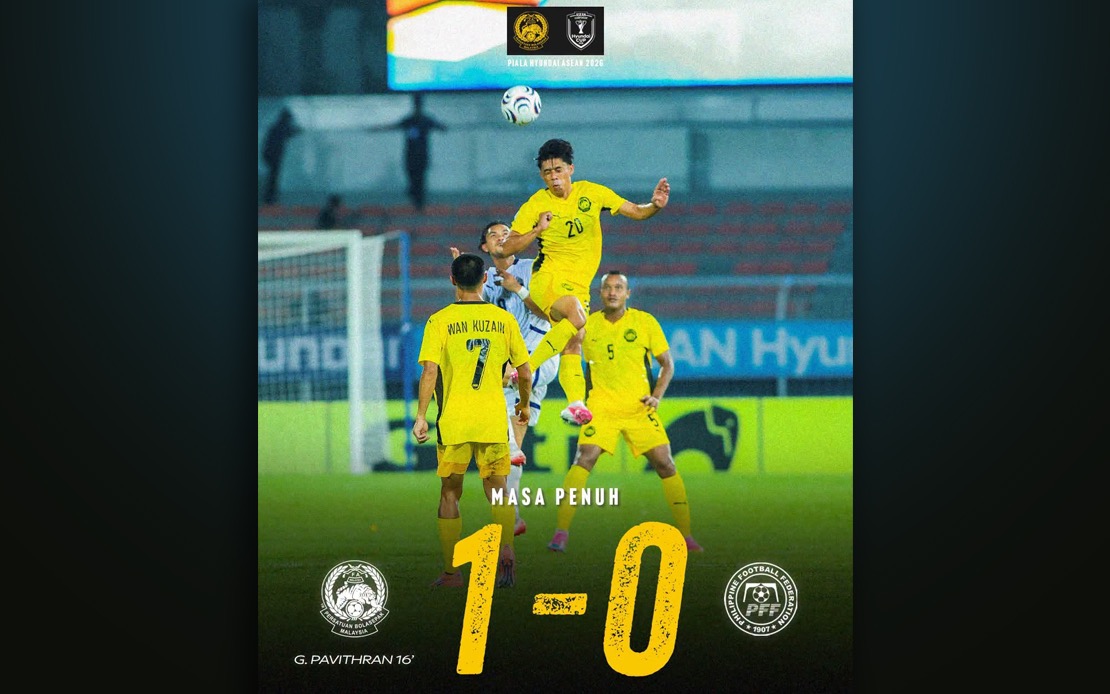
Malaysia's Harimau Malaya have secured a semi-final berth in the 2026 ASEAN Cup following their narrow 1-0 victory over the Philippines at Kuala Lumpur Football Stadium in Cheras on August 8. The win clinched second place in Group B for the national team, confirming their progression from the tournament's preliminary round and establishing a formidable path toward the championship.
Interim head coach Tan Cheng Hoe orchestrated a disciplined performance that relied on defensive solidity and clinical finishing. The humid evening in the Malaysian capital saw Harimau Malaya execute a straightforward tactical approach: control possession, create limited but high-quality opportunities, and convert them decisively. This pragmatic method proved effective against a Philippine side desperately seeking points to keep their tournament hopes alive.
The breakthrough arrived in the 16th minute when midfielder Wan Kuzain Wan Ahmad Kamal delivered a pinpoint cross into the opponent's penalty area. G. Pavithran rose above the Philippines defence to power a header past the goalkeeper, igniting the crowd of supporters who had packed the 18,000-capacity venue in yellow and black attire. The early goal fundamentally shifted the momentum in Malaysia's favour, allowing them to dictate play for much of the opening half.
Following their initial advantage, Malaysia's players displayed the maturity required at international level by maintaining possession and limiting the Philippines' attacking opportunities. Coach Carles Cuadrat's charges attempted to rally during the latter stages of the first half, pressing forward in search of an equaliser, yet they encountered a well-organised Malaysian backline that showed few weaknesses before the interval.
The second period witnessed a more aggressive Philippines approach as they sought to salvage their Group B campaign. However, the Malaysian defence, anchored by captain Paulo Josue's commanding presence, proved sufficiently robust to withstand sustained pressure. This defensive resilience proved crucial, particularly when Pavithran had an opportunity to extend the lead in the 85th minute but found his low cross intercepted by Philippines defender Jaime Rosquillo at the critical moment.
Malaysia's nine-point tally from the group stage reflected three victories across their matches, positioning them comfortably above the Philippines but behind Thailand, who topped Group B with 12 points. The War Elephants cemented their group leadership earlier in the evening by dispatching Myanmar 2-0, demonstrating the consistently high standard of regional football. Both Thailand and Malaysia now advance to face the semi-finals as group winners and runners-up respectively.
The draw has positioned Malaysia against Vietnam in a compelling semi-final encounter, with the defending champions emerging as Group A leaders. This matchup represents perhaps the tournament's most compelling affair from a regional perspective, pitting Malaysia's resurgent national team—buoyed by a domestic crowd advantage for the first leg—against Vietnam's proven experience at this level. The fixture carries significant implications for Southeast Asian football prestige, particularly given Vietnam's established pedigree.
The semi-final structure requires both teams to contest two-legged ties on August 16 and 19, compressing the tournament timeline considerably. This format advantages teams with consistent fitness levels and tactical flexibility, as the brief turnaround between matches eliminates recovery time and necessitates careful squad rotation. Vietnam's status as defending champions carries both psychological weight and proven tournament experience, having navigated similar pressures in previous editions.
For Malaysian football, this progression represents a measured success after years of inconsistent international results. Under interim management following previous coaching transitions, Harimau Malaya have demonstrated sufficient coherence to progress past the group stage against direct regional rivals. The opportunity to face Vietnam offers a genuine platform to assess the team's development trajectory and identify areas requiring refinement before subsequent continental challenges.
The home advantage in the first semi-final leg provides Malaysia with potential leverage, though the predominantly young squad must replicate their disciplined approach against more experienced opposition. Vietnam's attacking prowess and defensive organisation will present substantially greater challenges than those posed by the Philippines, demanding tactical adjustments and potentially higher individual performances from Malaysian players.

