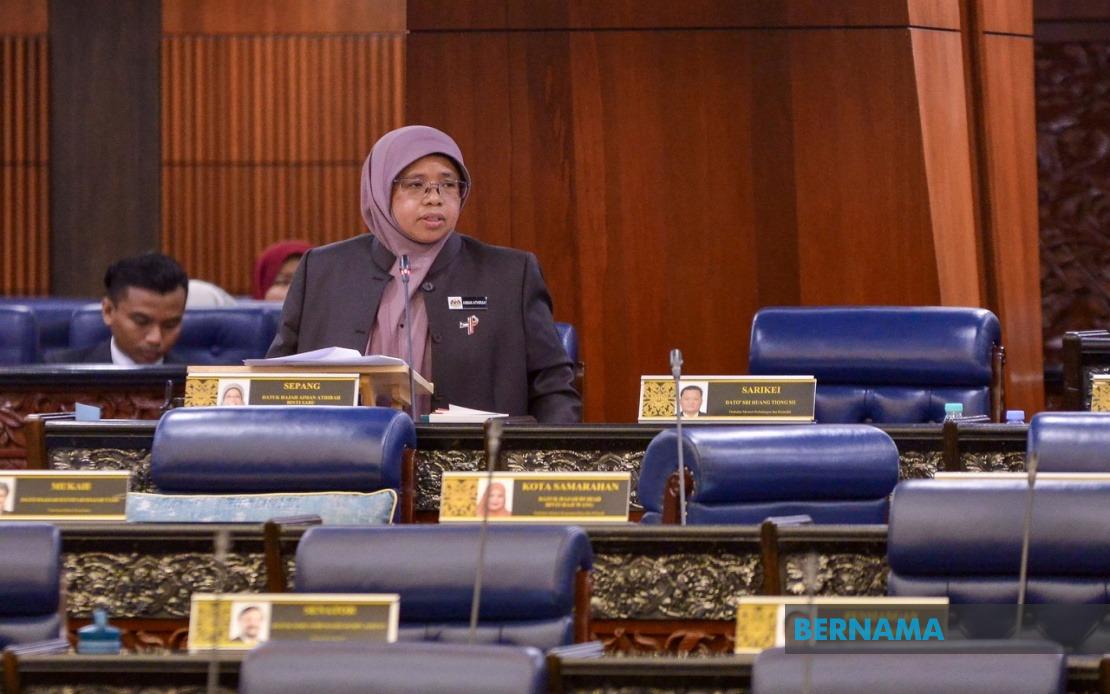
The Malaysian government is intensifying efforts to stabilise the nation's troubled housing market through a systematic, data-driven approach designed to align residential development with genuine citizen needs rather than speculative market forces. Deputy Housing and Local Government Minister Datuk Aiman Athirah Sabu outlined the strategy in Parliament on July 14, emphasising that evidence-based planning would curtail escalating property prices while tackling the persistent mismatch between housing stock and actual demand across the country.
The foundation of this reformed planning methodology rests on comprehensive datasets drawn from multiple authoritative sources, including statistics compiled by the Department of Statistics Malaysia, market intelligence from the National Property Information Centre, urban development patterns tracked through the Malaysian Urban Observatory, and supply-application information gathered from government housing agencies. By synthesising these diverse information streams, policymakers can now calibrate residential projects to match specific demographic and economic conditions within individual states and districts, rather than pursuing one-size-fits-all development strategies that have historically fuelled oversupply in certain regions while leaving shortages elsewhere.
Crucially, this evidence-based framework enables authorities to specify the precise composition, scale, and placement of new housing stock in alignment with what households can realistically afford within their local job markets. The approach moves beyond abstract national targets toward granular, locality-specific planning that accounts for regional variations in income levels, employment patterns, and living costs. This shift represents a fundamental recalibration in how the government conceptualises its role in the housing sector, transitioning from passive facilitation toward active market stewardship.
The execution of this strategy has been reinforced through the National Affordable Housing Council, an apex coordinating body chaired by the Prime Minister that functions to harmonise affordable housing policy across federal and state jurisdictions. This council mechanism addresses a longstanding governance challenge in Malaysia's federal system, where housing responsibilities are divided between central authorities and state governments, often resulting in uncoordinated development and policy conflicts. By creating a unified platform for inter-governmental dialogue and decision-making, the council aims to resolve bottlenecks that have impeded coherent national housing progress.
Parallel to forward-looking planning, the government has undertaken significant remedial action on the festering problem of delayed, sick, and abandoned housing projects that have devastated property buyers and eroded public confidence in the sector. Since establishing a Special Task Force dedicated to this crisis in December 2022, authorities have successfully resuscitated 1,615 projects comprising 190,422 residential units valued collectively at RM150.8 billion in gross development value. This figure underscores the staggering scale of the dysfunction that plagued Malaysia's housing industry, with nearly two hundred thousand families left in limbo by stalled construction and developer failures.
The revival of these abandoned projects addresses a critical justice issue for Malaysian homebuyers, many of whom made substantial down payments on properties that remained incomplete for years, tying up family savings and forcing individuals to shoulder mortgage payments for homes they could not occupy. The successful rescue of such a large volume of units signals that targeted government intervention, when properly resourced and directed, can rectify market failures that private mechanisms alone cannot resolve. However, the sheer number of projects requiring salvage also highlights how permissive regulatory oversight and inadequate developer accountability had become entrenched within the sector.
Looking forward, the government is finalising the National Housing Policy 2026-2035, a comprehensive framework intended to reshape residential development over the next decade. A distinctive feature of this policy is its commitment to dynamic affordability pricing mechanisms grounded in localised income data rather than static, nationally-determined thresholds. The Ministry of Housing and Local Government is conducting detailed mapping of what constitutes affordable housing prices across Malaysia using median household income figures disaggregated to the district level, drawing from the 2024 Household Income and Basic Amenities Survey conducted by the Department of Statistics. This granular, income-relative approach acknowledges that housing affordability is inherently a function of local economic realities—what qualifies as affordable in Kuala Lumpur bears little relationship to pricing in smaller towns or rural areas.
The policy framework explicitly recognises that housing affordability encompasses dimensions beyond the purchase price itself. In response to parliamentary questions regarding the financial burden borne by first-time homebuyers for renovation and maintenance costs—expenditures that often surprise purchasers expecting to occupy unfinished units—the government has expanded the Housing Credit Guarantee Scheme to provide loan guarantees extending to 120 per cent of the property's value. The additional 20 per cent coverage is specifically designated for renovation, refurbishment, and ancillary expenses, effectively acknowledging that developers' failure to deliver move-in-ready homes creates genuine hardship for ordinary Malaysian families.
The breadth of this intervention signals official recognition that housing affordability functions as a holistic ecosystem rather than a single-variable problem susceptible to narrow technical fixes. Financing accessibility, construction quality standards, developer accountability, urban planning coherence, and price-to-income alignment all require coordinated attention. For Malaysian policymakers, the challenge ahead lies in sustaining the institutional discipline necessary to implement these mechanisms consistently across different administrations and timeframes, avoiding the cyclical pattern whereby housing reform initiatives gain traction during political windows only to dissipate when attention shifts elsewhere.
These measures carry significant implications for Southeast Asia's broader development trajectory. Malaysia's housing dysfunction reflects challenges common across the region—rapid urbanisation, developer concentration, weak regulatory capacity, and speculative investment dynamics that inflate prices beyond wage-earner reach. How successfully Malaysia executes its data-driven, institutional reform approach will provide valuable lessons for neighbouring countries grappling with similar affordability crises. The revival of over 1.6 million housing units and the systematic recalibration of planning processes suggest that government, when equipped with adequate information and coordinating mechanisms, remains capable of reshaping market outcomes in ways that benefit ordinary citizens rather than entrenched commercial interests.

