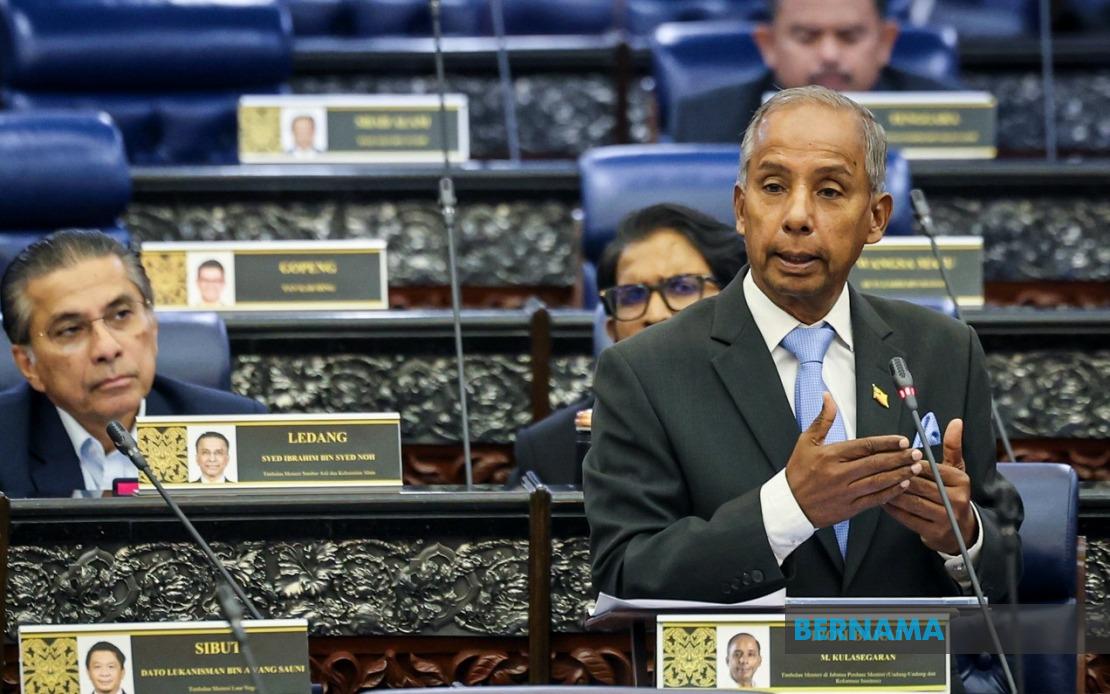
The Malaysian government is undertaking a comprehensive review of Section 97 of the Child Act 2001, driven by concerns that young offenders sentenced under the provision face indefinite detention with no clearly defined end date. Deputy Minister in the Prime Minister's Department (Law and Institutional Reform) M. Kulasegaran revealed during parliamentary Question Time that a special committee has been tasked with overhauling the legal framework to introduce fixed detention periods, addressing what has become a significant humanitarian and legal issue within Malaysia's criminal justice system.
The initiative stems directly from legislative reforms enacted in 2023, when Parliament abolished mandatory capital punishment and life imprisonment for child offenders. That watershed moment exposed a critical flaw in the existing framework: while the death penalty was removed, the alternative provision—indefinite detention at the pleasure of the King or state ruler—left convicted children in legal limbo, uncertain whether they would ever be released. Kulasegaran emphasised that the government recognises the need to balance multiple competing interests: ensuring justice for victims, maintaining public safety, and upholding Malaysia's international commitments to protect children's rights.
Currently, 40 individuals remain detained under Section 97 of Act 611, according to parliamentary records. These figures represent only the survivors of what may be decades of imprisonment, and the government's concern is particularly acute given the extended sentences already served by some detainees. During recent prison visits to facilities in Semporna and Sandakan, Kulasegaran encountered a striking example of the provision's impact: an individual who entered prison at age 17 remains incarcerated nearly 25 years later, his entire adult life spent behind bars with no notification of potential release eligibility. Such cases illustrate how indefinite detention can amount to de facto life imprisonment for children convicted of serious offences.
The human impact of this legal limbo extends beyond mere imprisonment statistics. Kulasegaran noted that long-term detainees lose touch with technological and social developments in the wider world, becoming institutionalised to the point where conventional life skills become foreign. This phenomenon raises serious questions about rehabilitation prospects if these individuals are eventually released, as they would face reintegration challenges beyond those typically confronting ex-offenders. The psychological toll of indefinite detention has long been documented in international human rights literature, creating lasting trauma that complicates rehabilitation efforts.
Malaysia's review reflects broader regional and global trends toward reforming juvenile justice systems. The country is bound by the Convention on the Rights of the Child (CRC), which establishes international standards for how signatory nations must treat young offenders. The CRC emphasises that detention should be used only as a last resort, for the shortest appropriate time, and that children deprived of liberty must retain hope for eventual release and reintegration. Malaysia's current provision, which leaves detention periods entirely discretionary and indefinite, sits uncomfortably with these international obligations, creating potential friction between domestic practice and international law.
The special committee undertaking this review has convened multiple times to examine how the law should be restructured. The stated objective is to introduce a fixed detention period framework while maintaining judicial flexibility to address individual circumstances and victim considerations. Such an approach would likely involve establishing maximum sentences tied to the severity of offences, with potential for early release based on rehabilitation progress, behaviour, and other penological factors. This model balances the principle that young offenders deserve developmental opportunities against society's legitimate interest in protecting potential victims.
For Malaysia's legal community and civil society organisations focused on juvenile justice, this review represents a significant opportunity to reshape how the country treats its youngest and most vulnerable offenders. The previous system, whereby a child could theoretically spend their entire remaining lifespan in detention without a predetermined release date, has drawn criticism from human rights advocates who argue it violates principles of proportionality and fundamental fairness. Introduction of fixed terms would provide clarity for all stakeholders—offenders, families, victims, and administrators—while creating a framework within which rehabilitation can be measured and assessed.
The implications for Southeast Asia are noteworthy, as several countries in the region face similar juvenile justice challenges. Malaysia's approach to reforming Section 97 could establish a regional precedent for how nations balance punishment, rehabilitation, and human rights in cases involving child offenders. Other countries monitoring this review may draw lessons for their own legislative frameworks, particularly regarding the practicability of introducing fixed detention periods while preserving public safety objectives.
Kulasegaran underscored that the MADANI Government remains committed to ensuring proposed amendments reflect Malaysia's broader human rights commitments and constitutional values. This language suggests the review will result in substantive legislative change rather than merely cosmetic adjustments. The timing is significant, coming approximately 18 months after abolition of mandatory capital punishment, allowing sufficient time for legal and policy analysis while maintaining momentum toward comprehensive juvenile justice reform.
The review also reflects international legal scholarship suggesting that indefinite detention for children serves no clear penological purpose and contradicts evidence-based approaches to rehabilitation. Countries that have introduced fixed detention periods for young offenders have generally reported improved outcomes in terms of successful reintegration, reduced recidivism, and enhanced victim satisfaction compared to systems relying on indefinite discretionary detention. Malaysia's adoption of similar principles could strengthen both the rehabilitation prospects of detained youth and public confidence in the justice system's fairness.
As the committee continues its work toward introducing amended legislation, stakeholders including the judiciary, correctional authorities, victim advocacy groups, and child protection organisations will likely engage in consultations. The challenge will be crafting provisions that satisfy competing demands: setting sufficiently robust detention periods to signal serious consequences for serious offences, while ensuring periods remain proportionate and release remains realistically achievable for young people demonstrating rehabilitation. Successfully navigating this balance will require careful legislative draftsmanship and consideration of how comparable jurisdictions have addressed similar tensions.
The government's commitment to striking equilibrium between justice and rehabilitation suggests that any amendments will likely feature tiered approaches, with detention periods varying according to offence severity and individual circumstances. Such frameworks typically include provisions for sentence reduction based on demonstrated rehabilitation, institutional behaviour, and other rehabilitative milestones, ensuring that release is not automatic but conditional upon genuine progress. This approach preserves accountability while creating pathways toward eventual reintegration, aligning Malaysian law more closely with international best practices and the country's human rights obligations under the Convention on the Rights of the Child.

