Malaysia's mangrove restoration efforts have reached a significant milestone, with nearly 4,000 hectares of coastal forest successfully rehabilitated across the country. The achievement represents a substantial investment in environmental conservation, reflecting the government's strategic approach to protecting one of the world's most productive and biodiverse ecosystems. The initiative has involved the planting of over 9.3 million mangrove trees and other suitable coastal species, marking tangible progress in reversing decades of coastal habitat degradation that has threatened both wildlife and human communities dependent on these ecosystems.
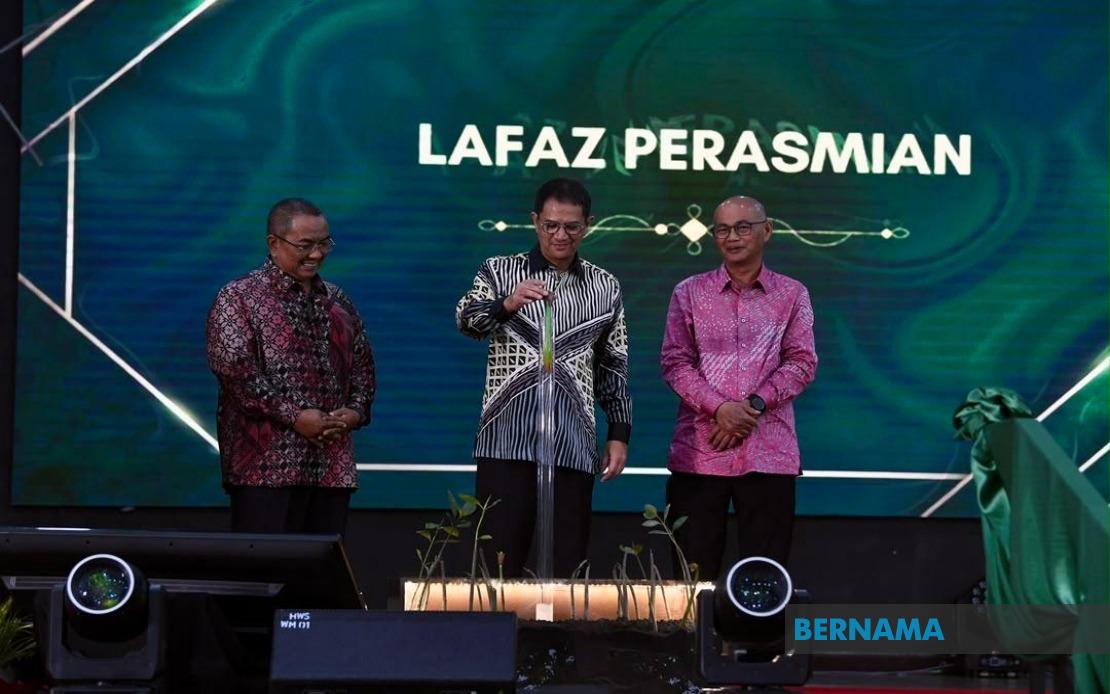
Natural Resources and Environmental Sustainability Minister Datuk Seri Arthur Joseph Kurup unveiled the restoration figures during the National-level International Day for the Conservation of the Mangrove Ecosystem 2026 celebration held in Alor Setar last night. The event, themed "Mangrove Ecosystems Towards Blue Economy Sustainability", brought together government officials, researchers, and environmental advocates to discuss Malaysia's role in preserving these critical habitats. The minister emphasised that the government remains steadfastly committed to conserving and rehabilitating coastal ecosystems, viewing mangrove restoration not merely as an environmental necessity but as a cornerstone of sustainable development.
The financial commitment underlying these restoration efforts cannot be understated. The government has allocated RM71.3 million through 2025 under the National Coastal Mangrove and Suitable Species Tree Planting Programme, funding a comprehensive array of activities spanning planting operations, ongoing maintenance work, scientific research, ecosystem monitoring, and public awareness campaigns. This substantial investment demonstrates that Malaysia recognises mangroves as critical natural infrastructure warranting serious resource allocation. Additionally, the 13th Malaysia Plan has earmarked RM2 million specifically for 2026 to advance conservation and preservation initiatives across Peninsular Malaysia, Sabah, and Sarawak, ensuring that mangrove protection remains a priority across all regions of the federation.
The restoration programme operates through a collaborative framework involving multiple government agencies and private stakeholders. Forestry Peninsular Malaysia serves as a coordinating body, working alongside the Sabah Forestry Department and Sarawak Forest Department to ensure coordinated action across diverse ecological zones. The Forest Research Institute Malaysia contributes scientific expertise and monitoring capabilities, while various non-governmental organisations and community groups provide essential implementation support on the ground. This multi-stakeholder approach reflects recognition that mangrove conservation transcends bureaucratic boundaries and requires genuine partnership between government, research institutions, and civil society.
The participation of NGOs and local communities has emerged as a particularly vital dimension of these conservation efforts. Grassroots engagement through environmental education and community-based protection activities strengthens the sustainability of mangrove restoration by building local stewardship and ensuring long-term ecosystem protection beyond initial planting phases. Communities living adjacent to mangrove areas possess invaluable traditional knowledge and maintain direct interest in coastal health, making their involvement indispensable to programme success. Recognition of this contribution came through certificates of appreciation presented by Kedah Raja Muda Tengku Sarafudin Badlishah Ibni Sultan Sallehuddin to four NGOs and community groups for their dedicated conservation work.
Mangroves occupy a unique ecological position, functioning simultaneously as nurseries for commercially important fish species, barriers against coastal erosion and storm surge, carbon repositories of exceptional significance, and habitats for specialised flora and fauna found nowhere else. Malaysia's extensive mangrove areas, particularly concentrated in Peninsular Malaysia, Sabah, and Sarawak, provide ecosystem services valued in the billions of ringgit annually. Beyond these tangible economic benefits, mangroves represent irreplaceable components of Southeast Asia's natural heritage. The degradation of mangrove ecosystems across the region through aquaculture development, urban expansion, and agricultural conversion has prompted intensified conservation efforts throughout Malaysia and neighbouring countries.
The restoration initiative carries particular significance given Malaysia's geography and development pressures. Coastal areas face competing demands from urban expansion, industrial development, and agricultural intensification, creating ongoing tension between economic development and environmental conservation. The government's commitment to restoring 3,965 hectares while simultaneously protecting existing mangrove areas demonstrates an attempt to reconcile these competing interests through science-based management and landscape-level planning. This approach acknowledges that sustainable development requires preserving natural capital rather than depleting it, with mangroves offering multiple dividends through carbon sequestration, fisheries productivity, and climate resilience.
The National Mangrove and Coastal Ecosystem Seminar 2026, held alongside the conservation day celebration, created a dedicated platform for knowledge exchange among researchers, technical specialists, government agencies, and conservation stakeholders. The seminar featured twelve research papers, fifteen technical posters, and nine exhibition displays examining diverse aspects of mangrove management and conservation science. This emphasis on evidence-based practice and continuous learning reflects sophisticated understanding that effective ecosystem restoration requires ongoing research adaptation and technical refinement. Best practice sharing among participants enhances the quality and efficiency of mangrove restoration across different ecological contexts and regions.
The restoration programme's success must be measured not only through hectares planted and trees established but through long-term ecosystem recovery and ecological functionality. Mangrove restoration remains challenging, requiring sustained commitment beyond initial planting phases through maintenance, monitoring, and adaptive management as saplings mature into productive forest structures. Success ultimately depends on whether restored mangrove areas develop the structural complexity, species diversity, and ecological functions characteristic of natural mangrove forests. The government's allocation of funding through 2026 and beyond suggests recognition that mangrove conservation represents a multi-decade commitment rather than a short-term project.
Looking forward, Malaysia's mangrove restoration efforts position the country as a regional leader in coastal ecosystem conservation, setting an example for neighbouring Southeast Asian nations facing similar pressures on mangrove habitats. The integration of mangrove conservation within broader blue economy frameworks reflects evolving understanding that environmental protection and economic development need not remain mutually exclusive. By demonstrating that large-scale mangrove restoration can proceed alongside economic activity, Malaysia contributes valuable lessons to global discussions about sustainable coastal development. The initiative also supports Malaysia's commitment to international environmental conventions and climate action objectives, as mangroves represent critical carbon sinks in combating atmospheric carbon accumulation.
The 3,965 hectares restored and 9.3 million trees planted represent concrete achievements within an evolving commitment to Malaysia's coastal heritage. However, these figures also underscore the scale of restoration challenges remaining, as mangrove loss continues in certain regions despite conservation efforts. Sustaining momentum will require continued political commitment, adequate funding, scientific support, and genuine community engagement. The restoration programme demonstrates that such comprehensive approach yields measurable results, offering hope that Malaysia's mangrove ecosystems can recover resilience and productivity while continuing to support both human communities and diverse wildlife dependent on these irreplaceable coastal forests.

