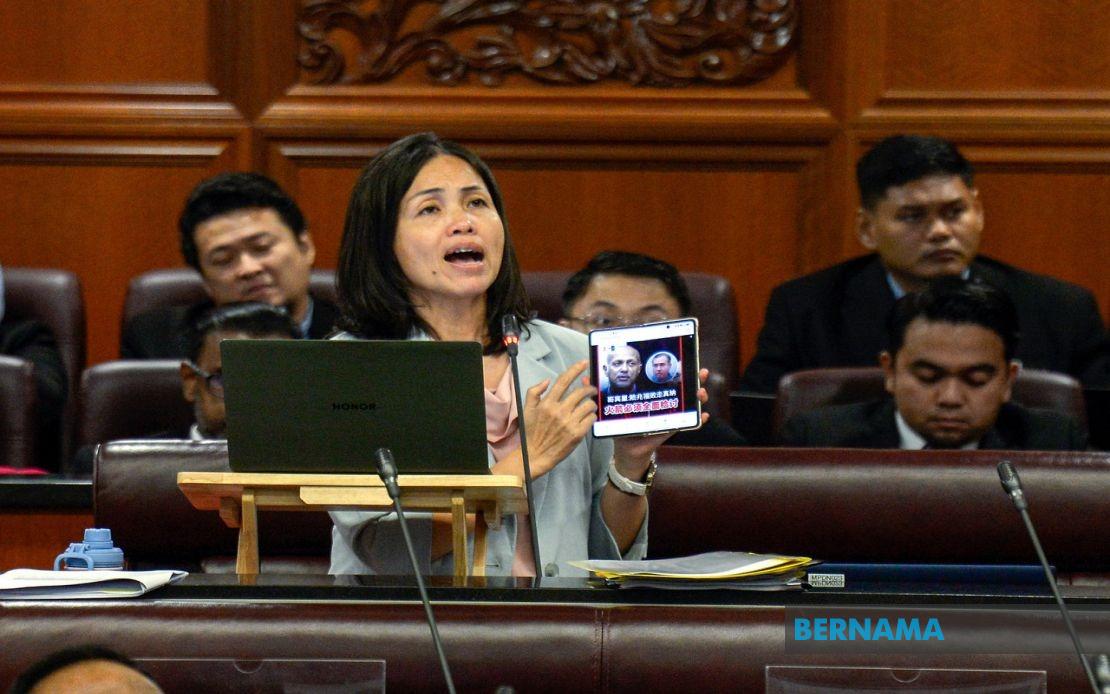
Malaysia's efforts to combat online fraud have reached a significant milestone, with nearly 100,000 pieces of scam content taken down from social media platforms during the opening seven months of 2026 alone. Deputy Communications Minister Teo Nie Ching disclosed that as of July 31, authorities had removed 99,693 scam-related content items, a figure that already exceeds the 98,503 pieces removed throughout the entirety of 2025. The escalating removal rate reflects both the intensifying sophistication of online fraud schemes targeting Malaysian citizens and the government's heightened vigilance in tackling digital crime across the region.
The trajectory of content removal demonstrates an alarming upward trend in scam prevalence. Comparing year-on-year figures reveals a dramatic acceleration in fraudulent material appearing on platforms: 242 items were removed in 2022, followed by 6,297 in 2023 and 63,652 in 2024. The exponential growth trajectory underscores how cybercriminals have increasingly exploited social media's vast reach and accessibility to perpetrate financial and personal fraud schemes. Teo emphasised during the Dewan Negara debate that these statistics illuminate the urgent necessity for sustained governmental focus and comprehensive action on digital safety infrastructure.
The Malaysian Communications and Multimedia Commission (MCMC) has emerged as the primary enforcement body responsible for identifying and removing such content from platforms, working in coordination with social media operators to expedite takedowns. The agency's operational capacity has expanded substantially to manage the growing volume of reports, reflecting resource allocation decisions prioritised by the government to address what has become a critical challenge for consumer protection and national digital integrity.
Supporting this enforcement framework, the Communications and Multimedia (Amendment) Bill 2026 was passed by the Dewan Negara through majority voice vote following deliberations among 15 senators. The legislation introduces structural amendments designed to provide the MCMC with clearer statutory authority and operational flexibility. Among its key provisions is the establishment of a National Universal Service Provision (NUSP) initiative, conceived as a mechanism to interconnect national security objectives with digital communications infrastructure governance.
The amendments specifically empower the Communications Minister to direct the MCMC in supporting initiatives connected to network services and applications deployment for NUSP implementation. This centralisation of directional authority represents a significant recalibration of regulatory relationships within Malaysia's communications sector, concentrating strategic decision-making authority while delegating operational responsibilities to the independent commission. The dual-clause Bill, which had previously passed the Dewan Rakyat on July 15, primarily amends Section 202 of the Communications and Multimedia Act 1998 to furnish the MCMC with enhanced legal grounding for such directed support.
Accountability mechanisms embedded within the revised framework address concerns about concentrated regulatory power. Teo clarified that parties aggrieved by MCMC decisions or ministerial directives possess recourse through an Appeals Tribunal established under the principal Communications and Multimedia Act. This tribunal, chaired by a High Court judge, provides an intermediate appellate forum where contentious determinations can be contested. Furthermore, dissatisfied parties retain the right to petition the courts for judicial review, creating a multi-layered check against potential regulatory overreach and ensuring that administrative actions remain subject to judicial scrutiny.
Senator Datuk Seri Prof Dr Noor Inayah Ya'akub raised critical considerations during parliamentary debate, insisting that determinations affecting national security must rest upon explicitly articulated criteria and clearly defined parameters. This emphasis reflects concern that broad security justifications could potentially justify expansive regulatory measures without transparent public understanding or proportionality assessment. The senator stressed that governmental decisions affecting communications infrastructure and content regulation demand transparent processes and verifiable accountability mechanisms to maintain public confidence in institutional integrity.
Senator Sheikh 'Umar Bagharib Ali positioned the communications sector within Malaysia's broader economic and security architecture, characterising it as strategic national infrastructure underpinning both digital economic advancement and public protection. His remarks acknowledged the complex interplay between facilitating economic opportunity through digital connectivity and safeguarding citizens against exploitation through malicious online activities. This perspective recognises that digital communications infrastructure constitutes not merely a commercial domain but a critical public good requiring governance structures that balance growth imperatives against protective requirements.
Sheikh 'Umar further contended that public confidence in governmental power—particularly its fair exercise, transparent deployment, and legal conformity—transforms citizens into collaborative partners in national security endeavours. This observation reflects contemporary governance philosophy emphasising that security objectives require voluntary public cooperation rather than unilateral state imposition. When citizens perceive that regulatory authority operates within disclosed parameters and remains accountable to independent institutions, they demonstrate greater willingness to support enforcement actions and adopt prudent digital practices.
The escalating scam content removal figures carry significant implications for Malaysia's position as a digital economy leader within Southeast Asia. Online fraud undermines consumer confidence in e-commerce and digital financial services, potentially constraining the region's digital economic expansion. Malaysian regulatory responses may establish precedents influencing how other ASEAN nations structure their own online safety frameworks, as governments across the region confront similar challenges from transnational cybercriminal networks. The MCMC's enforcement success and the legislative architecture supporting its operations could inform emerging regional approaches to digital governance.
Looking forward, the gap between scam content volume and removal capacity remains substantial. Nearly 100,000 removals in seven months suggests an underlying population of fraudulent material likely in the millions across Malaysian social media ecosystems. This disparity indicates that technological solutions—including artificial intelligence systems for content detection and predictive identification of emerging fraud tactics—may require investment comparable to traditional enforcement expansion. The evolving legislative framework must accommodate rapid technological adaptation while maintaining human oversight preventing algorithmic bias or disproportionate content suppression.
The revised Communications and Multimedia Act represents Malaysia's institutional response to the fundamental challenge of maintaining open digital platforms while protecting vulnerable users from sophisticated fraud schemes. Success will depend not merely on legislative language or removal statistics but on sustained public awareness, platform cooperation, and technological innovation working in concert. As Malaysian authorities continue tracking scam content removal metrics, these figures serve as both evidence of commitment and reminder of work remaining to establish digital environments where consumers can engage confidently without fear of exploitation.

