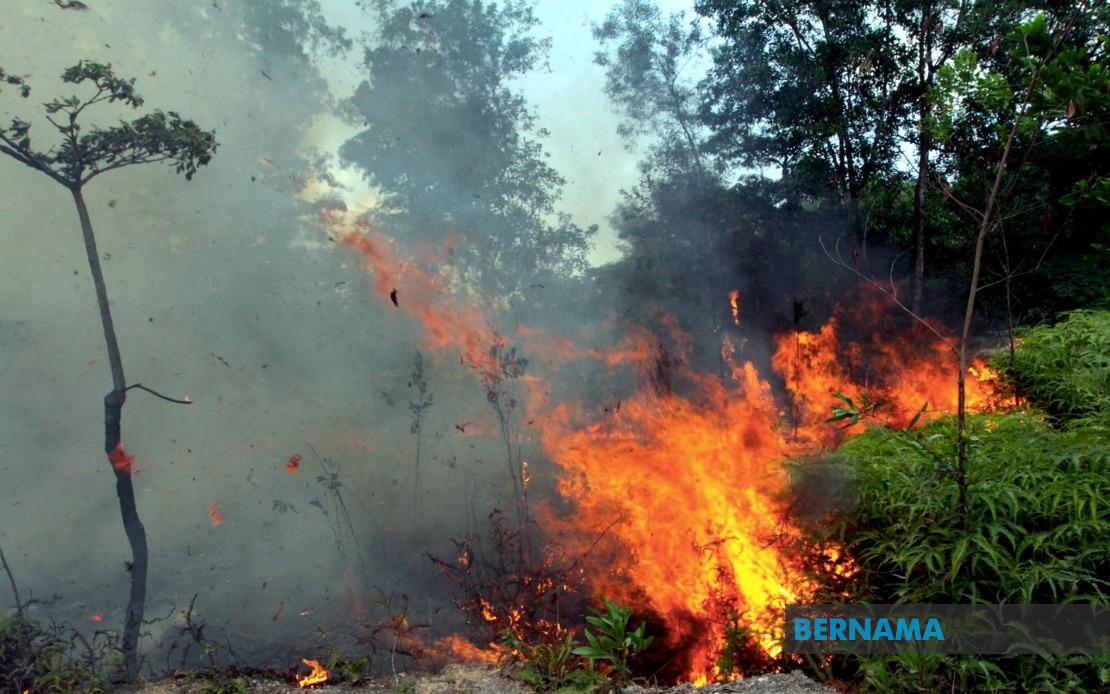
The Malaysian Fire and Rescue Department has sounded an alarm over a dramatic escalation in open burning incidents, with nearly 18,500 cases documented during the opening seven months of 2024. This represents a substantial surge compared to the 9,941 incidents recorded during an equivalent period in 2023, signalling a concerning trend in landscape fires across the nation. The department's director-general, Datuk Seri Nor Hisham Mohammad, disclosed these figures while addressing concerns about the department's readiness for potential large-scale fire emergencies that could strain response capabilities.
The spike in open burning incidents underscores a growing challenge for fire management authorities throughout Malaysia. Comparisons with 2024's historical data reveal that the current year's trajectory exceeds even the previous year's performance, with 18,432 cases outpacing the 16,294 documented during the identical seven-month window in 2024. This escalating pattern suggests that environmental and behavioural factors are converging to create heightened fire risks across diverse regions, from industrial areas to rural landscapes where agricultural burning and land clearing remain prevalent practices.
In response to the intensifying threat, JBPM has undertaken a comprehensive mapping exercise identifying 183 locations nationwide where open burning occurs with concerning regularity. These sites have been flagged based on historical incident data spanning the past five years, allowing fire authorities to establish predictive patterns and deploy preventative measures proactively. The department's approach reflects a shift toward data-driven fire management, moving beyond reactive emergency responses to anticipatory positioning of personnel and equipment in vulnerable areas.
Among these 183 monitored locations, 62 have been categorised as presenting exceptional risk, distinguished by their potential to generate massive fires exceeding 25 hectares in area. Such large-scale incidents pose unprecedented logistical challenges, as coordinating firefighting teams across vast, often difficult-to-access terrain requires resources that may exceed the department's immediate mobilisation capacity. The identification of these critical zones represents a candid acknowledgement by fire authorities that certain geographic and environmental conditions create scenarios where conventional firefighting strategies may prove insufficient, necessitating advanced planning and regional coordination.
Sarawak has emerged as a particular flashpoint, with large-scale fires currently afflicting regions including Sri Aman and Mukah. The state's geography, characterised by extensive forests and agricultural areas, creates conditions where fires can spread rapidly once ignited. Peninsular Malaysia, while experiencing a greater frequency of incidents, generally records smaller-scale fires that, though numerous, remain more manageable for response teams. This geographic variation in fire characteristics demands tailored intervention strategies rather than uniform national policies, with fire authorities requiring different equipment and personnel deployment models for coastal and inland regions.
Sabah represents another arena of heightened concern for the fire department. The eastern Malaysian state's combination of dense vegetation and challenging topography creates a particularly hazardous environment where fires, once established, spread with alarming velocity and prove exceptionally difficult to suppress. The terrain itself—mountainous, forested, and frequently remote—complicates access for firefighting personnel and equipment, effectively multiplying the difficulty of containment efforts. Seven locations around Kota Kinabalu that experienced major fire incidents during 2024 have been incorporated into JBPM's 62 high-priority monitoring sites, reflecting the state's strategic importance in the department's overall fire management framework.
Weather patterns emerge as a fundamental driver of the open burning surge documented this year. Extended periods of elevated temperatures in specific regions have created conditions where vegetation desiccation accelerates, rendering forests and shrublands increasingly flammable. These hot weather episodes coincide with traditional burning seasons for agricultural land preparation and waste management, creating a compounding effect where human-initiated fires encounter exceptionally receptive fuel conditions. Authorities have identified this intersection of climatic and human factors as central to understanding why 2024's open burning statistics substantially exceed previous years' figures.
Looking forward, Malaysian fire management planners are directing significant analytical attention toward the anticipated Super El Nino phenomenon, expected to develop in the Pacific region in November, with consequential weather effects anticipated to influence Malaysian conditions approximately eight weeks later, around late January or early February 2025. This climatic pattern historically correlates with drier conditions across Southeast Asia, potentially creating conditions even more conducive to rapid fire spread and intensity than currently observed. The department has initiated preparatory measures remarkably early, integrating meteorological forecasts into resource allocation and personnel positioning strategies ahead of the anticipated weather transition.
The convergence of these multiple factors—historical incident patterns, geographic vulnerability, current weather trends, and anticipated climatic shifts—has prompted JBPM to adopt an unusually proactive stance. Beyond monitoring and traditional prevention messaging, the department's establishment of the Firefighting Skills Hub signals investment in enhanced training and capability development. This institutional focus on preparedness reflects recognition that responding effectively to the fire challenges ahead will demand not merely more personnel and equipment, but personnel equipped with sophisticated techniques for managing fires under increasingly challenging environmental conditions.
For Malaysian stakeholders ranging from rural communities to property owners in fire-prone zones, these developments carry significant implications. The documented surge in open burning incidents indicates that fire risks have substantially intensified across multiple regions simultaneously, rather than representing isolated, localised problems. Property owners, agricultural enterprises, and residents in the 62 identified high-risk zones should anticipate intensified fire prevention campaigns and potentially more stringent enforcement of open burning restrictions. The department's early preparation for the anticipated El Nino-influenced weather pattern also signals that elevated fire risks will likely persist through the first quarter of 2025, warranting sustained vigilance and adherence to fire safety protocols throughout this extended period.

