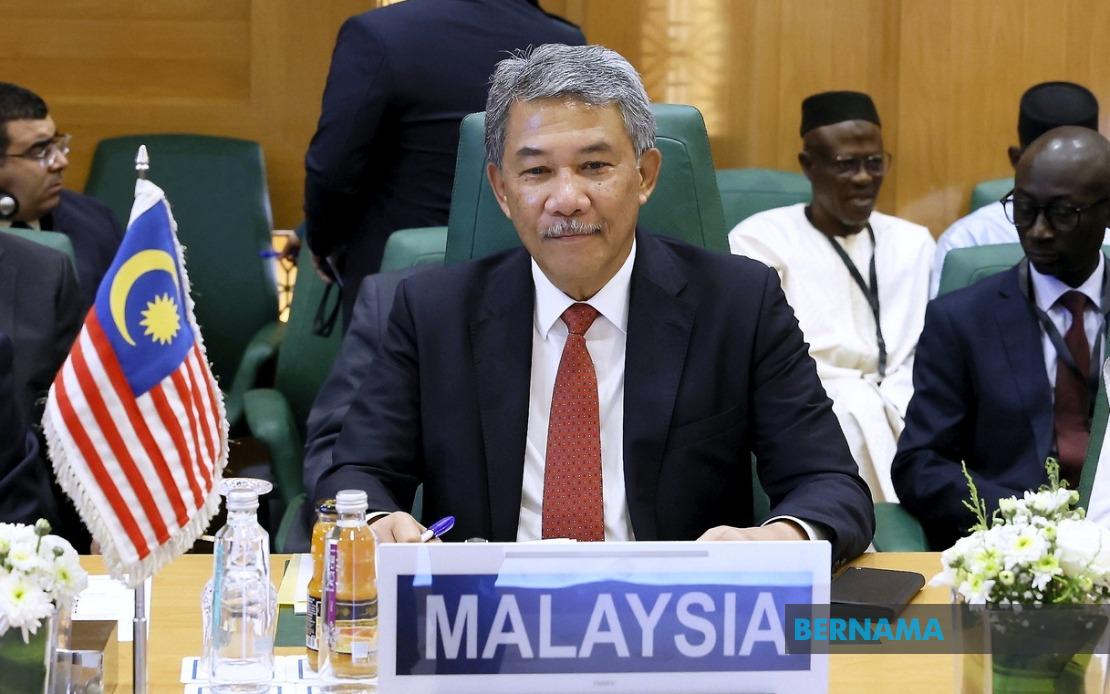
Malaysia has intensified diplomatic pressure on the Organization of Islamic Cooperation to take unified action against what Kuala Lumpur describes as Israel's systematic land acquisition programme in the Palestinian territories. Foreign Minister Datuk Seri Mohamad Hasan delivered the call at an extraordinary meeting of OIC foreign ministers in Jeddah on August 27, framing the matter as central to the legitimacy of the international legal order and the credibility of multilateral institutions.
The centrepiece of Mohamad's statement was Malaysia's formal condemnation of a US$2.3 billion Israeli settlement expansion initiative, with particular emphasis on the so-called E1 plan, which planners describe as a critical connector between Jewish residential areas and industrial zones. According to Malaysian analysis, this scheme represents a deliberate strategy to fragment Palestinian territorial control and render a contiguous Palestinian state geometrically impossible. By extending settlements eastward from Jerusalem toward the Jordan Valley, the expansion would effectively bisect the West Bank, creating geographical barriers that undermine Palestinian self-governance.
Malaysia grounded its appeal in the International Court of Justice advisory opinion released on July 19, 2024, which addressed the legal status of Israeli occupation and settlement activities. The Malaysian government framed OIC member compliance with this ruling not as a political preference but as a binding obligation stemming from international law. In this framing, the E1 settlement plan exemplifies a pattern of territorial expansion that contradicts the United Nations partition framework and the widely accepted two-state solution based on 1967 borders.
The broader context for Malaysia's intervention involves what Kuala Lumpur perceives as accelerating settlement construction across the occupied West Bank and East Jerusalem. The Malaysian position asserts that these activities are designed with deliberate intent to eliminate any realistic possibility of Palestinian statehood by reducing available land, severing geographical continuity, and establishing facts on the ground that preempt future negotiations. This interpretation views settlement expansion not as individual property disputes but as a state-directed territorial acquisition programme with existential implications for Palestinian viability.
Beyond the settlement question, Mohamad articulated Malaysia's position on the Gaza humanitarian catastrophe, citing international estimates of over 70,000 deaths and describing the situation as a profound failure of the global rules-based system. Malaysia's appeal for an immediate and permanent ceasefire reflects frustration with what the government characterises as the ineffectiveness of international humanitarian appeals and UN mechanisms. The emphasis on unhindered humanitarian access signals Malaysian concern that donor countries and international organisations have been insufficiently forceful in demanding compliance with basic humanitarian law.
A significant component of Malaysia's statement addressed religious and cultural dimensions of the Israeli-Palestinian dispute. The Malaysian government strongly condemned what it described as provocative incursions by Israeli ministers and far-right figures into the Al-Aqsa Mosque compound on July 23. This criticism reflects deep sensitivity within Malaysia—a Muslim-majority nation with significant Islamic institutional influence—regarding the status of Jerusalem's Islamic holy sites. The invocation of Jordan's historical Hashemite Custodianship over Christian and Islamic sites represents an effort to anchor Palestinian rights within a broader framework of religious stewardship and international religious law.
Malaysia's call for OIC member states to safeguard what it terms Al-Quds Ash-Sharif reflects the centrality of Jerusalem in Islamic theology and Malaysian foreign policy. The government is essentially asking the 57-member OIC bloc to view settlement expansion and settlement-related measures not merely as property or sovereignty disputes but as threats to sacred Muslim spaces. This rhetorical framing aims to mobilise broader Islamic solidarity behind Palestinian territorial claims and to elevate the dispute beyond conventional secular geopolitics.
The Malaysian statement also targeted UN institutional frameworks, demanding that the Security Council enforce international law and protect UNRWA's operational mandate. Malaysia specifically referenced the "illegal seizure" of UNRWA's Kalandia Training Centre and criticised legislation imposing mandatory death penalties that Malaysia argues targets Palestinians with discriminatory severity. These references represent Malaysia's attempt to internationalise Palestinian grievances by invoking UN mechanisms and normative frameworks that theoretically apply across all member states.
Malaysia's insistence on a two-state solution with East Jerusalem as the Palestinian capital reflects a consistent diplomatic position maintained over multiple administrations. By emphasising this as "not merely a diplomatic preference" but "a fundamental imperative," Mohamad elevated the position to quasi-constitutional status within Malaysian foreign policy. This framing prevents future Malaysian governments from compromising on core parameters without facing domestic political backlash from Islamic constituencies.
The timing of Malaysia's intervention at an extraordinary OIC meeting reflects the accelerating pace of Israeli settlement approvals and military operations in recent months. The convening of an emergency foreign ministers' gathering indicated that OIC leadership perceived events in Gaza and the West Bank as requiring more than routine diplomatic channels. Malaysia's high-profile participation positioned Kuala Lumpur as a principal voice within the Islamic bloc on Palestinian matters, a role that carries domestic political significance for the Malaysian government among its Muslim electorate.
Malaysia's demand for Israel to be "held fully responsible for its actions" through enforcement of international law represents an implicit criticism of Western powers that Malaysia views as providing diplomatic cover for Israeli operations. By emphasising the responsibility of the UN Security Council and invoking the rules-based international order, Malaysia was essentially arguing that selective application of international law—where some nations face sanctions and others do not—delegitimises the entire system. This rhetorical move appeals to other developing nations sharing frustrations about global power asymmetries.
The Malaysian government's framing emphasises that Palestinian statehood remains impossible without territorial contiguity, functional control over all component areas, and capital status for East Jerusalem. By linking the E1 settlement specifically to the destruction of statehood viability, Malaysia is making an argument about inevitability: that allowing such settlements means accepting the permanent subjugation of Palestinians. This logic aims to convince fence-sitting OIC members that accommodation with settlement expansion necessarily implies abandonment of any two-state solution, thereby raising the political cost of neutrality.
For Malaysia and other Southeast Asian nations, the Palestinian question represents a test case for whether international law genuinely constrains powerful states or whether the rules-based order functions selectively. Malaysia's insistence on enforcement mechanisms and accountability reflects broader anxieties among middle-power states about whether international institutions can protect smaller nations from great power pressure. By championing the Palestinian cause through UN institutions, Malaysia simultaneously advocates for strengthening these mechanisms as potential protections for other vulnerable nations facing power imbalances in disputes with stronger neighbours.

