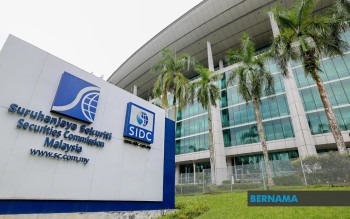
Malaysia is positioning itself as a gateway for Russian capital entering the Islamic finance market, a deliberate strategy by the Ministry of Finance and Securities Commission to deepen ties with Moscow and Central Asian economies while reinforcing the nation's standing as a global Islamic finance hub.
The initiative represents a significant diplomatic and economic pivot, with both institutions collaborating on a series of cross-border activities designed to attract investors from Russia and neighbouring regions. The Securities Commission has outlined plans for exploratory missions to Central Asia in 2026 or 2027, part of a broader internationalisation strategy for Malaysia's Islamic capital markets. These visits will serve dual purposes: evaluating market readiness in the region and building durable networks among key financial stakeholders who might become future partners or clients.
A critical dimension of Malaysia's outreach involves the potential export of shariah expertise to Russian jurisdictions. The Head of the Republic of Tatarstan expressed interest in May 2025 in adopting Malaysia's proven Islamic finance development model, opening doors for Malaysian firms to provide consultancy, training and capacity-building services across Russian financial institutions. This represents a lucrative service export opportunity that extends beyond traditional investment flows, positioning Malaysia as a knowledge provider and thought leader in Islamic finance architecture. Professional services—including shariah advisory and training programmes—could generate recurring revenue streams while simultaneously building long-term institutional relationships.
The groundwork for this expansion has already been laid through bilateral engagements conducted over recent years. The Securities Commission held strategic meetings with Russia's Central Bank in 2023 and again in 2025, establishing communication channels and exploring common ground on regulatory frameworks and market structures. Parallel discussions with the Saint Petersburg International Mercantile Exchange further underscore the breadth of Malaysia's engagement, suggesting interest in linking Russian commodity and derivatives markets with Malaysian Islamic finance infrastructure.
This outreach occurs within the context of Malaysia's Capital Market Masterplan 2026-2030, a comprehensive roadmap that prioritises regulatory enhancement, product innovation and international collaboration. The plan explicitly envisages stronger competitiveness through refined governance structures and expanded offerings tailored to global investors, with particular attention to shariah-compliant instruments. By positioning Russian engagement within this broader framework, Malaysia signals that Moscow's participation is integral to long-term market development rather than a transactional afterthought.
The strategic importance of Russia to Malaysia's Islamic finance ambitions reflects several converging factors. Russia possesses substantial sovereign wealth and institutional capital seeking diversification beyond Western markets, particularly in light of geopolitical tensions and sanctions. Simultaneously, Russia's Muslim-majority regions—particularly Tatarstan and other Volga republics—represent emerging markets for Islamic financial products with limited domestic supply. By establishing itself as Russia's preferred partner for Islamic finance infrastructure, Malaysia positions itself as an essential intermediary connecting Moscow with global halal capital markets.
For Malaysian investors and financial institutions, the Russian market opens significant opportunities. Asset management firms, Islamic banking subsidiaries and fintech companies operating under shariah principles could gain access to a vast underserved population. Likewise, Malaysian educational institutions and professional services firms stand to benefit from demand for shariah compliance expertise, training and certification as Russian entities build their Islamic finance capabilities from the ground up.
The government's commitment to welcoming Russian investment, subject to domestic laws and international standards, reflects a carefully calibrated approach to geopolitical neutrality. Malaysia has long maintained balanced diplomatic relations with major powers, and the Islamic finance initiative extends this philosophy into economic partnership. By framing engagement as mutual benefit rooted in shariah principles—specifically the Maqasid al-Shariah framework emphasising justice and sustainability—Malaysia presents partnership as ethical and principled rather than merely transactional.
Central Asia represents an underexplored frontier for Malaysian Islamic finance. The region encompasses multiple nations with significant Muslim populations, developing financial sectors and strategic positioning along China's Belt and Road Initiative. By establishing early presence through Malaysia's Central Asian exploratory missions, Malaysian institutions could claim first-mover advantage, shaping regulatory standards and market preferences before competitors from Turkey, the Gulf states or Southeast Asia establish dominance.
The timing of this initiative also reflects Malaysia's recognition that competitive pressures in Islamic finance are intensifying. Traditional rivals including Saudi Arabia, the United Arab Emirates and Indonesia are all aggressively pursuing international expansion. Malaysia's historical strength in Islamic finance infrastructure—including Kuala Lumpur's status as a major Islamic finance centre with deep expertise and established institutions—remains substantial, but must be actively leveraged to prevent market share erosion. Russian engagement represents a frontier market where Malaysia's accumulated experience and institutional depth provide meaningful competitive advantages.
Looking forward, success depends on translating diplomatic engagement and exploratory missions into concrete commercial relationships. Malaysian regulators must ensure that shariah compliance frameworks are transparent and acceptable to Russian counterparts, while product innovation must address genuine demand in Russian markets rather than simply adapting existing Malaysian offerings. The Securities Commission's planned regulatory enhancements under the Capital Market Masterplan 2026-2030 should explicitly address cross-border product flows and investor protection mechanisms relevant to Russian participation.
Beyond immediate financial gains, Malaysia's Russian Islamic finance initiative carries broader strategic implications for the region. By demonstrating that Muslim-majority markets and traditionally Western-aligned nations can establish prosperous economic partnerships rooted in shared financial values, Malaysia models an alternative to geopolitical zero-sum thinking. For Southeast Asian nations considering their own international economic positioning, Malaysia's approach suggests that Islamic finance offers a neutral, principles-based framework for deepening relationships with diverse partners irrespective of broader political alignments.

