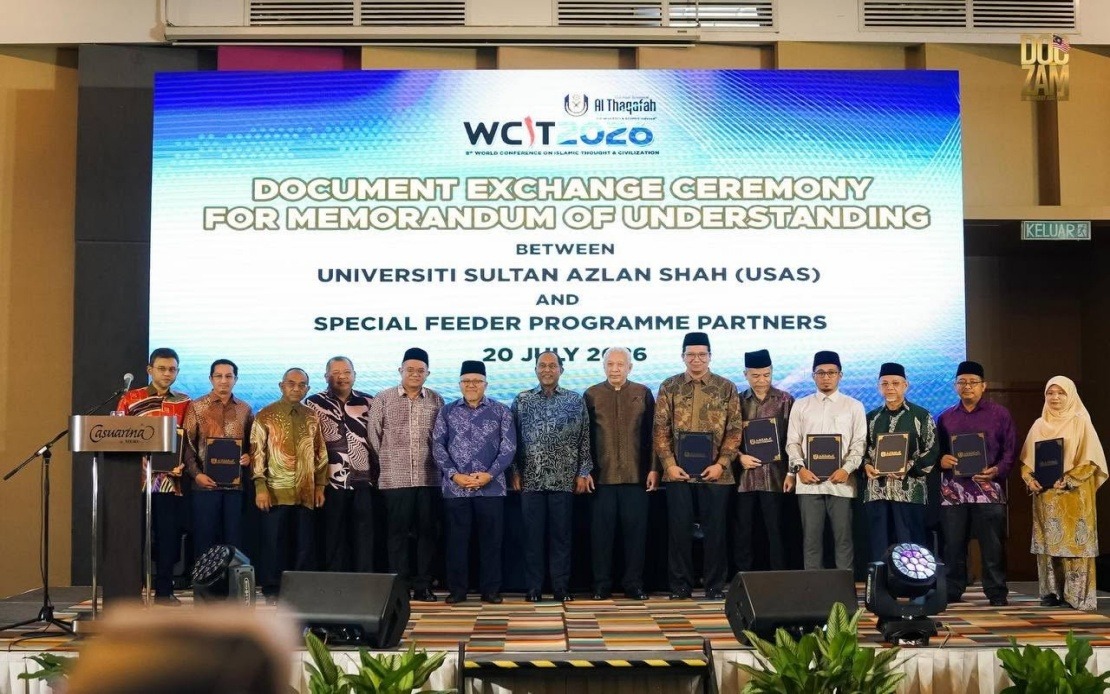
Malaysia is positioning itself as a critical nexus for international intellectual exchange and a beacon for higher education advancement, according to Higher Education Minister Datuk Seri Dr Zambry Abdul Kadir. Speaking at the launch of the 8th World Conference on Islamic Thought and Civilisation (WCIT2026), he articulated a vision where the nation serves simultaneously as a facilitator of cross-cultural knowledge sharing, a repository of educational excellence, and a dependable collaborator in constructing a knowledge framework rooted in inclusive principles, forward-thinking values, and ethical foundations.
The WCIT2026 gathering, now underway, represents a significant opportunity to consolidate this positioning on the global stage. By convening academics, researchers, intellectuals, and thought leaders from numerous countries under a single institutional umbrella, the conference creates pathways for generating practical frameworks and innovative thinking that can address pressing concerns affecting both the Muslim-majority world and humanity at large. The event's importance extends beyond ceremonial significance; it signals Malaysia's readiness to contribute substantively to contemporary intellectual challenges.
Dr Zambry's recent attendance at a preparatory dinner in Ipoh, hosted by Universiti Sultan Azlan Shah (USAS) and drawing over 180 international participants, underscored the scale of engagement this platform has garnered. The gathering brought together a diverse cohort united by commitment to elevating Islamic intellectual traditions and deploying rigorous scholarship to confront modern complexities. For Malaysia, hosting such calibre of international academic talent reinforces the country's credentials as a destination where serious intellectual work occurs and where cross-border scholarly networks can flourish.
Crucially, Dr Zambry's remarks departed from nostalgic framing of Islamic civilisation's historical achievements. Rather than dwelling on past grandeur, he articulated that sustainable progress for the Muslim world depends on contemporary pillars: systematic knowledge creation, evidence-based research methodologies, technological innovation, principled governance, and competitive academic institutions capable of matching global standards. This pragmatic orientation resonates with Southeast Asian contexts, where nations like Malaysia, Indonesia, and others are actively upgrading research infrastructure and attracting regional academic talent.
The minister's emphasis on maintaining education's independence from political pressures, factional conflicts, and technological determinism carries particular weight in contemporary Asia. He framed knowledge itself as humanity's common inheritance rather than the proprietary asset of any single nation or civilisation. This universalist perspective, articulated within a discourse on Islamic thought, effectively bridges communal identity with cosmopolitan intellectual values—a balance many Asian societies are attempting to strike.
Dr Zambry's invocation of historical warnings—referencing the destruction of Baghdad, Granada, Sarajevo, and the ongoing devastation in Palestine—served to underscore a sobering reality: when institutions of learning and knowledge repositories are damaged during conflicts, civilisations lose not merely physical infrastructure but their capacity to transmit wisdom, innovate, and evolve. For Malaysia and Southeast Asia, where regional stability and educational continuity remain interconnected imperatives, this framing carries contemporary relevance. The vulnerability of universities during upheaval resonates in a region conscious of how political instability can derail development trajectories.
The three-day WCIT2026 conference beginning at this juncture is expected to produce concrete outcomes: policy recommendations, research agendas, and collaborative mechanisms that can be implemented regionally and globally. For Malaysian higher education institutions, participation in such forums provides visibility, research partnership opportunities, and positioning within international academic hierarchies that increasingly shape university rankings and funding allocations. This dimension of soft power and institutional advancement often receives insufficient attention but materially influences a nation's educational competitiveness.
Dr Zambry's articulation of Malaysia's role also addresses an implicit gap in current global discourse on Islamic thought and civilisation. While Western-centric academic institutions have long dominated international intellectual property and frameworks, platforms like WCIT2026 create spaces where scholars from Muslim-majority nations can establish independent analytical traditions and generate solutions rooted in their own contexts and values rather than merely consuming or adapting external paradigms. For Malaysia specifically, such positioning elevates the nation from passive participant in globalised higher education to active contributor and framework-setter.
The minister's remarks also gesture toward practical implications for Malaysian institutions themselves. By endorsing the conference's thrust toward integrity-driven leadership and competitive excellence, he implicitly signals governmental expectations that local universities will meet these benchmarks. This creates accountability mechanisms and aspirational targets, encouraging institutions to enhance research output, international collaboration, and the ethical dimensions of knowledge production. Whether Malaysian universities can sustainably meet these elevated standards remains an open question requiring substantial investment and systemic reform.
Regionally, Malaysia's commitment to such intellectual bridging has implications for Southeast Asian higher education more broadly. As ASEAN nations increasingly emphasise knowledge economies and research-driven development, frameworks emerging from conferences like WCIT2026 can inform regional policy coordination. The values-based approach Dr Zambry emphasized—prioritising ethics, integrity, and inclusive progress—offers potential counterbalance to purely market-driven higher education models that have generated concerns about accessibility and social responsibility across Asia.
The aspiration for resolutions and innovative ideas contributing to the advancement of both the Islamic world and global well-being reflects an understanding that contemporary challenges—climate change, technological disruption, health crises, economic inequality—transcend civilisational and geographic boundaries. Whether WCIT2026 can translate intellectual engagement into actionable outcomes will partially determine the conference's legacy and Malaysia's demonstrated capacity to convene meaningful international dialogue.

