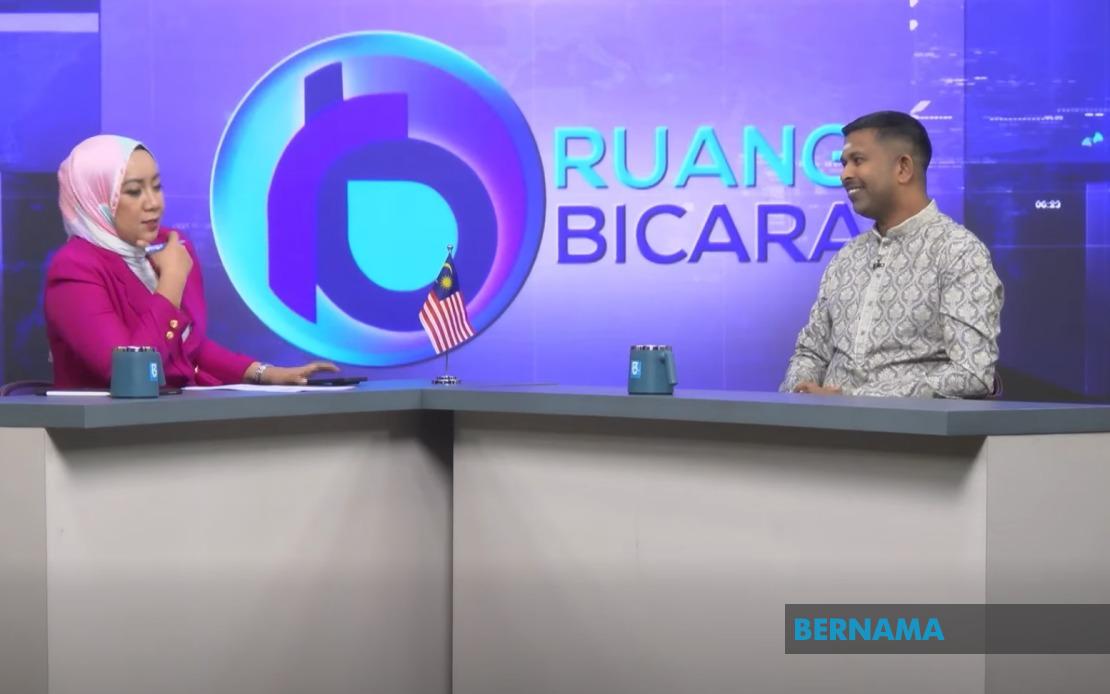
Strengthening the Malay language's position as Malaysia's national identity marker demands far more than legislative protection—it requires sustained commitment from every tier of society, according to a prominent legal scholar and language governance figure. Prof Dr Ramalinggam Rajamanickam, who serves both as a professor at Multimedia University's Faculty of Law and as a member of the Dewan Bahasa dan Pustaka Board of Governors, emphasises that the responsibility for upholding the dignity of Bahasa Melayu extends beyond government bodies to encompass higher education, corporate Malaysia, and ordinary citizens.
While the constitutional foundation for the national language appears solid, with Article 152 of the Federal Constitution explicitly conferring its status and the National Language Act 1963/67 mandating its use in official contexts, Ramalinggam identifies a subtle but critical distinction between protecting the language's institutional role and preserving the quality of its everyday application. This nuance matters significantly for Malaysian policymakers grappling with the digital age, where linguistic standards have become increasingly difficult to enforce and monitor.
The emergence of "bahasa rojak"—the colloquial blending of Malay with English, Chinese, and other languages—alongside the proliferation of text-speak and abbreviations on social media platforms represents the true contemporary challenge. Rather than viewing such phenomena as threats requiring suppression, Ramalinggam suggests a more sophisticated understanding: informal code-switching carries minimal consequence, but formal domains including government communications, legal documentation, and academic discourse must maintain rigorous grammatical standards and structural integrity. This calibrated approach recognises that language naturally evolves in casual settings while defending institutional benchmarks.
The legal infrastructure governing Malay language usage, though comprehensive on paper, requires active enforcement and monitoring to remain meaningful. Ramalinggam calls upon relevant ministries to strengthen implementation mechanisms while universities shoulder a particular responsibility to model and teach correct Malay usage. This institutional oversight becomes especially pressing as Malaysia positions itself as a knowledge economy, where the language must simultaneously serve scholarly and technical purposes without forcing a false choice between Malay proficiency and English capability.
An emerging dimension of this challenge involves artificial intelligence and technological development. Rather than passively waiting for global technology companies to eventually localise their products and services into Malay, Malaysia must pursue the more ambitious path of ensuring that the national language evolves to become a tool for driving technological innovation itself. This requires deliberate investment in linguistic research, terminology development, and computational resources that enable Malay to function as a language of science and engineering, not merely administrative convenience.
Realising this vision demands collaboration extending well beyond traditional language institutions. Government research agencies, university computer science and linguistics departments, technology companies, and independent language experts must coordinate on terminology standardisation, machine learning datasets, and digital infrastructure that treats Malay as central rather than peripheral. The regional precedent proves instructive: Malay once functioned as the lingua franca across maritime Southeast Asia, facilitating commerce and cultural exchange across diverse populations. That historical legacy, combined with current study of the language in major powers including China, Japan, and India, suggests untapped potential for Malay as a bridge language in regional scientific and economic collaboration.
The argument that empowering the national language necessarily diminishes other languages represents a false binary that Ramalinggam explicitly rejects. Multilingualism serves Malaysia well—proficiency in English remains strategically important for international engagement, Chinese languages strengthen ties within Asia, and minority languages deserve cultural preservation. The assertion that Malaysian citizens can command multiple languages while maintaining Malay as the paramount symbol of national cohesion and identity reflects pragmatic policy thinking suited to a diverse, globally-connected society.
For Malaysian policymakers, this framework suggests several concrete priorities. First, ministries responsible for language policy must shift from symbolic gestures toward measurable implementation standards, particularly in government communications and official documentation. Second, the university sector should embed rigorous Malay language instruction and terminology development into science and technology curricula, ensuring that future researchers and engineers can operate fluently in the national language. Third, private technology companies and media organisations should recognise their role in either reinforcing or eroding linguistic standards through their platforms and content.
The challenge ultimately reflects deeper questions about national identity and cultural continuity in an era of rapid globalisation. A nation that allows its official language to atrophy risks losing an essential unifying element, particularly in a multicultural context where language often serves as proxy for belonging and social cohesion. Conversely, rigid insistence on linguistic purity divorced from how actual speakers use language invites counter-productive backlash and undermines credibility. The middle path that Ramalinggam advocates—maintaining exacting standards in formal domains while permitting natural evolution in informal communication—offers a realistic model for language stewardship appropriate to Malaysia's circumstances.

