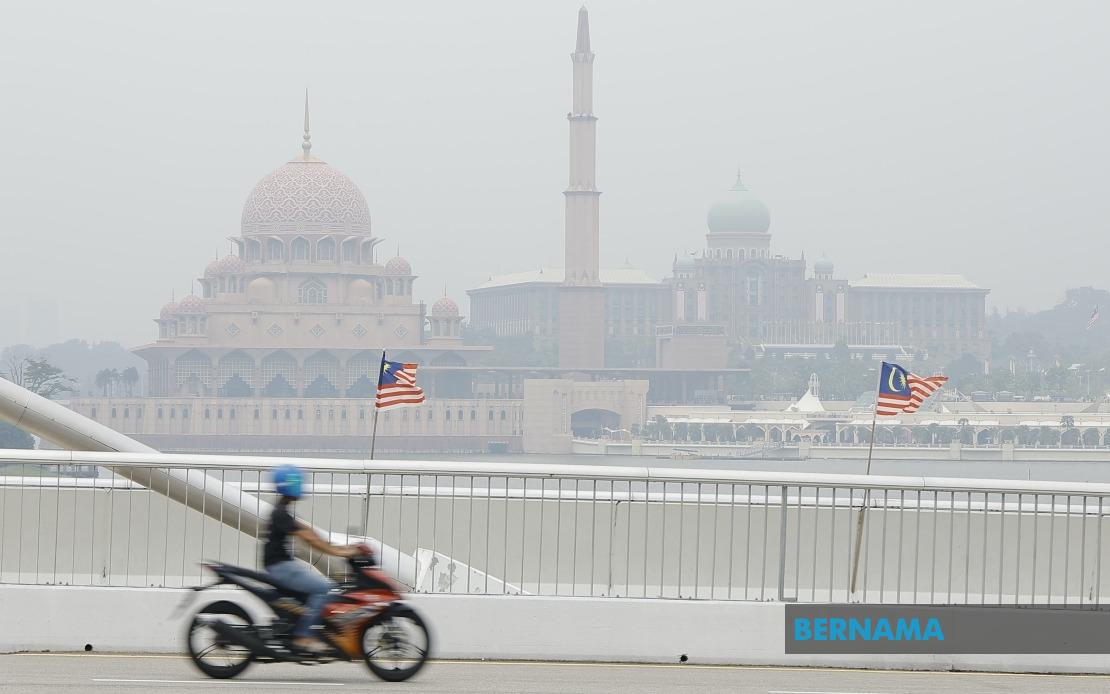
Malaysia must transition from managing haze crises as they unfold to anticipating and preventing air pollution episodes before they intensify, according to an air quality researcher at Universiti Sultan Zainal Abidin. Associate Professor Dr Azman Azid, director of the institution's Besut Campus, contends that the country possesses sufficient data to construct an early warning system capable of detecting hazardous conditions well ahead of their peak impact on residents. The shift from reactive to predictive frameworks represents a fundamental reimagining of how the nation addresses recurring transboundary pollution that affects millions across Southeast Asia.
The case for reform has become more urgent given emerging health consequences from recent pollution episodes. Malaysia's Ministry of Health documented a stark rise in respiratory ailments during epidemiological weeks 32 and 33, with asthma cases surging 259 per cent from 61 to 219 cases. This alarming trend underscores that the haze problem extends far beyond air quality metrics and into public health systems that struggle to respond when pollution peaks. The existing framework of monitoring and reacting to Air Pollutant Index readings treats symptoms rather than preventing illness, a fundamentally passive approach that leaves vulnerable populations at risk.
Dr Azman emphasises that Malaysia already operates sophisticated weather forecasting systems, yet lacks an equivalent capability for haze prediction. Such a system would function similarly to meteorological models but focus specifically on smoke movement and air quality degradation. The technological foundation exists: meteorological agencies track wind patterns and atmospheric conditions, satellite systems identify fire hotspots across the region, and air quality monitors measure fine particulate matter. The missing element is integration—combining these disparate datasets into a unified forecasting platform accessible to public health officials, hospital administrators, and educational planners.
An integrated haze warning system would synthesise hotspot data revealing fire locations, satellite imagery tracking smoke plumes, meteorological information on wind direction and velocity, and atmospheric trajectory models predicting air mass movement. Fine particulate matter measurements, specifically PM2.5 concentrations, would provide a health-focused metric more directly linked to respiratory impacts than the current API system. By correlating these data streams, forecasters could identify scenarios where pollution concentration would increase within a 48 to 72-hour window, allowing downstream institutions time for preparedness measures rather than emergency scrambling.
The practical benefits would permeate multiple sectors of Malaysian society. Hospitals and clinics receiving early warnings could increase staffing levels, stockpile respiratory medications, and establish surge protocols before patient volumes spike. Schools could schedule outdoor activities away from predicted pollution days, protecting children from acute exposure during vulnerable developmental periods. Individuals with chronic respiratory conditions would gain time to plan medical consultations or adjust activity levels proactively. This margin of advance notice transforms air quality from an uncontrollable environmental variable into a manageable public health challenge.
Dr Azman stresses that early forecasting does not diminish the continuing importance of real-time Air Pollutant Index monitoring. The API serves crucial functions in indicating current atmospheric conditions and guiding immediate behaviour modifications. However, from a risk management perspective, waiting for API measurements to rise reflects an approach of acting after pollutants have already entered the air. A predictive system complements rather than replaces this reactive capability, providing temporal leverage to authorities and residents. The analogy to weather forecasting is instructive: meteorologists issue hurricane warnings days in advance, not when winds reach maximum velocity.
Regional cooperation remains essential given the transboundary nature of Southeast Asian haze. Malaysia participates in the ASEAN Agreement on Transboundary Haze Pollution, yet current frameworks emphasise data sharing and response coordination rather than proactive prevention. Dr Azman advocates for deepening collaborative mechanisms to encompass fire source mapping, shared smoke trajectory forecasting, technology transfer between nations, coordinated firefighting assistance, and unified response protocols. Smoke and air masses traverse national boundaries indifferently, rendering unilateral efforts insufficient for addressing regional air quality degradation.
Strengthening enforcement mechanisms domestically complements technological advancement. The researcher notes that authorities must intensify legal measures targeting open burning, bush fires, and peatland area monitoring within Malaysian territory. Peatlands merit particular attention given their propensity to sustain fires for extended periods, releasing substantial smoke volumes that overwhelm regional air quality. Regulatory agencies require enhanced capacity and political support to consistently apply penalties for violations and implement preventive measures in high-risk ecosystems. Without resolving domestic fire sources, even sophisticated forecasting systems face limitations in reducing transboundary pollution.
Dr Azman identifies three interconnected requirements for comprehensive haze mitigation: technology, enforcement, and diplomacy must operate in concert. Atmospheric modelling and forecasting provide the technological dimension, enabling earlier detection and better-informed decision-making. Legal enforcement structures address fire prevention and land management, reducing pollution sources at origin. Diplomatic coordination through regional frameworks facilitates information sharing, mutual assistance, and harmonised standards across ASEAN member states. Absent any component, the overall system becomes compromised; a perfectly designed forecast system generates limited benefit without accompanying fire prevention, and cooperation efforts falter without shared analytical frameworks.
Sustainable land use practices represent a longer-term foundation for haze reduction. Current land conversion practices in Indonesia, particularly on peatlands, create conditions for extensive fires during dry seasons. Addressing this root cause requires regional discussion of agricultural expansion alternatives, rehabilitation investment, and economic incentives favouring forest preservation over clearing. The researcher acknowledges that preventing every smoke plume reaching Malaysia remains unrealistic given regional geography and current land-use trajectories. Nevertheless, systematic fire reduction, improved smoke movement forecasting, and health protection measures collectively represent achievable improvements within existing constraints.
For Malaysia specifically, developing an early haze warning system positions the nation as a regional leader in public health protection and environmental governance. Neighbouring countries facing similar transboundary pollution burdens could adopt comparable systems, establishing ASEAN-wide standards for haze forecasting and response. Such technical leadership simultaneously enhances Malaysia's diplomatic position in regional negotiations regarding environmental cooperation. The investment required—primarily in data integration infrastructure and analytical capacity—remains substantially modest compared to health system costs incurred during pollution crises or economic losses from activity disruptions.

