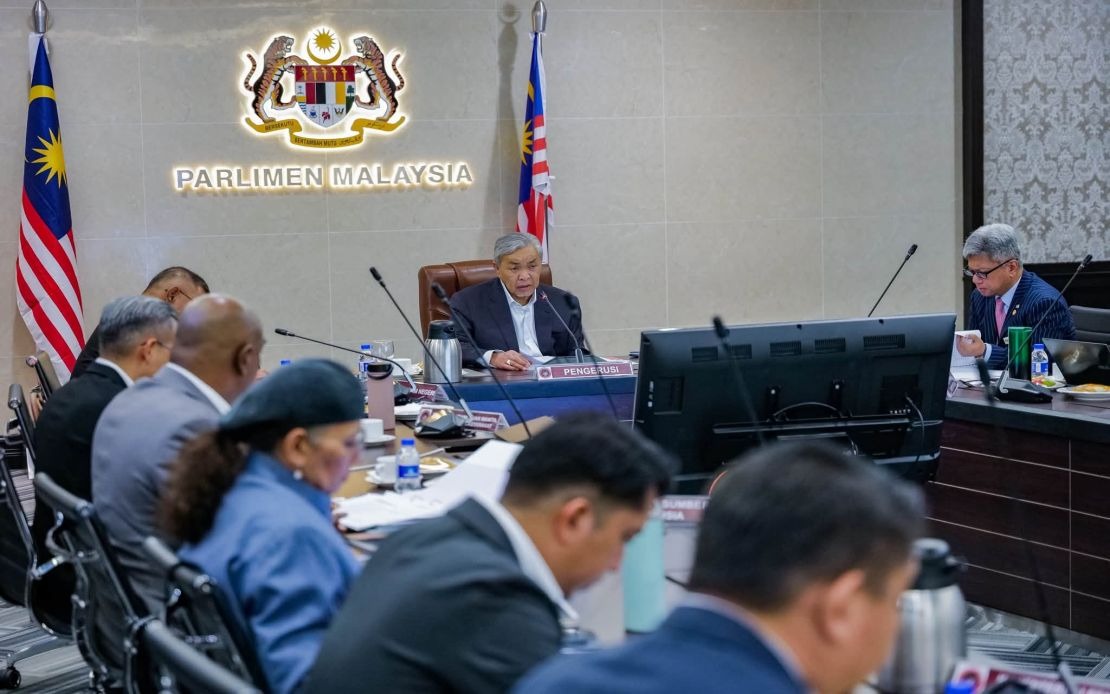
Malaysia's approach to managing the global refugee crisis must incorporate a dual mandate that safeguards humanitarian principles without compromising national security or state sovereignty, Deputy Prime Minister Datuk Seri Dr Ahmad Zahid Hamidi said on June 30. The statement comes as international displacement figures reach unprecedented levels, with more than 122 million people forced from their homes due to armed conflict and regional instability, placing mounting pressure on receiving nations across Asia and the Middle East.
Ahmad Zahid made his remarks following the sixth meeting of the High-Level Committee on the Management of Refugees and Asylum Seekers, a governing body tasked with overseeing Malaysia's refugee policies and operational frameworks. The committee convenes periodically to review implementation progress and ensure that the country's mechanisms for processing and managing displaced persons remain aligned with domestic priorities while meeting international humanitarian obligations. His emphasis on the need for stronger governance structures reflects growing recognition within the Malaysian government that refugee management demands systematic coordination across multiple ministries and agencies.
The Deputy Prime Minister, who also serves as Minister of Rural and Regional Development, stressed that refugee management extends far beyond administrative processing or bureaucratic efficiency. Instead, he characterized it as a complex governance challenge intertwining humanitarian responsibility, public security, civil order preservation, and national interest protection. This framing acknowledges that countries hosting substantial refugee populations face legitimate concerns about border control, resource allocation, and integration challenges, while simultaneously recognizing moral obligations to vulnerable populations fleeing persecution and violence.
Speaking through a Facebook post, Ahmad Zahid underscored that all decisions regarding refugee admissions and management must ultimately serve the interests of Malaysia's own population and uphold the nation's sovereign authority over its territory and borders. This position reflects a broader Southeast Asian perspective that views refugee policy through the lens of state capacity and national interest rather than purely humanitarian considerations. Malaysia, as a non-signatory to the 1951 Refugee Convention, maintains considerable discretion in how it manages refugee populations, though it hosts significant numbers of displaced persons, particularly from Myanmar and Pakistan.
The committee's deliberations included a comprehensive review of implementation progress across existing refugee management policies and operational mechanisms. Participants examined how current systems function in practice and whether they adequately serve Malaysia's dual objectives of protecting vulnerable displaced persons while managing potential security risks. This assessment-based approach suggests the government recognizes that refugee frameworks require periodic recalibration as circumstances evolve and as experience reveals implementation gaps or inefficiencies.
A significant focus of the meeting centered on the Refugee Registration Document (DPP), Malaysia's primary identification system for recognized refugees and asylum seekers. The committee reviewed operational performance of this registration mechanism, examining whether documentation processes function efficiently, whether records remain secure, and whether the system provides adequate information for government agencies coordinating refugee-related services and security monitoring. Registration systems serve multiple functions simultaneously: they facilitate service provision, enable population tracking, and contribute to broader security architecture.
The committee also addressed access guidelines for education and healthcare services available to refugee and asylum-seeking populations. These discussions aimed at streamlining administrative procedures and clarifying which agencies bear responsibility for specific service provision obligations. By harmonizing guidelines across health and education sectors, the government seeks to reduce bureaucratic confusion while ensuring regulatory compliance with Malaysian law. Better coordination theoretically improves service delivery while reducing opportunities for unauthorized access or administrative gaps that could undermine security protocols.
For Malaysian stakeholders, the committee's focus on coordination and systematic management reflects a middle-path approach that neither restricts refugee access to essential services nor creates loopholes in security oversight. Southeast Asian countries including Malaysia have historically struggled with balancing these competing demands, particularly as refugee populations grow and fiscal pressures mount. The emphasis on legal compliance suggests the government aims to ground refugee policies in established regulatory frameworks rather than ad-hoc humanitarian decisions.
The global context shaping Ahmad Zahid's statements involves unprecedented displacement levels driven by conflicts in Syria, Afghanistan, Ukraine, Somalia, South Sudan, and Myanmar. This crisis strains receiving countries worldwide, particularly those in developing regions lacking resources equivalent to wealthy nations. Malaysia's geographic position makes it a transit point and destination for displaced persons fleeing multiple conflict zones, creating pressures on social services, housing, and labor markets that generate political sensitivity domestically.
The government's invocation of national security concerns alongside humanitarian language reflects international trends where countries increasingly frame refugee policy through dual-mandate frameworks. This approach acknowledges that security screening and humanitarian protection need not represent opposing objectives if implemented through transparent, evidence-based procedures. However, critics contend that security considerations sometimes obscure restrictive policies presented in security language, a tension relevant to Malaysia's refugee debates.
Moving forward, Ahmad Zahid's framework suggests Malaysia will likely pursue incremental improvements in refugee management systems rather than substantial policy expansions. Strengthening existing mechanisms—improved registration, better inter-agency coordination, clearer service guidelines—represents an efficiency-focused approach. Such measures potentially enhance both security monitoring and service delivery if executed competently, though implementation challenges often determine actual outcomes.
For regional observers, Malaysia's approach carries implications beyond national borders. As Southeast Asian nations grapple with displacement crises and irregular migration, they observe how neighbors balance security and humanitarian concerns. Malaysia's refinement of refugee frameworks may influence policy discussions in neighboring countries, particularly those also hosting significant displaced populations without formal convention commitments. The balance Ahmad Zahid advocates remains perpetually contested in practical implementation.

