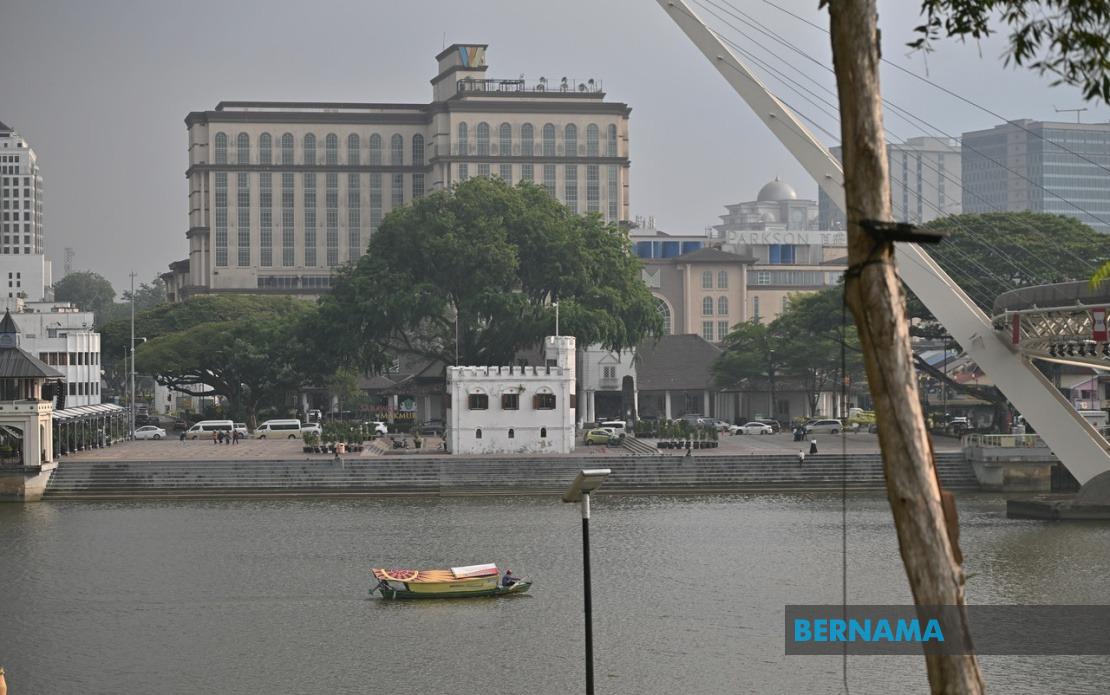
Tan Sri Lee Lam Thye, chairman of the Alliance for a Safe Community, has called on the Malaysian government to implement immediate preventive measures against transboundary haze following the resurgence of unhealthy air quality across several regions in the country. With recent air pollution readings exceeding dangerous thresholds in parts of Sarawak and Peninsular Malaysia, Lee argues that authorities must fundamentally shift their approach from reactive crisis response to proactive risk mitigation. The warning comes as six schools in Tebedu, Sarawak, were forced to close after the Air Pollutant Index exceeded 200, underscoring the tangible impact of deteriorating air quality on daily life and economic activity.
The recurrence of haze episodes represents a systemic failure to learn from past experiences, according to Lee. Malaysia has grappled with transboundary pollution for decades, yet continues to find itself caught off-guard when air quality suddenly plummets. This pattern reflects what environmental policymakers across Southeast Asia have identified as a persistent governance challenge: the tendency to mobilise resources only after a crisis becomes visible rather than addressing underlying vulnerabilities before they materialise. By the time visible haze blankets cities and school closures become necessary, significant harm has already occurred to public health, the economy, and social stability.
Lee's analysis identifies climatic and geographic factors as critical pressure points. The extended hot and dry weather patterns currently affecting Sarawak create ideal conditions for rapid fire spread and atmospheric transport of smoke across international boundaries. This combination of conditions transforms localised fire incidents into transnational environmental emergencies within hours. For Malaysia, which sits downwind of large fire-prone regions in Indonesia, this vulnerability is particularly acute. The Indonesian landmass contains peatlands and forested areas that can burn extensively during dry seasons, sending smoke plumes across the Strait of Malacca and the South China Sea to affect air quality across Malaysian territory.
To address this multifaceted challenge, Lee proposed a comprehensive five-point strategy beginning with the automatic activation of the National Haze Action Plan whenever early warning systems detect rising risk indicators. This represents a departure from current practice, where action plans typically activate only after air quality has already deteriorated measurably. The proposal essentially redefines the trigger point for government intervention, moving it upstream in the causal chain. Enhanced monitoring of fire hotspots, weather patterns, wind direction, and air quality data would enable authorities to anticipate problems and intervene preventively, potentially averting or substantially reducing haze episodes before they develop.
Regional cooperation forms the cornerstone of Lee's framework. Malaysia, along with all other ASEAN member states, ratified the ASEAN Agreement on Transboundary Haze Pollution in 2015, establishing the legal and institutional basis for coordinated action. However, Lee contends that the mere existence of this agreement has proven insufficient without robust implementation and expedited on-the-ground action. The gap between formal institutional commitments and effective operational coordination remains a persistent feature of regional environmental governance. Strengthening engagement with Indonesia and other Southeast Asian neighbours requires not only diplomatic exchanges but concrete joint operational protocols, real-time information sharing, and aligned enforcement mechanisms that can respond rapidly to emerging fire threats.
Accountability mechanisms represent another dimension that Lee emphasises as requiring reinforcement. Transboundary haze constitutes simultaneously a public health crisis, an economic disruption, and a social emergency. The respiratory diseases it triggers impose direct costs on healthcare systems and indirect costs through lost productivity and school closures. When school facilities must shut down due to hazardous air quality, educational outcomes suffer, particularly for disadvantaged students without access to remote learning infrastructure. These cascading impacts suggest that addressing haze represents not merely an environmental imperative but an obligation to protect basic rights to health and education.
Critically, Lee reminds policymakers that Malaysia cannot place the entire blame on cross-border smoke. Domestic contributors including illegal open burning, peat fires, agricultural land clearing, and poorly managed land development significantly deteriorate local air quality. By addressing these internal sources, Malaysia can reduce background pollution levels and demonstrate good faith commitment to regional partners. This domestic accountability becomes especially important in ASEAN diplomacy, where reciprocal responsibility underpins collaborative frameworks. Malaysia's credibility in urging Indonesian action depends partly on visible domestic efforts to eliminate internal pollution sources.
Public preparedness and institutional readiness constitute the final pillar of effective haze management. Schools, hospitals, and workplaces require clearly documented protocols that trigger automatically when air quality reaches dangerous thresholds. These protocols must specify who makes decisions about closures, how alternative arrangements will be communicated, and how vulnerable populations will be protected. Equally important is ensuring that the public receives timely, accurate information about air quality conditions and health risks. Poor information flows have historically contributed to confusion and delayed responses during haze episodes, with residents sometimes unaware of actual pollution levels or appropriate protective measures.
Lee's most significant contribution may be his argument for a fundamental mindset shift within Malaysian society and governance structures. Characterising haze as merely a seasonal inconvenience obscures its nature as a recurring regional disaster requiring sustained, year-round attention. This reframing has profound implications for resource allocation, institutional design, and political prioritisation. Treating haze as a seasonal problem allows governments to defer investment until crisis emerges, whereas viewing it as a permanent regional risk justifies maintaining enhanced monitoring capacity, regional coordination infrastructure, and public education programmes throughout the year. The preventive approach ultimately offers cost advantages; investment in prevention is substantially cheaper than managing the public health, economic, and educational consequences of severe haze events.
For Malaysian policymakers, the practical challenge lies in translating these principles into sustained political commitment and adequate resource allocation. Regional cooperation requires building and maintaining relationships across shifting political landscapes in Indonesia and other ASEAN countries. Domestic implementation demands coordination among multiple federal and state agencies operating under different mandates and budget cycles. Public engagement requires communicating urgently about risks that manifest seasonally, maintaining attention during periods when air quality is acceptable. Yet the stakes justify these administrative and political efforts. Each major haze episode imposes costs that dwarf the investment required for prevention, making the case for proactive governance compelling on purely fiscal grounds, even before considering public health and quality of life impacts.

