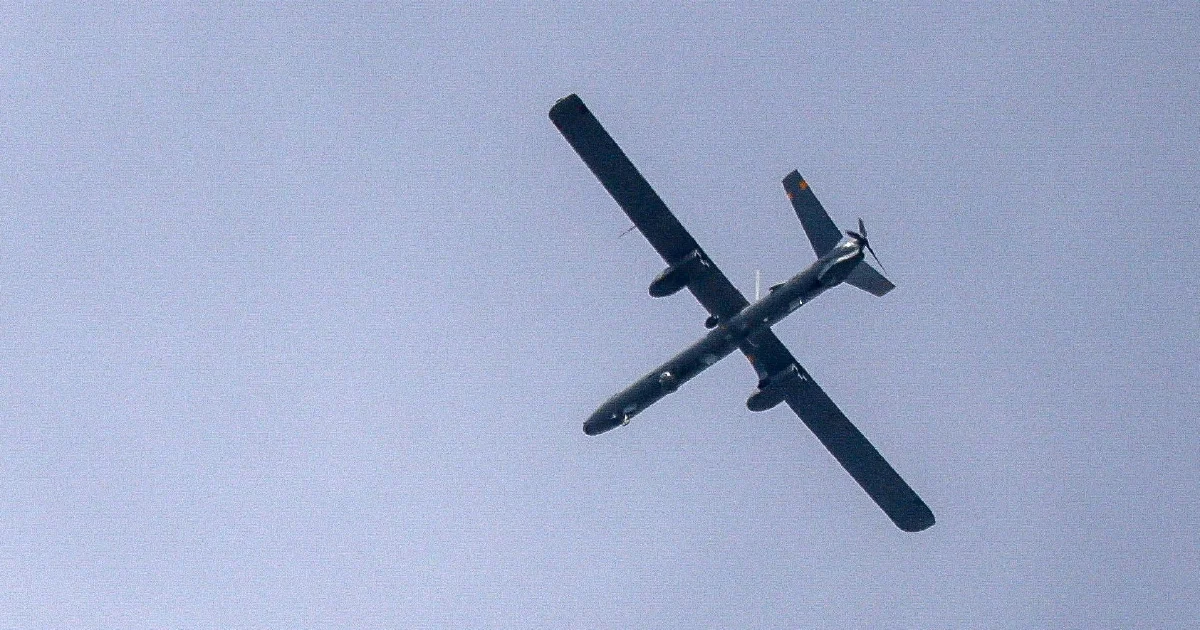
Malaysia faces mounting pressure to embrace advanced technologies at a faster clip, with Prime Minister Datuk Seri Anwar Ibrahim issuing a pointed call for the nation to prioritise the unmanned aerial vehicle sector as a cornerstone of future economic resilience. Speaking in Sepang, the premier emphasised that accelerating development across the drone industry and related technologies is integral to securing Malaysia's competitive standing in an increasingly innovation-driven global marketplace.
The push toward UAV adoption reflects a broader strategic recognition that Malaysia risks losing ground to regional competitors and developed economies if technological advancement remains sluggish. Countries across Southeast Asia and beyond have invested heavily in drone capabilities for commercial, agricultural, and defence applications, creating a widening gap that Malaysian policymakers view with concern. By signalling government commitment to this sector, Anwar's remarks underscore the administration's acknowledgment that passive approaches will not suffice in an era when technological prowess directly translates to economic advantage.
Drone technology encompasses a diverse range of applications with significant implications for Malaysia's key economic sectors. In agriculture, UAVs enable precision farming and crop monitoring across the nation's plantation estates and smallholder farms, potentially raising yields while reducing input costs. The manufacturing sector could leverage drones for inspection, quality control, and logistics within factory environments. Meanwhile, in telecommunications and infrastructure, unmanned systems offer cost-effective solutions for surveying remote terrain and maintaining communication networks across Peninsular Malaysia and East Malaysia.
The commercial drone market globally has demonstrated remarkable growth, with applications expanding from traditional surveying and mapping into delivery services, disaster response, and environmental monitoring. Malaysia's geographic composition, featuring dense urban centres alongside vast forested regions and sprawling agricultural land, makes the country particularly suited to harness these technologies. Yet the regulatory framework governing drone operations has historically lagged behind technological capability, creating friction between innovators and authorities concerned with airspace management and public safety.
Investment in the drone ecosystem also promises downstream employment opportunities across multiple skillsets. Engineers, technicians, operators, and software developers would find growing demand as the industry matures. Educational institutions would need to develop corresponding curriculum offerings, while research and development facilities could establish Malaysia as a regional hub for UAV innovation. This multiplier effect on human capital development adds economic rationale beyond immediate commercial applications.
The challenge ahead extends beyond political rhetoric to concrete implementation through policy reform and strategic funding allocation. Regulatory agencies must streamline certification processes for drone operators and manufacturers without compromising safety standards. Tax incentives or direct grants could catalyse private sector investment in research and development. Public procurement policies could favour locally-developed drone solutions where capabilities match those of established international suppliers, nurturing embryonic Malaysian firms.
Competition in the UAV space remains intense, with established players from China, the United States, Israel, and Europe commanding substantial market share through accumulated expertise and capital. Malaysia's late entry means competing on innovation and niche applications rather than attempting to replicate global leaders. Partnerships between local companies, universities, and research institutions could accelerate knowledge transfer and reduce time-to-market for innovative solutions tailored to Southeast Asian conditions.
Regional context matters significantly to Malaysia's drone strategy. Indonesia, Thailand, and the Philippines have initiated their own UAV programmes, some receiving backing from major powers. The Association of Southeast Asian Nations has begun discussing frameworks for cross-border drone operations and standardised airspace regulations. Malaysia's position as a technologically advanced ASEAN member with established manufacturing capacity positions it to lead regional harmonisation efforts, potentially establishing standards that Malaysian companies would naturally comply with while competitors adapted.
The geopolitical dimension also warrants consideration. Drone technology carries dual-use implications, with civilian and military applications often sharing underlying systems architecture. Malaysia's strategic location along crucial sea lanes and its participation in regional security arrangements mean that indigenous drone capabilities enhance national self-reliance in surveillance and maritime monitoring. This motivation aligns the prime minister's economic framing with broader considerations of strategic autonomy.
Financial institutions and venture capital ecosystems must evolve to support drone technology startups and scale-ups. Currently, Malaysian entrepreneurs pursuing UAV ventures often secure funding from overseas investors or partner with foreign companies, resulting in diluted local ownership and reduced knowledge retention. Establishing dedicated venture funds or innovation-focused development finance institutions could channel capital toward promising drone-related enterprises while keeping value creation within Malaysia.
Prime Minister Anwar's intervention signals that the government recognises drone technology as a priority rather than a peripheral concern. Whether this translates into sustained funding, regulatory reform, and institutional support remains to be seen. The private sector response will ultimately determine success, but government backing provides crucial initial momentum for an industry still establishing itself in Malaysian soil. The window for Malaysia to position itself as a significant player in Southeast Asian UAV development remains open but narrows with each passing year as competitors consolidate advantages.

