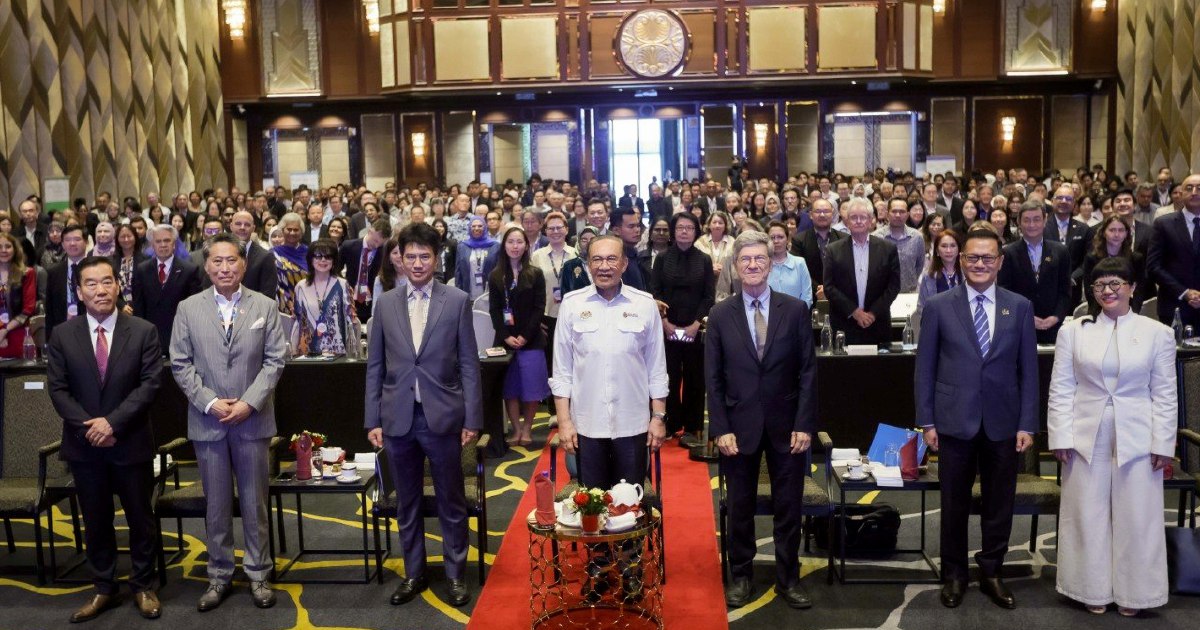
Malaysia's Prime Minister Datuk Seri Anwar Ibrahim has made a compelling case for reconsidering nuclear energy as a cornerstone of ASEAN's broader shift towards sustainable power generation. Speaking in Subang Jaya, Anwar argued that nuclear capacity should be integrated into regional energy strategies rather than relegated to the periphery of climate discussions. This position signals a potential shift in how Southeast Asian governments view one of the world's most contentious yet efficient energy sources.
The statement arrives at a critical juncture for the Association of Southeast Asian Nations, which collectively faces mounting electricity demand driven by rapid industrialisation, urbanisation and digital infrastructure expansion. Several ASEAN members, including Vietnam and Thailand, have already invested in or seriously considered nuclear programmes, yet regional consensus remains fragmented. Anwar's intervention suggests Malaysia may be re-evaluating its own nuclear stance, a notable development given the country's traditional wariness of atomic energy following previous public opposition.
From an energy security perspective, Anwar's reasoning reflects broader global trends. Nuclear plants operate at capacity factors exceeding 90 per cent and generate baseload power 24 hours daily regardless of weather conditions—a characteristic that intermittent renewables like solar and wind cannot match without substantial battery storage infrastructure. For an economically developing region like ASEAN, this reliability translates into industrial stability and competitive manufacturing costs. Countries importing fossil fuels would reduce their energy import bills over time, freeing capital for other development priorities.
The affordability argument deserves scrutiny given nuclear's notorious construction costs and extended project timelines. However, when amortised over a plant's 60 to 80-year operational lifespan, levelised costs become increasingly competitive, particularly as fossil fuel prices remain volatile and renewable storage technology prices have not yet reached grid-scale affordability in all scenarios. Regional economies facing carbon pricing mechanisms through international trade arrangements may find nuclear's low operational emissions increasingly economically rational.
ANWAR's remarks highlight a critical tension in ASEAN's energy transition narrative. The region simultaneously aspires to achieve net-zero commitments while managing energy poverty affecting millions and maintaining industrial competitiveness. Renewable energy alone, while abundant in tropical Southeast Asia, cannot address this trilemma without substantial investment in grid infrastructure, storage systems and smart distribution networks—expenses that dwarf initial power generation costs. Nuclear, despite its challenges, offers a proven technological pathway requiring significantly smaller geographic footprints than equivalent renewable capacity.
The geopolitical dimension cannot be overlooked. Major powers including China, Russia and France have actively promoted nuclear technology transfers to Southeast Asian nations, viewing it as both commercial opportunity and strategic influence. Japan's renewed commitment to nuclear following its 2023 policy shift similarly signals changing regional attitudes. By articulating Malaysia's openness to nuclear possibilities, Anwar positions the country advantageously within these strategic competitions while potentially leveraging technology partnerships.
Public perception remains the substantial obstacle. Memory of Fukushima lingers in regional consciousness, and communities near proposed reactor sites have historically mobilised against projects. However, generational attitudes are shifting; younger Southeast Asian populations increasingly accept nuclear as necessary climate medicine. Educational campaigns addressing waste management, accident safety protocols and disposal regulations could substantially shift public opinion, particularly if framed within climate urgency narratives.
ANWAR's statement also reflects Malaysia's specific circumstances. The country's aging coal-fired capacity requires replacement, renewable potential is geographically concentrated, and gas imports remain expensive and geopolitically sensitive. A diversified energy portfolio including nuclear would strengthen Malaysia's energy independence while positioning the nation as a sophisticated technology adopter within ASEAN, enhancing its soft power and regional leadership credibility.
Implementing nuclear capacity across ASEAN presents genuine technical and regulatory hurdles. Establishing credible nuclear safety authorities, negotiating financing arrangements, securing skilled workforce development and managing spent fuel represent formidable challenges that individual nations cannot overcome alone. Regional cooperation frameworks, potentially through ASEAN institutional mechanisms, could address these collectively while sharing best practices and regulatory standards.
The path forward requires nuanced policy discourse moving beyond ideological positions towards evidence-based energy planning. ASEAN nations must conduct comprehensive techno-economic assessments comparing nuclear with alternative low-carbon pathways specific to their geographic, economic and demographic circumstances. Some countries may find small modular reactors viable where large traditional plants prove impractical; others might prioritise renewable-dominant strategies supplemented by regional nuclear generation.
ANWAR's intervention suggests Malaysia is preparing intellectual groundwork for potential policy pivots, testing public receptiveness and signalling openness to international technology partnerships. Whether this translates into concrete nuclear investment depends on subsequent political, financial and social conditions. Nonetheless, his willingness to champion nuclear's inclusion in serious energy transition discussions represents a significant repositioning that could influence broader regional perspectives.

