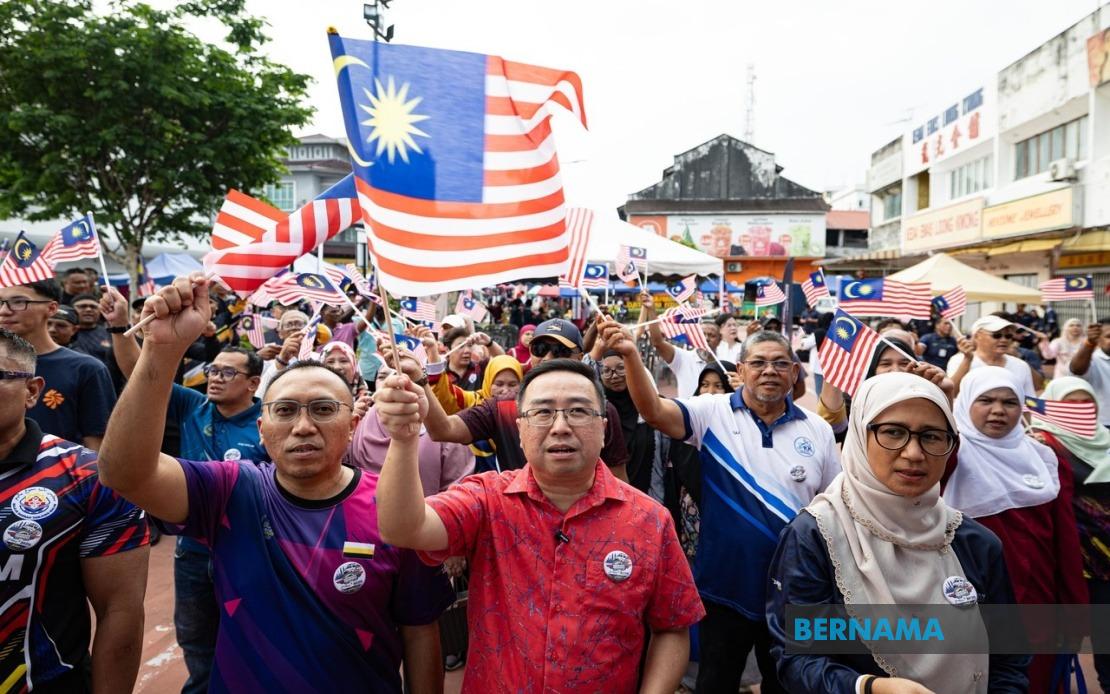
Malaysia must evolve beyond the divisive framework of identity politics and cultivate a more sophisticated understanding of what nationhood means, according to Science, Technology and Innovation Minister Datuk Chang Lih Kang. Speaking as the country marks another Merdeka anniversary, the Tanjong Malim parliamentarian contends that sustainable national unity cannot be constructed through coercion, fear or the exclusion of dissenting voices, but rather through deliberate efforts to ensure every Malaysian—irrespective of ethnic background, religious affiliation or political orientation—genuinely perceives themselves as stakeholders in the nation's destiny.
Chang's intervention arrives at a moment when Malaysian public discourse has become increasingly fractious, with political messaging frequently channelled through the prism of racial and religious identity. This approach, he argues, fundamentally undermines the nation-building project by creating a zero-sum competitive dynamic between communities rather than fostering a sense of common purpose. The minister's analysis suggests that contemporary Malaysian politics faces a structural problem: the dominant narrative frame treats different communities as inherently opposed, making it nearly impossible for citizens to imagine shared solutions to collective challenges.
The foundation for durable national cohesion, according to Chang's perspective, rests upon three institutional pillars. First, the state apparatus must function with genuine impartiality, ensuring that the rule of law operates without regard to a citizen's racial or religious identity. Second, public services must be distributed equitably, removing the perception—whether justified or not—that certain communities receive preferential treatment. Third, political leadership itself must model restraint and proportionality rather than weaponising state machinery for partisan advantage. Without these elements in place, Chang suggests, Malaysia will remain vulnerable to the erosion of social trust that inevitably follows when citizens believe the system discriminates against them.
Chang's commentary reflects concerns articulated by Sultan Perak Sultan Nazrin Shah at the 8th World Conference on Islamic Thought and Civilisation, wherein the Sultan emphasised that authentic unity emerges from genuine belonging rather than imposed uniformity. This distinction carries profound implications for how Malaysia might reimagine its social contract. A nation held together primarily by coercion or surveillance remains brittle; citizens comply through fear but harbour resentment. Conversely, societies built on authentic inclusion and reciprocal respect develop organic resilience because people voluntarily participate in sustaining shared institutions.
The minister extends his analysis to the symbolism of national identity, particularly the treatment of the Jalur Gemilang. While emphasising that Malaysia's flag deserves respect as an embodiment of the nation's historical journey and aspirations, Chang cautions against an enforcement regime so stringent that inadvertent mistakes trigger severe punishments. This calibration reflects a deeper truth about mature democracies: they distinguish between genuine errors committed in good faith and deliberate acts of sedition or provocation. A patriotic society, he suggests, should possess the confidence to respond proportionately—offering education and guidance when citizens err innocently, while reserving serious consequences for malicious transgressions.
This framework has immediate relevance for Malaysian governance. Too often, Malaysian authorities have prosecuted individuals for perceived disrespect toward state symbols where the transgression appeared minor or the context ambiguous. Such heavy-handed responses risk chilling legitimate expression and paradoxically weakening patriotism by transforming flag-flying into an anxiety-inducing activity rather than a natural civic gesture. The minister's argument implies that excessive enforcement breeds resentment rather than reverence, suggesting that truly confident nations need not resort to disproportionate punishment to maintain respect for their symbols.
Chang's appeal for empathy and proportionality extends to Malaysian society's collective temperament. He urges citizens to resist reflexive outrage over honest mistakes and instead cultivate a culture of understanding that distinguishes between unintentional error and deliberate provocation. This call for social maturity acknowledges a genuine problem in contemporary Malaysian discourse: the tendency toward instantaneous, amplified condemnation that often overwhelms contextual nuance. When every misstep becomes a cause for public castigation and institutional punishment, the resulting environment becomes one where citizens self-censor not from respect for law but from fear of disproportionate consequences.
The minister's broader point addresses the instrumentalisation of identity categories for narrow political purposes. When political actors consistently mobilise appeals based on ethnic or religious grievance—particularly claims that particular communities are receiving disproportionate benefits—they inevitably deepen intergroup suspicion and compete for a zero-sum pie. This dynamic leaves room for only winners and losers, creating material incentives for communities to view their neighbours as competitors rather than fellow citizens. Breaking this cycle requires political leadership willing to articulate a different vision of Malaysia, one where economic growth and social progress benefit everyone rather than being parcelled out according to communal calculations.
For Malaysia's position in Southeast Asia and beyond, this conversation carries strategic implications. Regional stability increasingly depends on whether nations can manage internal diversity without fragmenting along identity lines. Singapore's experience demonstrates that multiethnic societies can achieve prosperity through meritocratic institutions and explicit deprioritisation of racial and religious divisions in public policy. Thailand and Indonesia have both struggled with communal conflicts when political actors successfully weaponise identity. Malaysia's trajectory remains contested; it contains potential for both greater inclusion and deeper division depending on whether political elites choose to compete on identity or policy grounds.
Chang's emphasis on institutional impartiality strikes at perhaps the deepest source of contemporary Malaysian anxiety. When citizens believe public institutions systematically favour certain communities over others, the social contract unravels regardless of the objective reality. Whether or not Malaysian state institutions actually discriminate, if substantial portions of the population perceive systematic bias, that perception becomes politically destabilising. Building a Malaysia where every community believes in institutional fairness requires not merely formal equality before law but demonstrable patterns of impartial treatment across multiple domains, from university admissions to civil service recruitment to business licensing.
The minister's Merdeka reflection ultimately poses a challenge to Malaysian society and its leadership: Will the nation continue framing politics through the lens of competing group interests, or will it attempt the more demanding task of building institutions and political culture oriented toward inclusive prosperity? The former path is easier in the short term—identity appeals are psychologically potent and readily mobilised—but leads toward increasingly fractious politics where every issue becomes zero-sum. The latter requires political leaders willing to resist tribal instincts, citizens prepared to think beyond immediate communal advantage, and state institutions genuinely committed to neutrality. Chang's intervention suggests that at least some segments of Malaysia's political establishment recognise the unsustainability of the current trajectory and are searching for an alternative framework. Whether that recognition can translate into systemic change remains uncertain.

