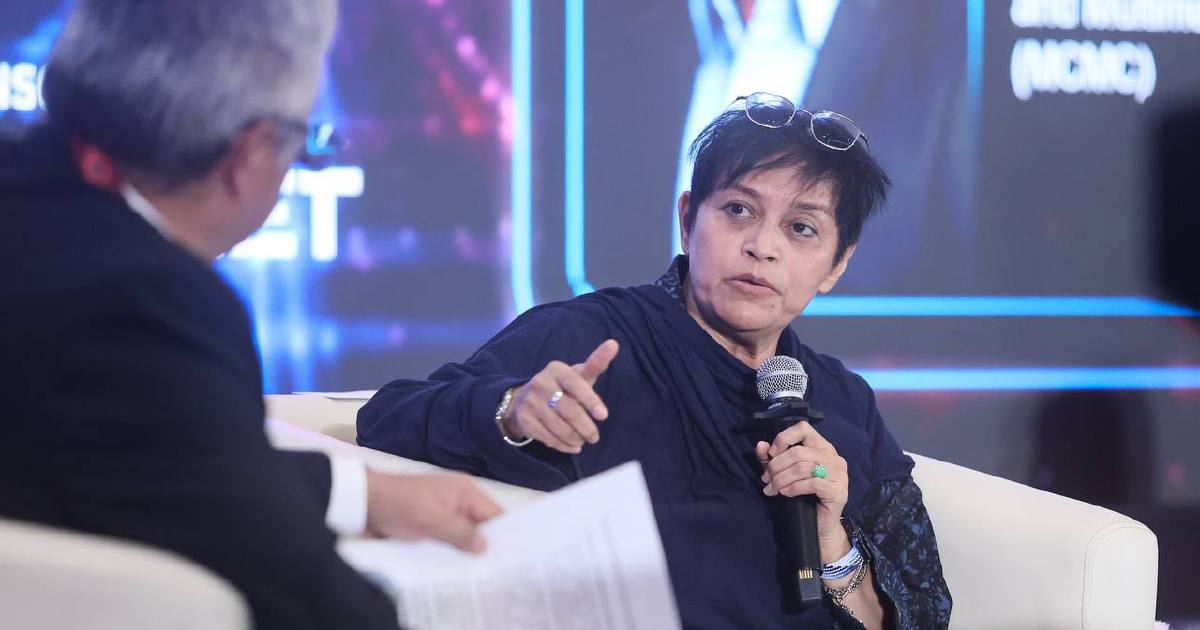
Datuk Seri Azalina Othman Said, Malaysia's Minister in the Prime Minister's Department (Law and Institutional Reform), has emphasised the critical importance of creating equitable conditions in the digital realm when the nation holds elections. Speaking on the subject, she underscored that the Malaysian Communications and Multimedia Commission must take a balanced approach to content oversight, ensuring no political participant gains unfair advantage through online channels.
The minister's statement reflects growing concerns across Southeast Asia about the weaponisation of digital platforms during electoral campaigns. As internet penetration deepens and social media becomes the primary news source for millions of Malaysians, the mechanisms governing online political discourse have become as consequential as traditional media regulations. Election watchdogs and democratic institutions worldwide have documented how algorithmic amplification, coordinated campaigns, and targeted disinformation can distort voter perception and undermine the principle of one person, one vote.
Azalina's intervention signals recognition that Malaysia's regulatory framework must evolve to address modern electioneering challenges. The MCMC, as the country's primary telecommunications regulator, finds itself in an unprecedented position. Traditional broadcasting rules developed for television and radio cannot simply transfer to platforms where algorithm-driven content distribution operates according to engagement metrics rather than editorial principles. This structural difference means that monitoring alone may prove insufficient; regulators must understand the mechanisms driving visibility and engagement online.
The concept of a level playing field in digital spaces carries particular weight in Malaysia's multiethnic, multireligious context. Where political messaging can exploit communal sensitivities, and where false narratives can spread faster than corrections, ensuring equitable access to digital platforms becomes a safeguard for social cohesion. If certain parties can deploy resources or technical capabilities to dominate digital conversation whilst others lack equivalent tools, electoral outcomes reflect technological advantage rather than voter preference. This disparity threatens the legitimacy of democratic processes themselves.
Implementing such fairness presents formidable technical and legal challenges. Regulators must distinguish between legitimate political speech, grassroots advocacy, and coordinated inauthentic behaviour—a classification that demands sophisticated analytical tools and consistent application. Simultaneously, any aggressive regulatory approach risks accusations of censorship, particularly when applied to political content. Balancing these competing imperatives requires frameworks developed through consultation with stakeholders including political parties, technology companies, civil society organisations, and independent academics specialising in electoral integrity.
The timing of Azalina's statement carries significance within Malaysia's political calendar. With national and state elections occurring periodically, and given the demonstrated capacity of digital misinformation to influence voter behaviour in both developed and developing democracies, proactive regulation signals governmental commitment to electoral integrity. Indonesia's and Thailand's experiences with online disinformation during recent elections have demonstrated how unmanaged digital spaces can exacerbate existing political tensions and erode public trust in institutions.
Malaysia's regulatory approach will also influence regional norms. As the most developed digital economy in Southeast Asia, with sophisticated media ecology and active technology sector, Malaysian decisions about election-period digital governance may set precedents. Neighbouring countries facing similar challenges will observe whether MCMC-led initiatives effectively balance democratic openness with electoral fairness. Success or failure could shape regulatory approaches across the region.
Beyond technical regulation, Azalina's call implicitly acknowledges that institutional frameworks require updating. Current election laws predated social media's emergence and were designed for environments where content dissemination required expensive infrastructure or editorial gatekeeping. Digital platforms have democratised publishing capacity, enabling individuals and organisations to reach millions instantaneously. Regulation must accommodate this transformation whilst preventing bad actors from exploiting technological advantages to distort electoral processes.
The implementation challenge extends to resource allocation. Effective monitoring of digital content during elections demands investment in personnel with technical expertise, analytical capabilities, and understanding of platform mechanics. The MCMC must expand capacity to review content in real time, identify coordinated inauthentic networks, track algorithmic amplification patterns, and investigate complaints of improper conduct. Such investment reflects recognition that election security in the digital age requires sustained commitment comparable to traditional polling place management.
Azalina's statement also highlights the responsibility shouldered by technology platforms themselves. Social media companies have demonstrated capacity to regulate content when motivated by regulatory compliance or reputational concerns. During elections, platforms could implement transparency measures, reduce algorithmic amplification of political content, and take action against inauthentic networks. Cooperation between regulators and technology companies, though sometimes contentious, may offer pathways to achieving fairness without excessive governmental overreach.
The broader implication of the minister's call concerns Malaysia's democratic maturity. Acknowledging digital fairness as an election requirement reflects sophistication in recognising that ballot-box integrity depends on information integrity. If voters receive systematically biased information shaped by algorithmic manipulation or coordinated disinformation campaigns, their choices, though procedurally uncoerced, become substantively compromised. Regulatory frameworks addressing this problem represent evolution in understanding what genuine democratic elections demand in technologically advanced societies.
Looking forward, Malaysia's approach to digital election monitoring will require ongoing refinement. Technology companies continue innovating, changing how content circulates and how influence operates online. Regulatory frameworks must maintain flexibility, remaining responsive to emerging challenges whilst preserving the foundational principle Azalina articulated: all participants in Malaysia's democratic processes deserve access to fair conditions in digital spaces where contemporary political discourse increasingly occurs.

