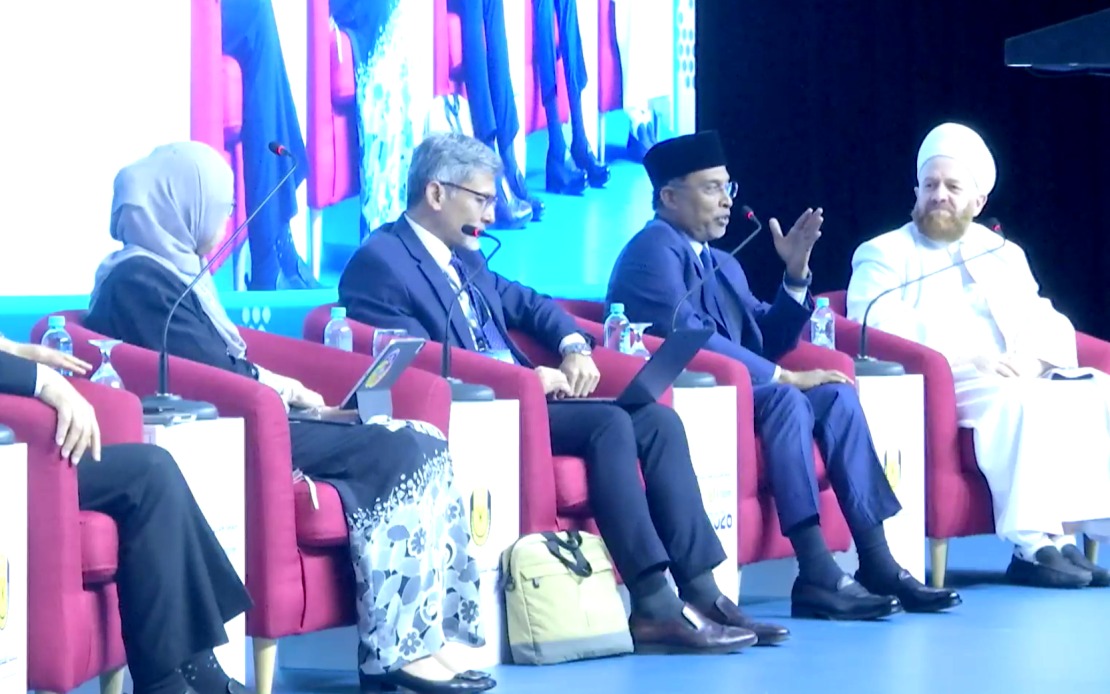
Higher Education Minister Datuk Seri Dr Zambry Abd Kadir has underscored the strategic necessity of embedding artificial intelligence and cutting-edge technologies into Malaysia's higher education system, positioning such integration as essential for developing the skilled workforce and intellectual resources required to weather contemporary global volatility. Speaking at the 8th World Conference on Islamic Thought and Civilisation in Ipoh, Zambry articulated a vision in which technological capability and human wisdom advance in tandem, reflecting growing recognition among policymakers that technical proficiency alone cannot address the multifaceted challenges facing society.
The Ministry of Higher Education has consequently formulated an extensive roadmap spanning 2026 to 2035 that seeks to orchestrate equilibrium across three interconnected domains: technological innovation, cultivation of human talent, and reinforcement of ethical and moral foundations. This framework acknowledges that the rush to adopt AI and quantum computing must not come at the expense of the values and character-building dimensions that historically defined educational institutions. Rather than viewing these objectives as competing priorities, the ministry's approach treats them as mutually reinforcing components of a comprehensive educational philosophy.
Zambry articulated particular concern about the challenge posed by AI's capacity to generate rapid and precise outputs without necessarily fostering the deeper cognitive and ethical judgement required of informed citizens. As artificial intelligence systems proliferate across economic and social sectors, universities bear responsibility for ensuring that graduates possess not merely technical competence but also the moral reasoning to deploy such tools responsibly. The minister stressed that algorithmic literacy must be paired with sustained engagement in humanities disciplines that historically cultivate wisdom, critical reflection, and ethical sensitivity.
The pedagogical shift from traditional STEM curricula toward the expanded STEAM framework—incorporating arts and liberal studies—represents a concrete manifestation of this philosophical stance. Under this model, engineering and technology students do not simply acquire domain-specific technical skills but deliberately engage with artistic expression, philosophical inquiry, and humanistic perspective. Zambry highlighted the example of Universiti Teknologi Petronas, where integrated engineering programmes require students to undertake coursework extending beyond their primary discipline, thereby developing not only professional expertise but also personal character and adaptability.
This broadening of the curriculum reflects a recognition that technology deployment decisions are inherently value-laden and that engineers, data scientists, and technologists operating without grounding in ethical frameworks or understanding of human societies will be ill-equipped to navigate complex real-world scenarios. The integration of arts and liberal studies into technical education creates space for students to examine questions of justice, equity, cultural sensitivity, and long-term societal consequence—considerations that pure technical training tends to sideline. For Malaysian higher education, this represents a deliberate pivot away from instrumentalist approaches that reduce university education to workforce preparation.
The minister's framing of education as fundamentally concerned with cultivating critical thinking capacity marks a philosophical distinction with far-reaching implications. While AI systems excel at pattern recognition and rapid computation, they operate within parameters established by human designers and lack the capacity to question fundamental assumptions or reimagine frameworks from first principles. Universities positioned to develop graduates capable of such meta-level reasoning will produce leaders and innovators capable of steering technological development toward genuinely human-centred outcomes rather than merely maximising efficiency metrics.
Malaysia's particular context as a developing economy with significant regional influence lends additional urgency to this challenge. The nation's universities serve not only domestic student populations but increasingly attract regional talent and contribute to intellectual discourse across Southeast Asia. By establishing a model that treats technological advancement as inseparable from ethical formation and humanistic education, Malaysian institutions can differentiate themselves in the global higher education marketplace while simultaneously fulfilling a broader responsibility to shape technologists and leaders attuned to the distinctive cultural and social contexts of Asian societies.
The 10-year blueprint also reflects acknowledgement that rapid technological disruption creates particular psychological and social pressures on younger generations, who must navigate uncertainty about career trajectories, social connection, and meaning-making in an accelerating world. Education grounded in character development, moral reasoning, and exposure to humanities traditions provides psychological resources for navigating such disruption beyond what purely technical training could offer. Students equipped with historical perspective, philosophical frameworks, and artistic sensibility possess cognitive tools for constructing meaning and purpose that transcend immediate economic instrumentalism.
Zambry's emphasis on placing humanity at the core of the ministry's strategic blueprint pushes back against techno-optimist narratives that position advanced technology as an unqualified good requiring only deployment at scale. Instead, the minister articulates a vision in which technological capability is deliberately calibrated to human values and social purposes that remain constant across generations. This stance carries implications for how Malaysian universities approach curricular design, faculty recruitment, research priorities, and institutional governance during a period of profound technological transition.
The integration of AI literacy with ethical training and humanities education also addresses a talent pipeline concern. Multinational technology companies and digital-economy employers increasingly seek not only technically proficient graduates but also individuals capable of working across disciplinary boundaries, communicating complex concepts to non-expert audiences, and recognising ethical dimensions of technical decisions. By producing graduates with this hybrid skillset, Malaysian universities can position their alumni competitively in global labour markets while contributing to the development of more thoughtful and socially aware technology leadership.
As the minister noted, this educational transformation cannot occur through policy declarations alone but requires deliberate institutional restructuring, investment in faculty development, redesign of assessment methods, and cultural shifts within universities traditionally organised around discipline-specific silos. The decade-long timeframe reflects realistic recognition that such systemic change proceeds incrementally, particularly within established institutions resistant to radical reorganisation. Yet the urgency of AI's expansion through economic and social systems suggests that beginning this transition immediately, rather than deferring action, constitutes a strategic imperative for Malaysian higher education.

