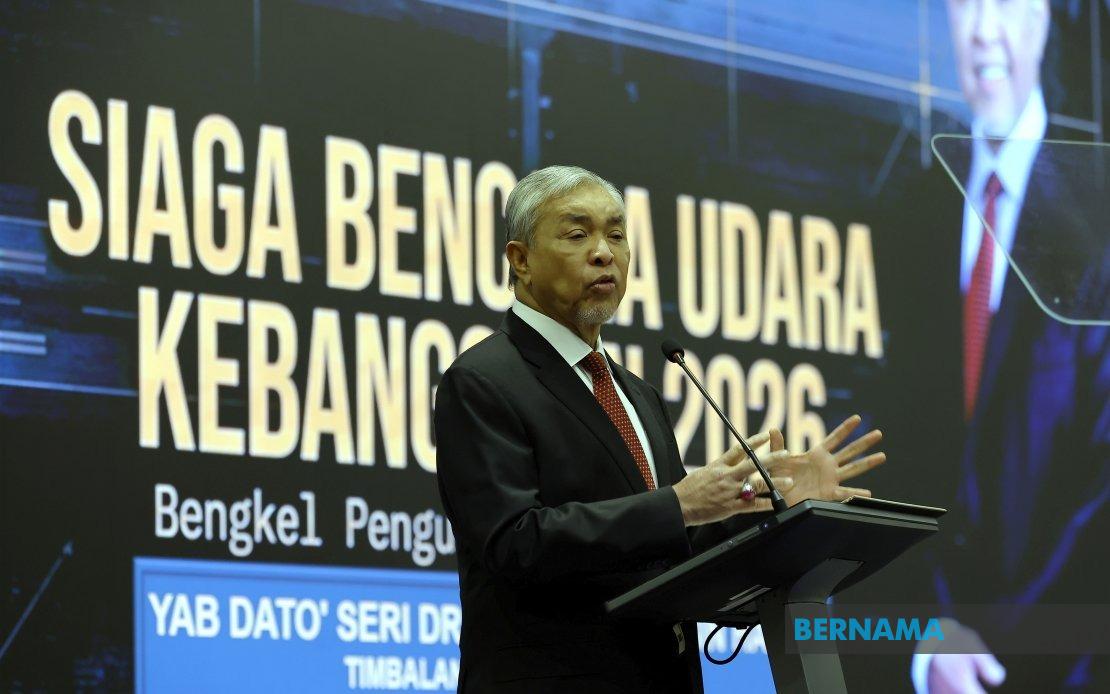
Malaysia's disaster response infrastructure requires a fundamental shift towards integrated operations where all emergency agencies operate under a single command structure with shared situational awareness, according to Deputy Prime Minister Datuk Seri Dr Ahmad Zahid Hamidi. Speaking at the launch of the National Air Disaster Preparedness 2026 workshop in Sepang, Ahmad Zahid articulated a vision for air disaster management rooted in the principle of "one system, one command, and one action"—a framework designed to eliminate the fragmentation that has historically plagued Malaysian emergency response operations.
The Deputy Prime Minister's call reflects growing recognition that Malaysia's aviation sector, which handled 42.2 million international visitors last year and generated RM110.6 billion in tourism revenue, requires robust disaster preparedness infrastructure as a matter of strategic national importance. Domestic tourism spending reached RM121.3 billion, underscoring the economic stakes involved in maintaining aviation safety and public confidence. Ahmad Zahid stressed that effectiveness should not be measured by the sheer number of assets or personnel deployed, but rather by the seamless coordination of these resources when operating under the intense pressure of an active crisis.
The existing fragmentation in Malaysia's approach to air disasters stems partly from the multiplicity of agencies involved in emergency response, each operating under separate jurisdictions, protocols, and command structures. Ahmad Zahid cautioned against relying on theoretical frameworks that appear comprehensive on paper but fail to function when subjected to real-world conditions. The hallmark of a truly effective system, he argued, is its ability to perform decisively when information flows rapidly, circumstances shift unpredictably, and critical decisions must be made within compressed timeframes. This observation carries particular weight given Malaysia's geographic complexity and the diverse operational environments that rescue teams might encounter.
The workshop, which drew more than 100 representatives from government ministries, law enforcement agencies, security and rescue services, commercial airlines, and airport operators, was positioned as a testing ground for existing procedures and communication protocols. Attendees were tasked with evaluating whether current inter-agency coordination mechanisms would function effectively during an actual disaster. This approach reflects a significant evolution in disaster management thinking—moving away from static preparedness exercises towards dynamic scenarios that stress-test the entire system's operational capacity.
Ahmad Zahid identified four strategic priorities that should guide Malaysia's air disaster management development. First, the country must strengthen its chain of command and clarify decision-making authority through comprehensive procedural review. Second, information-sharing capabilities and integrated communication systems across agencies require substantial enhancement to ensure all stakeholders maintain a consistent operational picture. Third, scenario-based training must expand beyond airport facilities to encompass challenging terrain and remote areas where rescue operations might prove logistically complex. Fourth, accelerated digitalisation of disaster management systems is essential to enable real-time data sharing and reduce decision-making lag.
The emphasis on training beyond conventional airport settings reflects practical understanding of Malaysia's geography and infrastructure challenges. Many potential aviation incidents could occur in remote regions with limited road access, rugged terrain, or proximity to sensitive areas. Rescue teams responding to such scenarios must be prepared to operate in coordination with counterparts managing airport-based operations, requiring integrated planning that transcends traditional boundaries. The workshop's inclusion of scenario-based exercises specifically targeting hard-to-access sites suggests recognition that current training protocols may be insufficient for real-world conditions.
Contextualising aviation safety as a matter of strategic national importance rather than purely technical concern represents a noteworthy policy reorientation. Ahmad Zahid positioned disaster preparedness investment as integral to broader economic objectives—protecting lives while maintaining international confidence in Malaysia's aviation infrastructure and supporting continued growth across tourism, trade, and investment sectors. This framing helps justify the resource allocation required for comprehensive system overhaul and ongoing capacity building, particularly important during periods of budget constraints or competing governmental priorities.
The government's stated commitment to supporting disaster preparedness through improved policies and capacity building must translate into sustained funding and institutional commitment beyond the workshop itself. Previous disaster preparedness initiatives have sometimes faltered when initial momentum waned or inter-agency tensions reasserted themselves. Maintaining unified command structures requires ongoing training, regular inter-agency exercises, and institutionalised mechanisms for resolving jurisdictional disputes before crises occur. Malaysia's experience with other emergency situations has occasionally revealed coordination gaps that emerge only under actual pressure.
For Malaysian readers and regional observers, Ahmad Zahid's initiative carries implications extending beyond aviation. The "one system, one command, and one action" framework could establish templates for disaster management across other sectors—maritime emergencies, major industrial accidents, or natural disasters. Southeast Asia's vulnerability to various disaster types makes effective inter-agency coordination increasingly important as climate impacts intensify and economic development concentrates populations in vulnerable areas. Malaysia's experience could inform regional standards and capacity-sharing arrangements.
The involvement of Malaysia Airports Holdings Bhd and commercial airline representatives in the workshop indicates that private sector integration is considered fundamental to system effectiveness. Airport operators and airlines possess critical expertise, real-time situational awareness, and assets that can materially affect response outcomes. Formalising this private-public collaboration into unified command structures requires clarity on liability, operational authority, and decision-making precedence—technical matters that must be resolved during planning phases rather than emergencies.
Implementing the integrated air disaster management system Ahmad Zahid envisioned will require sustained institutional commitment and likely significant operational restructuring. Agencies must relinquish aspects of autonomous authority, communications protocols must be standardised across organisations with different technical cultures, and training curricula must be redesigned to emphasise inter-agency operations over single-agency excellence. These changes encounter institutional resistance, requiring leadership commitment at the highest levels to overcome bureaucratic inertia.
The workshop's two-day format, while intensive, raises questions about whether it adequately tests system capacity or merely identifies procedural improvements. Full-scale exercises typically require days or weeks to comprehensively evaluate disaster management systems under realistic stress conditions. However, the workshop should be viewed as one element in an ongoing process rather than a definitive test, with subsequent larger-scale exercises planned to validate improvements and identify remaining gaps.
Moving forward, Malaysia's success in establishing genuinely integrated air disaster management will depend on translating Ahmad Zahid's strategic vision into concrete operational protocols, ensuring sustained inter-agency collaboration, and maintaining political commitment even when no active crisis commands public attention. The coming months will reveal whether the impetus generated by this high-level initiative translates into institutional reforms that would meaningfully enhance Malaysia's capacity to respond to aviation emergencies and protect both lives and economic interests.

