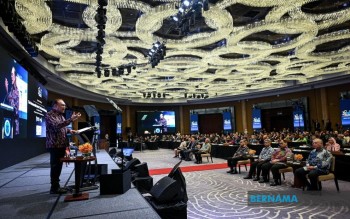
Prime Minister Datuk Seri Anwar Ibrahim has called for Malaysia to establish a sovereign cloud infrastructure designed to protect the nation's critical security information and personal data, even as the country continues welcoming international digital investments. Speaking at the 39th Asia-Pacific Roundtable in Kuala Lumpur, Anwar framed the proposal as a strategic necessity in an era when Southeast Asia faces increasing reliance on digital technologies and interconnected systems that transcend traditional borders. The initiative reflects a broader tension facing developing economies: how to harness the benefits of globalisation while maintaining control over sensitive national assets in an increasingly integrated digital ecosystem.
The Prime Minister's comments were prompted by concerns about the reach of the United States Cloud Act, legislation that grants American authorities access to data held by US-registered companies regardless of where those companies operate internationally. Anwar cited this law as a concrete example of how digital sovereignty has become a genuine security concern for smaller nations. When President Trump administration policies permit American firms to access data from countries where they invest, smaller nations lose leverage in protecting their own interests. Rather than viewing this as a reason to isolate Malaysia from global digital commerce, Anwar proposed a middle-ground solution that would enable the country to navigate between openness and protection.
The sovereign cloud concept would operate with firewalls specifically designed to shield Malaysia's most sensitive information while allowing broader participation in the global digital economy. This approach acknowledges a fundamental reality: complete data isolation is neither feasible nor desirable for a country seeking to maintain competitive advantage in technology-driven sectors. By compartmentalising critical security data and personal information within domestically controlled infrastructure, Malaysia would retain authority over its most sensitive assets while remaining accessible to international investors and technology partners. The strategy essentially creates a protected inner sanctum within an otherwise open digital environment.
Anwar emphasised that while such protections have inherent limits in a globalised world, they represent the most pragmatic way available to safeguard Malaysia's interests and its citizens. He acknowledged that as a free and democratic nation, Malaysia necessarily maintains open access to information and embraces principles of transparency that sometimes conflict with security objectives. This tension between openness and protection has become increasingly acute as digital platforms proliferate. The Prime Minister recognised that complete hermetic sealing of information flows contradicts democratic values and economic interests, yet some degree of institutional control over sensitive data remains essential.
Beyond data infrastructure, Anwar raised broader concerns about how digital openness creates vulnerabilities for citizens and society. He highlighted how social media platforms and digital networks are frequently exploited for harmful purposes spanning political manipulation, economic fraud, sexual exploitation, and personal harassment. These abuses have intensified as digital connectivity has expanded, particularly affecting young people who often lack the experience to navigate online risks. Anwar stressed that governments bear responsibility for implementing safeguards against such exploitation, even while preserving the fundamental freedoms that democratic societies value. This balancing act requires sophisticated policy frameworks that protect without imposing authoritarian restrictions.
The Prime Minister's remarks also addressed Malaysia's role in attracting foreign investment amid great power competition. Malaysia continues to appeal to investors from the United States, China, and Germany, countries representing different economic systems and geopolitical interests. Anwar signalled that Malaysia's openness to investment from all three reflects its commitment to ASEAN centrality, a foreign policy doctrine that prioritises regional agency and refusing alignment with any single external power. This positioning requires demonstrating that Malaysia can manage its own affairs competently while offering stable platforms for international capital. A functioning sovereign cloud infrastructure could actually strengthen Malaysia's investment appeal by demonstrating robust governance over digital assets while eliminating concerns about uncontrolled data flows to foreign governments.
When discussing Malaysia's international standing, Anwar consciously avoided the language of "middle power" status that some analysts have applied to the country. Instead, he reframed Malaysia's strength as rooted in ASEAN's collective capabilities rather than in individual national prowess. This reorientation reflects recognition that small nations achieve disproportionate influence through regional cooperation and coalition-building rather than attempting to punch above their weight as standalone actors. Malaysia's strategic value derives partly from its geographic position, cultural diversity, and diplomatic skills, but these advantages amplify when exercised through ASEAN mechanisms that give smaller states voice in regional affairs.
Anwar's articulation of Malaysia's role emphasises that regional evolution should proceed collectively rather than through individual nations seeking elevated status. This perspective carries particular relevance for Southeast Asia as it navigates competition between major powers and manages internal development challenges. The ASEAN principle of non-interference and consensus decision-making has traditionally limited the grouping's ability to act decisively on many issues. However, Anwar's framing suggests that Malaysia views its interests as fundamentally aligned with ASEAN cohesion. When individual member states pursue middle-power aspirations at the expense of regional solidarity, they risk fracturing the collective strength that underpins their individual security and prosperity.
The sovereign cloud proposal also reflects Malaysia's evolving understanding of what digital autonomy means in practice. Rather than rejecting globalisation or attempting protectionist isolation, the approach seeks to create asymmetries of control that benefit Malaysia while maintaining mutually beneficial economic relationships. This nuanced position acknowledges that the global digital infrastructure increasingly embeds power relationships that smaller nations cannot simply opt out of. By developing domestic capabilities for managing sensitive data, Malaysia reduces dependency on external infrastructure while demonstrating technological competence that attracts more sophisticated investments. The approach recognises that true sovereignty in the digital age means not absolute independence from global systems but rather having sufficient domestic capability to negotiate terms favourably and protect core national interests.
Looking forward, Malaysia's sovereign cloud initiative could serve as a model for other Southeast Asian nations grappling with similar concerns about data protection and digital sovereignty. The region's collective development of interoperable cloud infrastructure could strengthen ASEAN's technological autonomy while reducing individual vulnerability to external pressure. Such cooperation would align with Anwar's vision of strength through regional coordination rather than individual positioning. However, implementation challenges remain substantial, including technical standards, cybersecurity expertise, and maintaining economic competitiveness against established cloud providers. The commitment to developing such infrastructure therefore represents a long-term strategic investment rather than a quick fix to digital security concerns.

