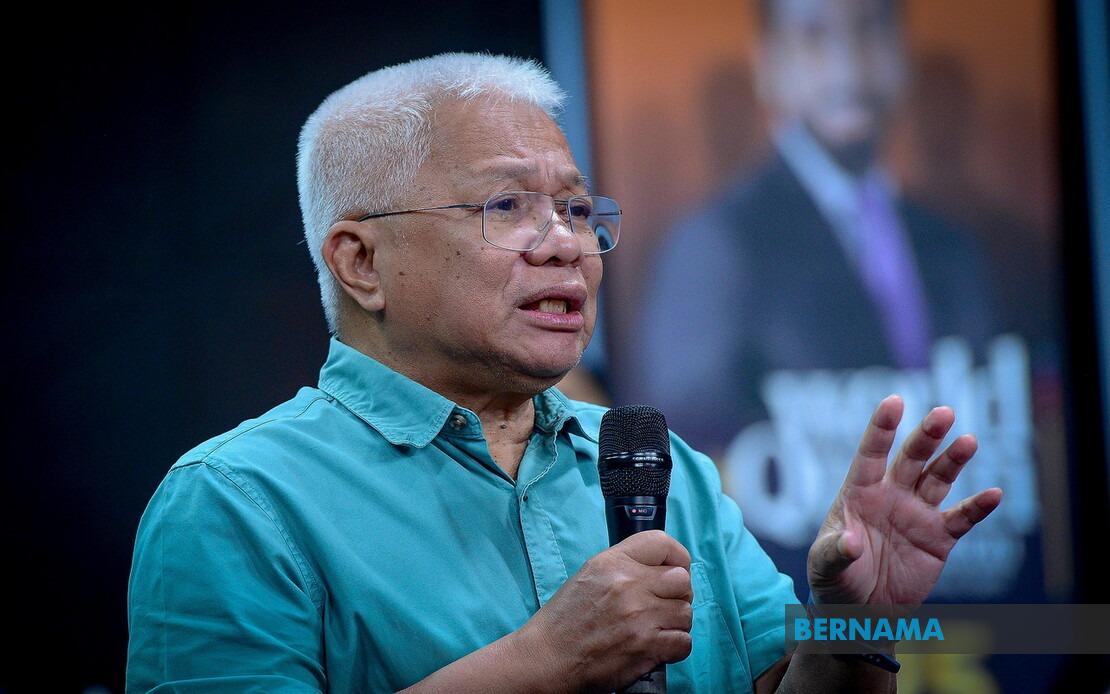
With only three decades separating Malaysia from its centenary in 2057, the nation stands at a crossroads where the decisions made today will fundamentally determine the inheritance left to future generations. Datuk Hussamuddin Yaacub, founder of Yayasan Warisan Ummah Ikhlas and Yayasan Sinar Untuk Malaysia, has issued a stark reminder that the window for transformative change is narrower than many realise, encompassing precisely one generation of time. Speaking on the occasion of the 69th National Day celebration, Hussamuddin articulated a vision that transcends the immediate political landscape and instead focuses on the deeper structural and moral foundations that will define Malaysia's second century.
The urgency underlying Hussamuddin's message reflects a growing concern among Malaysian civil society observers that the nation is squandering valuable time on disputes rooted in race, religion, and partisan political rivalry. While these tensions consume public discourse and institutional energy, the practical work of modernising systems, strengthening democratic institutions, and building resilience against corruption remains deferred or neglected. Hussamuddin's intervention specifically names corruption and breaches of public trust as matters requiring decisive action rather than accommodation or normalisation. This framing represents a deliberate pivot away from acceptance of institutional capture or elite misconduct as inevitable features of the Malaysian political ecosystem, instead positioning accountability as a prerequisite for genuine national progress.
The concept of #Malaysia100 as a unifying national project carries particular significance for Southeast Asia's oldest democracy. Unlike previous milestone commemorations, Hussamuddin suggests that the centenary should function as a focal point for mobilising cross-communal consensus around institutional reform and value-based governance. The emphasis on a "shared direction" rather than a top-down governmental programme implies that meaningful transformation cannot emerge solely from Putrajaya's corridors but must originate from households, workplaces, and civil society organisations. This distributed approach to nation-building acknowledges that deep societal change requires millions of individual choices and commitments rather than policy announcements alone.
Central to Hussamuddin's framework is the metaphor of passing a "baton" of values across generations. Rather than focusing exclusively on economic growth metrics or physical infrastructure—the traditional measures of national development—he insists that integrity and compassion must advance alongside technological progress and commercial prosperity. This concern about hollow modernity, where a nation appears advanced externally while experiencing internal decay, resonates with observations about how rapid development can sometimes outpace institutional and moral capacity. Malaysia's experience of rapid urbanisation and digital transformation without corresponding institutional strengthening illustrates the risks Hussamuddin identifies.
The call for citizens to refuse silent complicity in injustice represents an implicit critique of the apolitical or depoliticised posture some Malaysians adopt toward governance failures. By asserting that remaining quiet in the face of wrongdoing amounts to burdening future generations with inherited problems, Hussamuddin reframes civic responsibility as an active, unavoidable obligation rather than an optional dimension of national life. This carries particular weight in a context where many citizens feel overwhelmed by the scale of institutional challenges and consequently withdraw from engagement.
The foundational emphasis on instilling "noble values" in children's hearts and teaching young people "how to respond to differences" addresses the long-term demographic and social foundation upon which Malaysia's stability depends. Rather than treating the polarisation afflicting contemporary Malaysia as a temporary political aberration, Hussamuddin's approach recognises that addressing root causes requires investment in early socialisation and education. This acknowledgment that values formation begins at home rather than in parliament or through legislative action underscores the limitations of top-down governance approaches and the necessity of cultural and familial transmission of civic norms.
For Malaysian policymakers and institutional leaders, the message contains an implicit challenge to recalibrate priorities and timeframes. The thirty-year horizon to Malaysia's centenary coincides roughly with the career span of current mid-level and senior officials. Rather than treating institutional weakness as a problem for successors to solve, Hussamuddin's framework positions contemporary leaders as the generation responsible for handing over either strengthened or further-compromised institutions. This compressed timeline militates against the common pattern of deferring difficult reforms or accepting incremental decay as acceptable.
The regional dimension of Hussamuddin's vision, though not explicitly articulated, carries implications for Malaysia's standing within Southeast Asia. As the region's oldest democracy and one of its most developed economies, Malaysia's capacity to model institutional integrity and inter-communal cooperation influences broader perceptions of governance possibilities in the region. Conversely, the perception of institutional decline or normalised corruption transmits demoralising messages to civil society actors across Southeast Asia who work toward similar ideals. The #Malaysia100 project therefore carries weight beyond Malaysia's borders as a test case for whether established democracies can renew themselves through intentional value-based nation-building.
The absence of partisan political rhetoric in Hussamuddin's statement—his emphasis on shared vision explicitly transcends ideology and background—suggests recognition that the challenges facing Malaysia transcend any single political party's platform or capacity to address. Institutional weakness, corruption, and social division persist across electoral cycles and government transitions, indicating that solutions require sustained, multi-generational commitment from across the political spectrum. This framing may offer a model for how civil society actors can mobilise around reform agendas without becoming proxies for partisan competition.
Implementing the vision Hussamuddin articulates would require unprecedented coordination and commitment spanning government agencies, educational institutions, civil society, religious leaders, corporate sector actors, and millions of individual households. The thirty-year timespan provides sufficient duration for institutional transformation if systematic effort begins immediately, but insufficient time for meaningful progress if action is deferred. Whether Malaysia's contemporary leadership and society possess the collective will to subordinate immediate political convenience to long-term structural integrity remains the critical question underlying Hussamuddin's appeal.

