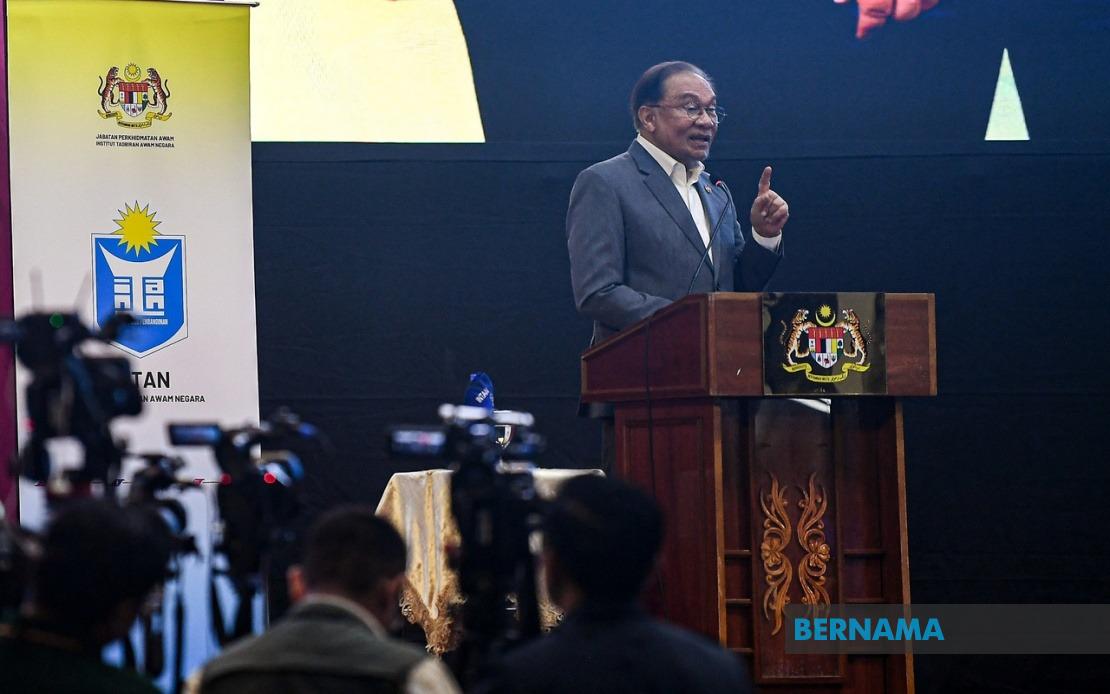
Prime Minister Datuk Seri Anwar Ibrahim has called on Malaysians to shed a colonial mentality that positions Western systems, languages, cultures and development approaches as the gold standard for national progress. Speaking at a gathering with civil servants from the Central Zone at Universiti Islam Selangor on July 20, alongside Chief Secretary to the Government Tan Sri Shamsul Azri Abu Bakar and Director-General of the Public Service Tan Sri Wan Ahmad Dahlan Abdul Aziz, Anwar emphasised that true independence demands more than simply enjoying the freedoms hard-won through struggle. The contemporary generation bears the responsibility of ensuring Malaysia's future development is anchored in robust national values and a clear sense of national identity.
Anwar's remarks reflect growing concerns among policymakers that decades after independence, segments of Malaysian society continue to regard overseas models as inherently superior across numerous domains. This phenomenon extends beyond mere preference for foreign goods or services; it represents a deeper psychological alignment with external reference points that can undermine the development of distinctly Malaysian solutions to local challenges. The Prime Minister observed that even among those born well after Merdeka, a paradoxical attachment to Western frameworks persists—individuals who may possess Malaysian citizenship and brown skin yet harbour an internalized belief that authentic progress must follow Western blueprints.
The specific example Anwar provided highlighted education as a particularly acute manifestation of this colonial hangover. He pointed out that many Malaysians unconsciously assume that quality education must be conducted in English, that cultural refinement must mirror European or Anglo-American norms, and that economic structures should replicate Western capitalist models. This extends further into governance and political systems, where external frameworks are often accepted uncritically as universal templates rather than evaluated for their suitability to Malaysia's specific social, cultural and institutional context. Such deference to foreign models, Anwar suggested, represents a failure to fully claim independence in the psychological and intellectual dimensions that matter most for sustained national development.
This message carries particular resonance in contemporary Malaysia, where ongoing debates about the medium of instruction in schools, the role of vernacular languages, and the balance between traditional values and modernisation continue to divide public opinion. The Prime Minister's intervention suggests that the government views these not merely as educational or cultural questions but as fundamental tests of whether Malaysia has genuinely broken free from colonial mental frameworks. His comments implicitly critique a widespread tendency to conflate Westernisation with modernity, as though progress necessarily requires abandonment of local knowledge systems, languages and institutional traditions.
Anwar's emphasis on building Malaysia on its own strengths rather than imported templates resonates with broader regional trends in Southeast Asia. Neighbouring countries have increasingly asserted the importance of developing homegrown solutions tailored to their specific circumstances, whether in technology, governance, or economic models. Malaysia's own success stories—from the Petronas Twin Towers to advancements in Islamic finance and halal certification—demonstrate that excellence need not require wholesale adoption of Western approaches. These achievements emerged precisely because Malaysian innovators and institutions adapted global best practices to local conditions rather than uncritically copying foreign models.
The civil service audience for Anwar's remarks is particularly significant. As the primary implementation arm of government policy, civil servants shape how national development actually unfolds at ground level. By directing his message to Central Zone administrators, the Prime Minister was signalling that bureaucratic processes, governance practices and public service delivery need not slavishly follow foreign templates. There is space and indeed necessity for developing Malaysian approaches to public administration that reflect local governance traditions, institutional histories and cultural values while maintaining professional standards and efficiency.
This message also responds to ongoing political debates within Malaysia about national identity, the status of Bumiputera principles, and the appropriate balance between Islamic and secular governance frameworks. Anwar's call to reject blind Western emulation can be understood as affirming Malaysia's right to chart its own course on contentious questions about religious expression in public life, affirmative action policies, and the relationship between modern state institutions and traditional sources of authority. Rather than accepting Western liberal frameworks as the only legitimate model, Anwar suggests that Malaysia should develop distinctive approaches that reflect its own constitutional arrangements, plural society and multicultural heritage.
The emphasis on national values and identity also carries economic implications. A nation confident in its own frameworks tends to invest more boldly in developing local industries, supporting indigenous entrepreneurs, and creating spaces for Malaysian enterprises to compete globally. Conversely, a population convinced that Western products and services are inherently superior creates structural disadvantages for local businesses and can perpetuate economic dependencies. By framing the rejection of colonial mindsets as an economic imperative alongside a cultural and political one, Anwar positions this as central to Malaysia's long-term competitiveness and prosperity.
However, Anwar's message should not be interpreted as advocating for wholesale rejection of valuable knowledge, technologies or methodologies regardless of origin. The distinction he appears to be drawing is between critical engagement with global ideas—evaluating them for Malaysian applicability—and uncritical deference that treats foreign frameworks as inherently superior or universally applicable. This nuance matters because Malaysia's future requires absorbing relevant global knowledge while maintaining confidence in indigenous capabilities and approaches.
The timing of these remarks, with Anwar explicitly noting the generational aspect, suggests concern that Malaysia risks losing something essential if younger cohorts continue to view Western systems as the default reference point for development. Building robust national institutions, supporting local creative and intellectual production, and developing confidence in Malaysian approaches to problem-solving become increasingly urgent as the nation seeks to transition toward higher income status and greater regional influence. The Prime Minister's call effectively frames the rejection of colonial mentality not as nostalgic or backward-looking but as essential to Malaysia's future prosperity and standing.

