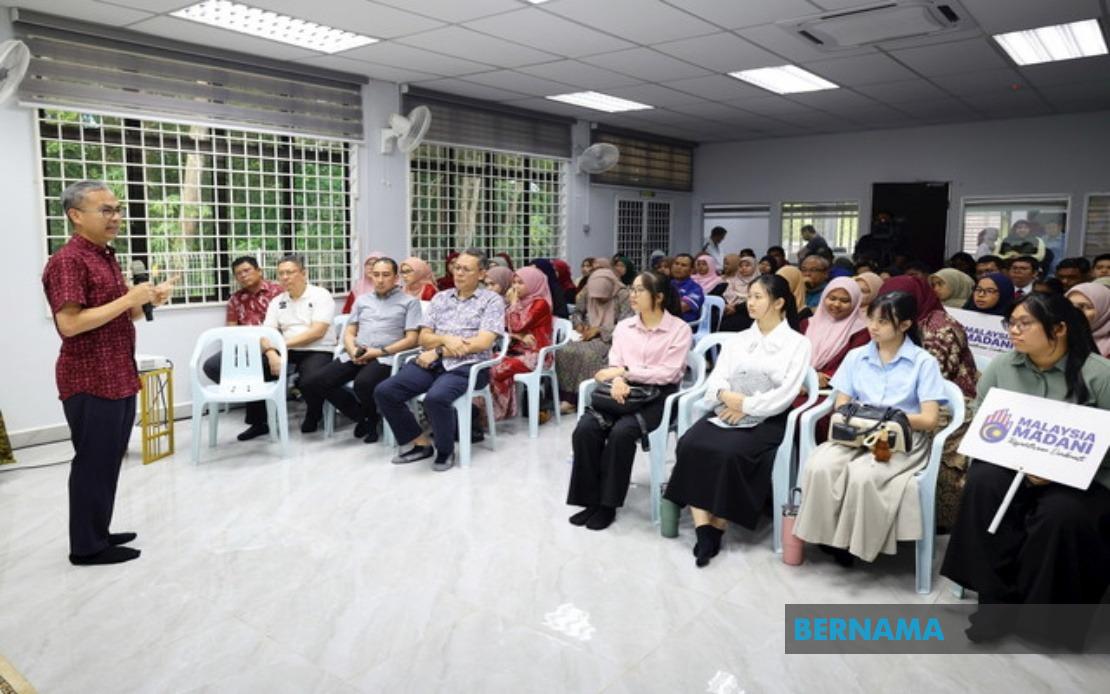
In a gathering with secondary school students in Jempol, Communications Minister Datuk Seri Fahmi Fadzil has underscored the critical importance of nurturing a generation that balances patriotic commitment with digital competence. Speaking after engaging 60 Form Six students from three schools in the Jempol parliamentary constituency, Fahmi highlighted that young Malaysians cannot afford to face the complexities of the modern era without both a grounded understanding of their national identity and sophisticated skills in navigating the digital landscape.
The minister's remarks came during an interactive dialogue session held under the Pentarama X Kelab Malaysiaku programme, a joint initiative aimed at reinforcing national values through entertainment and education. The event, organised by the Department of Information Malaysia (JaPen) on 26 July, was deliberately structured as a two-way conversation rather than a top-down information dissemination exercise, reflecting a growing recognition within government that youth engagement requires listening as much as teaching. Fahmi described the encounter as eye-opening, noting that Form Six students demonstrated impressive awareness of contemporary issues while raising thoughtful questions about their future in an increasingly technology-driven world.
The emphasis on history and national consciousness reflects concerns within Malaysia's leadership that younger generations, particularly those growing up with digital connectivity as the default experience, may lack sufficient grounding in the nation's founding principles and the historical struggles that shaped Malaysia's multiethnic, multireligious character. Fahmi articulated this through the lens of citizenship responsibility, arguing that understanding Malaysia's journey and one's place within the national narrative is foundational to becoming an effective contributor to the country's continued development. This framing positions patriotism not as blind nationalism but as informed participation in national progress, a distinction that matters considerably in Malaysia's diverse context.
The students who participated in the Jempol session raised concerns that resonate across Southeast Asia's digital societies. Fake news and misinformation emerged prominently in their questions, reflecting how disinformation has become a lived problem for young people navigating social media and online information ecosystems. Mental health challenges, particularly those exacerbated by social media use, also featured in their inquiries, suggesting that Malaysian youth are grappling with psychological pressures amplified by constant digital connectivity and the performative nature of online identity. These concerns underscore why digital literacy must extend beyond technical skills to encompass critical thinking, emotional resilience, and ethical reasoning.
The rapid advancement of artificial intelligence occupied significant space in students' questions about their futures, revealing anxiety about employment prospects and societal disruption in an economy increasingly shaped by automation and machine learning. This preoccupation is hardly surprising given Malaysia's ambitions to position itself as a regional technology hub and AI innovation centre. Yet the dialogue format allowed Fahmi and his team to understand that from the student perspective, these technological shifts are experienced not as abstract policy issues but as immediate existential concerns about their career pathways and relevance in an evolving job market.
The Pentarama X Kelab Malaysiaku programme represents one approach to addressing this generational education challenge. Pentarama, a performance unit under JaPen, communicates government policies and patriotic values through entertainment media including song, dance, and theatrical performance. This "edutainment" methodology acknowledges that traditional classroom-based civics instruction may not effectively capture youth attention or imagination in competition with the engaging, dynamic content available through digital platforms. By leveraging performance and cultural expression, the programme attempts to make patriotism and national values relevant and memorable rather than obligatory and didactic.
The expansion of Kelab Malaysiaku clubs to 850 locations nationwide indicates substantial institutional investment in school-based patriotic and civic engagement activities. These clubs, which organise events and activities marking Malaysia Day and National Day, provide structured opportunities for young people to express national identity through participatory activities. However, the success of such initiatives depends significantly on leadership quality, teacher commitment, and whether activities feel genuinely meaningful to participants rather than merely performative compliance with government directives.
The attendance at the Jempol session of JaPen director-general Erwin Khairul Ahmad and Malaysian Communications and Multimedia Commission (MCMC) Negeri Sembilan director Faisal Hamdi Mohammed Ghouth illustrated the multidepartmental nature of youth engagement strategy. The MCMC's involvement reflects the government's recognition that digital literacy and safe internet practices cannot be addressed through information and patriotism messaging alone but require active participation from the regulator charged with overseeing Malaysia's communications landscape. This convergence suggests potential for more integrated approaches to youth digital citizenship that combine patriotic values education with practical guidance on online safety and media literacy.
For Malaysia's policymakers, the challenge lies in ensuring that cultivating patriotism and digital literacy do not become competing objectives. Rather, the two must reinforce each other. Youth equipped with critical digital literacy skills are better positioned to identify and resist misinformation that might otherwise exploit nationalist sentiment or social divisions. Conversely, a grounded understanding of national history and constitutional values provides ethical anchoring points for how young Malaysians exercise their agency in digital spaces. When digital literacy is disconnected from values and national context, it risks producing technically skilled individuals disconnected from civic responsibility. When patriotism is not informed by critical thinking and digital sophistication, it becomes vulnerable to manipulation and extremism.
The specific focus on Form Six students also warrants attention. This cohort represents those poised to enter universities and professional life, occupying positions of influence and decision-making across society within the next decade. Investing in their digital literacy and patriotic consciousness carries amplified returns compared to similar efforts aimed at younger cohorts who will require reminding and reinforcement as they age. Form Six students are also developmentally at a stage where ideological commitments and professional aspirations crystallise, making this the critical window for shaping their understanding of the relationship between technology, society, and national purpose.
The dialogue format itself signals a shift in how the government conceptualises youth engagement. Rather than simply disseminating information downward through channels like Pentarama performances and Kelab Malaysiaku activities, the minister's commitment to hearing student questions and concerns suggests recognition that effective engagement with youth requires understanding their actual preoccupations and anxieties. This approach creates space for government messaging to be responsive and relevant rather than generic and disconnected from lived reality.
Looking forward, Malaysia's success in this endeavour will be visible not in attendance figures at patriotic programmes or digital literacy workshops, but in the quality of youth participation in Malaysia's digital public sphere. Do young Malaysians demonstrate resilience against misinformation while maintaining openness to diverse viewpoints? Do they leverage digital tools to advance civic engagement and national development? Do they balance individual expression through social media with awareness of their responsibilities to community and nation? These outcomes depend not on single initiatives but on sustained, coherent, multisectoral commitment to integrating digital citizenship and patriotic values across educational and public engagement systems.

