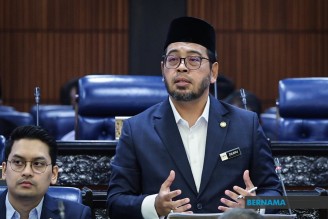
Malaysia's government has committed to a comprehensive overhaul of Tabung Haji (TH), the country's Islamic pilgrimage savings fund, following damaging revelations about investment mismanagement and near-catastrophic losses that nearly forced a massive government bailout. Parliament's special sitting on August 12 provided the platform for detailed revelations about the scale of the institution's problems and a roadmap for restoring public confidence in one of Southeast Asia's largest faith-based financial institutions.
The scale of Tabung Haji's crisis proved far more severe than previously acknowledged. Cumulative losses approached RM13 billion, while a complete collapse of depositor confidence would have burdened taxpayers with potential liabilities exceeding RM74.5 billion in 2018 alone. These staggering figures underscore the systemic risks posed by inadequate governance at large non-bank financial institutions that handle savings from millions of Malaysian Muslims preparing for the sacred hajj pilgrimage. The institution's exposure to troubled investments, particularly its indirect entanglement with the scandal-plagued 1Malaysia Development Bhd (1MDB) through its Putrajaya Perdana investment, revealed how deficient oversight allowed contagion from Malaysia's most notorious corporate collapse to reach a fund meant to be sheltered from such risks.
Responding to the Royal Commission of Inquiry's findings and recommendations, the government has established a specialized task force charged with translating reform proposals into binding legislation. Led by TH chairman Tan Sri Abdul Rashid Hussain and including Bank Negara Governor Datuk Seri Abdul Rasheed Ghaffour and Securities Commission chairman Datuk Mohammad Faiz Azmi, the task force represents an attempt to harmonize oversight across multiple regulatory domains. Their central recommendation—splitting TH's operational responsibility between the Securities Commission for investment matters and the Religious Affairs Ministry for pilgrimage logistics—addresses a fundamental governance gap that allowed investment decisions to operate without adequate professional scrutiny or market discipline.
The proposed legislative amendments to the Tabung Haji Act 1955 mark a watershed moment in how Malaysia regulates its Islamic financial ecosystem. Perhaps the most symbolically significant change involves barring active politicians from serving as board members, a measure that directly confronts the political patronage dynamics that observers believe enabled poor decision-making and insufficient accountability. This prohibition acknowledges that elected officials sitting on corporate boards often face conflicting loyalties between shareholder interests and political considerations, a tension that proved catastrophic in TH's case. Coupled with Securities Commission assumption of investment governance, the reforms aim to insulate the fund's portfolio strategy from both political interference and insufficient technical expertise.
Finance Minister II Datuk Seri Amir Hamzah Azizan emphasized that government transparency surrounding the crisis would not shy away from uncomfortable truths. Seven of fourteen troubled investments generated complete losses, demonstrating that TH's difficulties stemmed not from isolated bad luck but from systematic failures in due diligence, risk assessment, and investment governance. The minister's explicit commitment to accountability without favoritism signals a potential willingness to pursue legal consequences against those responsible for stewardship failures, though Malaysian readers familiar with prior financial scandals may approach such commitments with cautious skepticism.
Parliamentary debate revealed broader concerns about Malaysia's regulatory architecture for non-bank financial institutions. Member Aminolhuda Hassan proposed establishing a unified supervisory authority overseeing major NBFIs including the Employees Provident Fund (EPF), Permodalan Nasional Bhd (PNB), and the Retirement Fund Incorporated (KWAP). Malaysia currently lacks a single regulator with comprehensive authority over prudential supervision and systemic risk assessment across the non-bank financial sector, creating gaps that supervisory fragmentation exploited in TH's case. This governance fragmentation extends beyond TH to encompass institutions managing trillions of ringgit in national savings, suggesting that TH's crisis may catalyze broader regulatory consolidation.
The institution's structural dependencies pose persistent challenges for its recovery trajectory. Tabung Haji's substantial reliance on income from UJSB sukuk—comprising nearly 26 percent of annual revenues according to RCI findings—creates vulnerability to changes in sukuk market dynamics and issuer creditworthiness. Member Young Syefura Othman called for detailed government plans to reduce this income concentration, highlighting that financial stability requires revenue diversification rather than dependence on a narrow income stream. Rebuilding depositor confidence while simultaneously restructuring the fund's income sources presents competing demands that will test government policymakers throughout the implementation phase.
The Royal Commission of Inquiry itself, commissioned in 2021 and staffed by appointed members in January 2022, completed a 211-page report revealing governance weaknesses spanning the 2014-2020 period. Its twenty-five recommendations addressed systemic failures in management and operational oversight, with Tabung Haji reporting that seventy-five percent had been implemented by July 30. However, implementation without accompanying legislative and structural changes may prove insufficient if the underlying governance frameworks remain unchanged. The government's commitment to amend the foundational legislation governing TH's operations suggests recognition that genuine reform requires more than procedural adjustments to existing institutions.
For Malaysian depositors and pilgrims, the reforms address legitimate anxieties about their accumulated hajj savings. Changing profit distribution mechanisms to base hibah payments exclusively on audited accounts rather than discretionary allocations provides greater predictability and transparency. Restricting all institutional decisions to considerations of broader ummah interests—rather than allowing extraneous political or commercial considerations to influence governance—theoretically realigns TH's decision-making framework with its foundational purpose. Whether these legislative and structural changes prove sufficient to restore public confidence depends partly on successful prosecutions of those responsible for TH's mismanagement and partly on visible enforcement of new regulatory constraints.
Regionally, Malaysia's experience with Tabung Haji carries implications for other Southeast Asian nations managing Islamic financial institutions and large national savings funds. The combination of political board involvement, insufficient professional investment oversight, and fragmented regulatory authority enabled TH's losses to reach systemic proportions before remedial action commenced. Other nations maintaining similar institutional structures—whether Islamic banks, pilgrimage funds, or national pension systems—may find Malaysia's reform efforts instructive, particularly regarding the necessity of separating operational management from political appointment and consolidating regulatory oversight. The Tabung Haji episode demonstrates how governance failures in faith-based financial institutions can metastasize from institutional mismanagement into national fiscal liabilities, a lesson carrying salience throughout the Islamic financial ecosystem.
Implementation success remains uncertain despite institutional commitment and parliamentary consensus. The task force must complete detailed recommendations for Cabinet consideration before legislative amendments can proceed through parliamentary processes. Regulatory transitions involving Securities Commission assumption of investment oversight require careful sequencing to avoid operational disruption. Most critically, enforcement of reforms depends on political will sustaining beyond immediate electoral cycles, particularly regarding the politically sensitive prohibition on elected officials serving on corporate boards. Malaysian observers familiar with prior reform initiatives may reasonably harbor reservations about whether structural changes announced with parliamentary fanfare translate into durable governance transformation.

