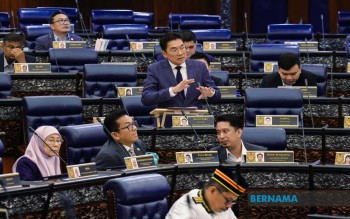
The Malaysian government is undertaking a comprehensive overhaul of its electric vehicle strategy, moving beyond piecemeal incentives toward a coordinated ecosystem approach that addresses critical infrastructure gaps. Deputy Investment, Trade and Industry Minister Sim Tze Tzin disclosed during parliamentary proceedings that authorities recognise the charging infrastructure deficit represents a fundamental constraint on EV adoption, requiring systematic intervention across multiple policy domains rather than isolated measures.
At the heart of this initiative lies an often-overlooked technical reality: the nationwide shortage of power substations capable of supporting distributed EV charging networks. Sim revealed that the government is collaborating directly with Tenaga Nasional Bhd, the nation's primary electricity provider, to construct additional substations as a prerequisite for expanding public charging facilities. This infrastructure-first approach represents a departure from previous initiatives that focused mainly on tax incentives without addressing the underlying power distribution constraints that render charging facility construction economically unviable in many regions.
The administration's strategy extends beyond infrastructure investment to include financial mechanisms designed to attract private operators into the charging business. Officials are engaged in ongoing discussions to structure incentive packages that would make charging facility development commercially attractive to entrepreneurs and private entities. Sim acknowledged that current market conditions do not naturally encourage such investment without government support, necessitating carefully calibrated policies that reduce perceived risks while maintaining fiscal responsibility. This dual approach—combining infrastructure enablement with operator incentives—reflects recognition that neither government nor private sector actions alone can establish the necessary charging ecosystem.
These policy adjustments must be understood within Malaysia's broader commitment to environmental targets, particularly the objective of achieving net-zero greenhouse gas emissions by 2050. The domestic EV infrastructure deficit has emerged as a significant impediment to meeting intermediate adoption goals, with Malaysia lagging regional peers in charging facility density. Parliamentary inquiries have increasingly focused on this gap, prompting the government to accelerate implementation timelines despite the acknowledged complexity of coordinating stakeholders and deploying capital across dispersed geographic locations.
Simultaneously, the government faces scrutiny over its import regulations governing imported electric vehicles, which impose a minimum cost, insurance and freight valuation of RM200,000 and minimum power output of 180 kilowatts. These requirements apply specifically to fully imported vehicles rather than locally assembled models, a distinction that has drawn parliamentary questioning regarding fairness and market distortion. Sim's explanation illuminates the deliberate policy logic underlying these apparently restrictive measures, revealing a calculated attempt to balance competing national objectives.
The government's rationale centres on a recognition that internal combustion engine vehicles and electric vehicles occupy fundamentally different positions within Malaysia's industrial development trajectory. For conventional vehicles, import policy has historically relied on engine displacement thresholds, permitting only models exceeding 1,800 cubic centimetres to enter the country. This longstanding framework reflects efforts to protect and develop local automotive assembly capacity by restricting competition from imported smaller vehicles. Applying analogous logic to EVs would be inappropriate, however, given that electric powertrains cannot be measured by displacement and remain at an earlier stage of localisation within Malaysia.
The minimum import value requirement serves multiple policy objectives simultaneously, according to Sim's parliamentary statement. First, it protects emerging local EV assembly and supply chain development by making imported alternatives less price-competitive, thereby preserving market space for domestically manufactured vehicles. This approach aims to ensure Malaysia develops not merely as a consumer market for foreign electric vehicles, but as a manufacturing hub capable of building complete EV ecosystems. Second, the valuation floor addresses tax administration concerns specific to electric vehicles, which face markedly lower excise duty rates than conventional vehicles at merely ten percent compared to considerably higher rates for combustion engines depending on displacement and other factors.
The technical nature of EV taxation creates particular revenue risks that the minimum CIF value helps mitigate. Because electric vehicles' tax treatment differs fundamentally from internal combustion vehicles—reflecting policy decisions to encourage EV adoption through lower duty rates—determining an accurate import value becomes more critical to revenue collection. Without minimum value thresholds, importers might have stronger incentives to understate declared values when importing low-duty vehicles compared to when importing high-duty conventional vehicles. The RM200,000 minimum therefore functions as an anti-evasion mechanism designed to ensure government revenue collection remains stable despite the preferential tax treatment granted to electric vehicles.
This multi-layered policy framework reflects sophisticated policymaking that attempts to simultaneously pursue three potentially conflicting goals: accelerating EV adoption among Malaysian consumers through tax incentives, developing domestic EV manufacturing and supply chain capabilities, and maintaining government revenue at appropriate levels. Each objective carries significant weight within Malaysia's broader economic and environmental strategy. Accelerating EV uptake addresses climate commitments and improving urban air quality. Building local manufacturing capacity generates employment and technological advancement. Maintaining revenue protects government fiscal capacity to invest in public goods including the infrastructure initiatives now being prioritised.
The government's approach, though complex, reflects mature recognition that EV policy cannot be reduced to simple duty reductions or subsidy schemes. Instead, successful ecosystem development requires coordinating infrastructure investment, managing import competition, structuring operator incentives, and calibrating tax policy. Implementation challenges remain substantial—coordinating across Tenaga Nasional Bhd, multiple government agencies, and private investors requires sustained institutional coordination. Yet the articulated strategy provides a roadmap for systematically addressing barriers that have constrained Malaysia's EV transition relative to regional standards and national aspirations, particularly regarding the 2050 net-zero target.
For Malaysian consumers and businesses, these policy developments carry immediate implications. The expansion of charging infrastructure directly addresses a primary barrier to EV ownership adoption that surveys consistently identify alongside vehicle cost. The infrastructure-focused approach suggests that practical charging facility expansion should accelerate over coming years, particularly in urban and periurban areas where substation construction can proceed efficiently. Simultaneously, the import regulations indicate that locally assembled EVs will enjoy comparative pricing advantages over fully imported models, potentially encouraging consumers to consider domestic brands as they enter the market or expand production. The combined effect should gradually shift market conditions in ways that make EV ownership increasingly practical and economically attractive for ordinary Malaysians.

