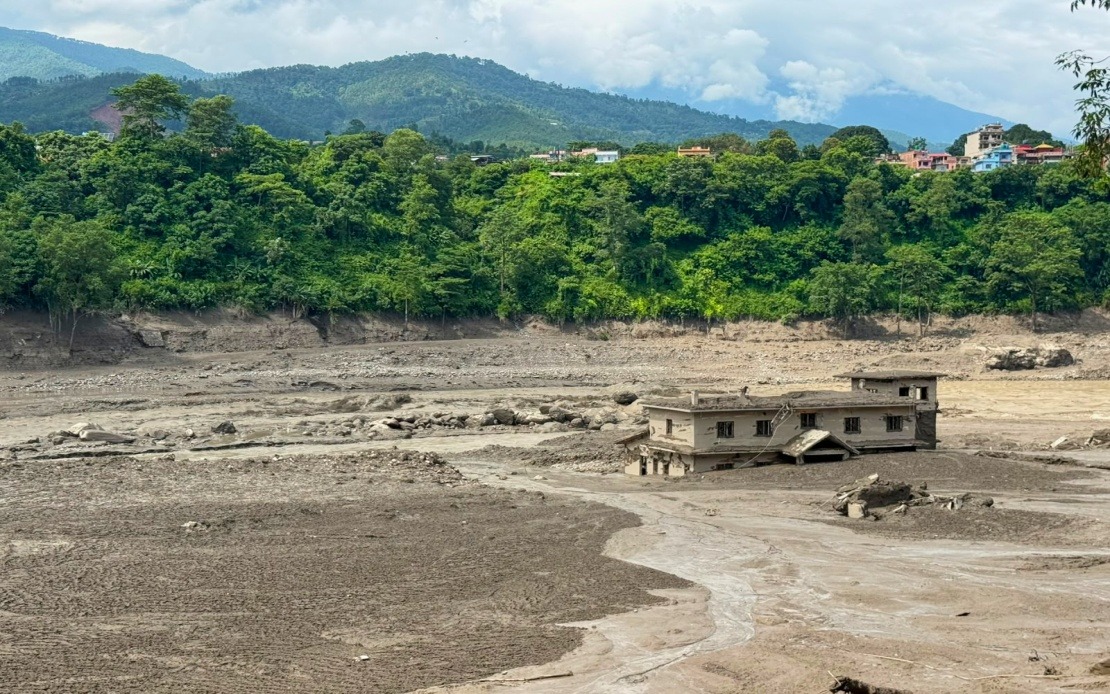
Prime Minister Datuk Seri Anwar Ibrahim has raised the alarm over 54 Malaysian nationals who have become uncontactable following devastating flash floods that swept through Rasuwa district in Nepal on August 27. In a public statement, the premier conveyed both personal concern and determination that the government would exhaust all available channels to trace and assist the affected citizens, underscoring the gravity with which Kuala Lumpur is treating the humanitarian crisis affecting its nationals.
The catastrophic flooding resulted from a confluence of natural hazards along the Nepal-Tibet border region, where torrential rainfall combined with glacier-triggered landslides to send cascading waters down the Bhote Koshi River with devastating force. The disaster has severely hampered rescue and recovery operations, as the deluge destroyed critical infrastructure including communication systems and severed the principal roadway connecting the affected mountainous territory to Kathmandu, Nepal's capital. This geographical isolation has created a communications blackout that compounds the difficulty in establishing the welfare status of the missing Malaysians and coordinating rescue efforts.
Responding to the crisis, the Malaysian Embassy in Kathmandu has immediately coordinated with Nepalese government agencies and local rescue teams to mount search operations. The embassy's engagement with Nepalese authorities represents the frontline of Malaysia's response, leveraging diplomatic channels to secure access to information and facilitate direct involvement in on-ground rescue coordination. The embassy staff have been actively engaged in gathering intelligence about the location and status of missing nationals while liaising with Nepalese officials to understand the evolving situation.
In a strategic expansion of diplomatic capacity, Malaysia has summoned additional resources by deploying officers from the Malaysian High Commission in Dhaka, Bangladesh, to strengthen coordination efforts. This cross-border repositioning of diplomatic personnel reflects the severity with which the government views the emergency and demonstrates a willingness to deploy resources beyond the immediate crisis zone to enhance communication networks and information gathering capabilities. The deployment underscores how serious diplomatic crises often require mobilisation of personnel across multiple countries to achieve effective response coordination.
Prime Minister Anwar's public statement through Facebook represents an important signal of government commitment at the highest political level. By personally addressing the nation regarding the missing Malaysians, Anwar has elevated the issue beyond routine diplomatic channels, signalling that the Cabinet and executive apparatus are directly engaged in the response. This political engagement often facilitates faster bureaucratic movement and resource allocation, as it transforms a consular matter into a priority issue commanding attention across multiple government departments and agencies.
The Foreign Ministry has assumed primary responsibility for coordinating the multifaceted response, serving as the central hub for information dissemination and strategic direction. The ministry maintains ongoing contact with the Malaysian Embassy in Kathmandu and other diplomatic missions in South Asia, ensuring that developments are communicated swiftly to decision-makers in Kuala Lumpur. This centralised coordination structure, while sometimes cumbersome, allows the government to maintain situational awareness and adjust its response posture as new information emerges regarding the missing nationals.
For Malaysian citizens residing or travelling in Nepal and other parts of South Asia, the government has essentially committed to a comprehensive search and support operation that will mobilise diplomatic, consular, and humanitarian resources as needed. The statement that efforts to locate the missing citizens and obtain updates on their condition were being actively pursued represents an implicit guarantee that the government would not treat this as a routine matter to be handled through standard diplomatic channels alone. The invocation of religious sentiment through the phrase "Insya-Allah" also reflects the predominantly Muslim Malaysian audience and signals unity around the humanitarian imperative.
The Nepal flooding disaster highlights persistent vulnerabilities faced by Malaysian travellers and expatriates in remote regions of South Asia, where infrastructure remains susceptible to rapid deterioration during natural disasters. The Rasuwa district, situated along the challenging Nepal-Tibet frontier, represents exactly the type of remote mountainous terrain where disaster response capacity is limited and communication infrastructure remains fragile. Malaysian nationals travelling to such areas often have limited awareness of the elevated risks or the potential for becoming isolated during natural disasters, making this incident a sobering reminder of the hazards inherent in travel to developing nations with less robust disaster management systems.
The involvement of the Dhaka High Commission in the coordination effort also reflects broader Southeast Asian diplomatic practice, wherein regional embassies often provide mutual support during crises affecting their respective nations' citizens. Bangladesh, as a fellow South Asian nation, has existing relationships and institutional knowledge that could facilitate access to information networks or provide logistical support that might prove valuable in a crisis spanning Nepal and potentially involving multiple countries. This regional approach to crisis management represents an evolution in how ASEAN-adjacent nations handle consular emergencies.
The communication blackout resulting from infrastructure destruction represents one of the most challenging aspects of the response operation. Without functioning telephone networks or internet connectivity in the affected zone, confirmation of individual status becomes extraordinarily difficult, and families of the missing nationals face days of uncertainty. The Malaysian government's commitment to actively pursue information suggests a recognition that families back home are anxiously awaiting updates, placing political and moral pressure on officials to deliver results with appropriate urgency.
For Malaysian policymakers, this incident raises questions about consular preparedness and whether existing protocols for handling citizens trapped in remote disaster zones are adequately resourced and practiced. The speed with which the government mobilised diplomatic resources suggests relatively well-developed crisis response procedures, yet the scale of the challenge—locating 54 individuals in a communication-blackout zone—suggests that even well-organised responses face significant practical constraints when disaster occurs in geographically remote and infrastructurally challenged regions.
The unfolding situation in Nepal demonstrates the persistent risks that globalisation brings to nationals of all countries who venture into remote regions. While most Malaysian travellers reach destinations without incident, catastrophic natural disasters serve as reminders that geographic isolation and infrastructural vulnerability remain inherent characteristics of many tourist and travel destinations. The government's vigorous response and public commitment to finding the missing nationals reflect both institutional capability and political will, though the ultimate outcome will depend substantially on Nepalese government capacity, geographic realities, and the fortuitous circumstance of whether missing Malaysians can be located amid ongoing disaster recovery operations.

