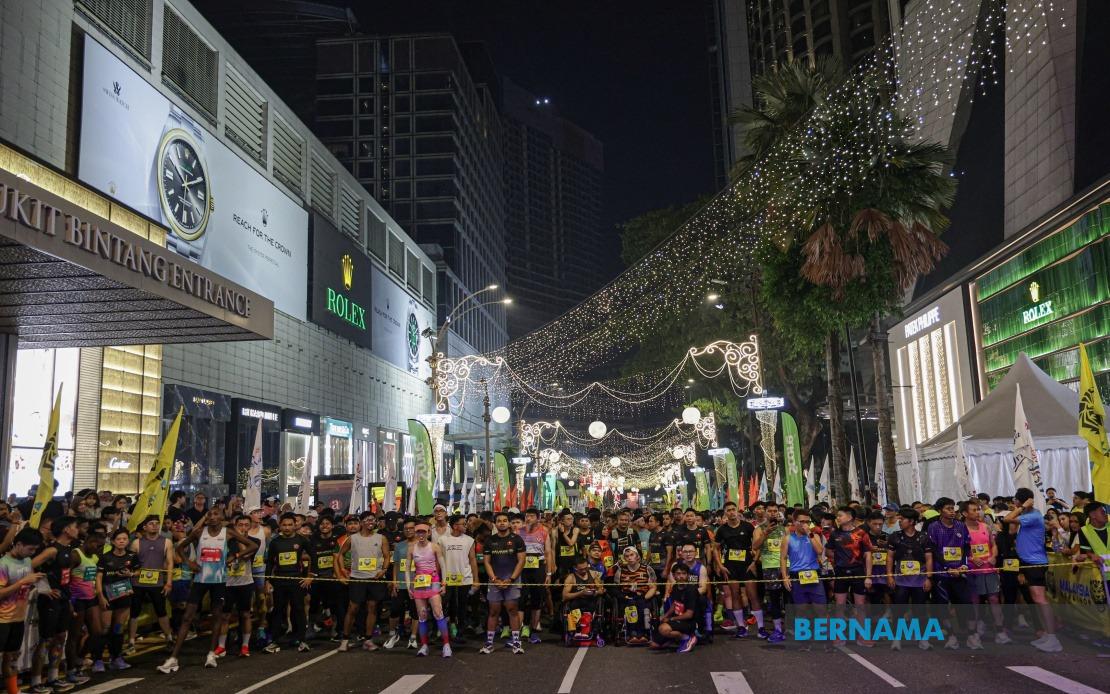
Malaysia's inaugural marathon championship commenced just after midnight on August 30, mobilizing an unprecedented 25,000 local and international competitors across four separate racing categories. The spectacle, officially recognised by World Athletics, marked a significant sporting milestone for the nation during its 69th National Day festivities. Minister of Tourism, Arts and Culture Datuk Seri Tiong King Sing inaugurated proceedings at the Pavilion Kuala Lumpur precinct, setting in motion a meticulously choreographed multi-hour racing schedule that would extend into the morning.
The flagship 42-kilometer Full Marathon category commenced at 12:30 am, attracting 2,000 elite and amateur runners keen to test themselves against one of Asia's most demanding urban marathon courses. This opening wave of competitors faced the prospect of traversing a grueling 900-meter elevation gain as they navigated the Ampang-Kuala Lumpur Elevated Highway during the pre-dawn hours. The ambitious routing reflected organizers' commitment to showcasing Kuala Lumpur's evolving infrastructure whilst presenting genuine athletic challenges.
Following the full marathon's start, the Half Marathon category attracted 8,000 participants beginning their 21-kilometre journey at 2:00 am. This mid-distance option proved particularly popular, demonstrating strong regional appetite for marathon racing at a more accessible length. The staggered start times proved strategically essential, allowing crowd management and ensuring adequate medical and logistical support across all race stages.
Malaysia's marathon departed from conventional practice by selecting the Kuala Lumpur City Centre precinct as the universal finishing point across all categories, displacing the traditional Dataran Merdeka location. This architectural landmark symbolized the event's contemporary positioning within Malaysia's modern urban landscape, offering international media an iconic backdrop whilst integrating the race experience more directly with the capital's commercial heart.
The 10-kilometre intermediate category commenced at 3:30 am with 5,000 runners, providing a stepping stone for participants seeking moderate-distance racing without undertaking the marathon's full commitment. The morning's final major wave, the 5-kilometre Fun Run, welcomed 10,000 participants beginning at 7:30 am, expanding the day's celebratory atmosphere beyond dedicated athletes to include families and community-level runners. This mass participation format aligned with growing regional trends toward inclusive sporting events that balance competitive racing with accessibility.
Particularly distinctive was the 10-kilometre category's inclusion of a specially commissioned HONOR-made humanoid robot competing alongside international runners from nations including Japan and Nigeria. This technological integration generated significant global media interest, positioning Malaysia's marathon within the cutting-edge intersection of athletics and artificial intelligence. The robot's participation symbolized both national technological ambitions and the event's forward-looking positioning within the competitive international marathon circuit.
The international competitor roster reflected Malaysia's sporting diplomacy and regional connectivity. Athletes from diverse nations converged upon Kuala Lumpur, transforming the marathon into a multiculturally significant sporting festival extending well beyond domestic athletic competition. Such cross-border participation strengthens Malaysia's reputation as a capable host for major international events whilst creating economic benefit through visitor spending and international media exposure.
Kuala Lumpur authorities implemented comprehensive traffic management protocols to accommodate the marathon's urban routing. Phased road closures and diversions commencing from midnight extended through the following afternoon, affecting major arterial routes including Jalan Bukit Bintang, Jalan Ampang, Jalan Sultan Ismail, and Jalan Raja Chulan. The Ampang-Kuala Lumpur Elevated Highway and SUKE expressway also experienced coordinated closures, necessitating advance public communication to minimize disruption for non-participating residents and workers.
The marathon's World Athletics recognition signified international validation of organizational standards and course certification. This accreditation enables qualifying performances to contribute toward athletes' international rankings and eligibility for premium global racing circuits. For Malaysian distance running development, such recognition enhances the country's standing within elite athletics whilst attracting higher-calibre international competitors.
The 69th National Day integration marked a deliberate decision to intertwine sporting excellence with national commemorations. Marathon participation offered citizens tangible engagement with patriotic celebrations beyond conventional ceremonies, democratizing National Day observance through physical activity and community participation. This approach reflected evolving patterns whereby major sporting events increasingly serve as vehicles for national identity expression and collective celebration.
For Southeast Asian sporting infrastructure, Malaysia's marathon represents expanded regional capacity for hosting world-class distance racing events. The scale, international recognition, and urban integration demonstrate capability that positions Malaysia competitively within the Asian marathon circuit. Neighbouring nations monitoring Malaysia's success may reassess their own event development strategies, potentially catalyzing regional sports tourism expansion.
The 2026 marathon's success established a platform for future iterations, potentially solidifying Malaysia's position within the annual international marathon calendar. Sustained execution of such large-scale sporting events generates training opportunities for local athletics organizations, infrastructure development benefits, and cumulative sporting culture advancement. The inaugural staging thus functions as foundational establishment for potential marathon championship longevity.

