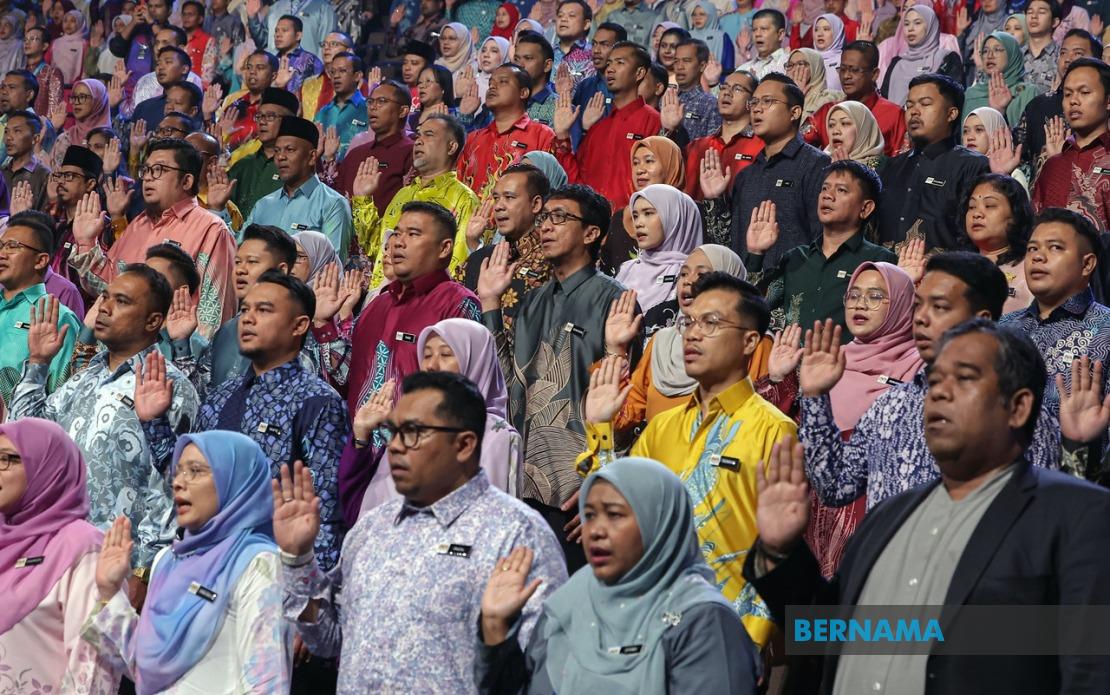
The Malaysian government has decided to retain the mandatory retirement age of 60 for civil servants, Communications Minister Datuk Fahmi Fadzil announced following a Cabinet meeting on 8 July. The decision reflects a government position that no legislative changes are currently warranted despite ongoing demographic pressures and workforce planning considerations facing the public sector. Fahmi stated clearly that the retirement threshold would not be elevated at this time, signalling stability in personnel policies affecting hundreds of thousands of federal and state government employees across the country.
The retention of the 60-year retirement benchmark represents a significant policy anchor for Malaysia's civil service, which has faced periodic calls from various stakeholders to extend working lives in response to ageing populations and fiscal pressures on pension systems. The Cabinet's reaffirmation suggests the government prioritises other policy levers for addressing long-term workforce sustainability rather than pushing workers to extend their careers. This approach contrasts with some regional neighbours and developed economies that have gradually raised retirement ages to offset rising healthcare and pension expenditures.
Civil service retirement policy carries substantial implications for Malaysia's labour market, public administration capacity, and fiscal planning. The 60-year threshold determines when hundreds of thousands of government employees conclude their careers, influencing promotion pathways, pension liabilities, and succession planning across the entire bureaucracy. By maintaining this benchmark, the government signals continuity to current and prospective civil servants while preserving predictable career progression expectations that have governed recruitment and retention strategies for decades.
In a parallel policy development with direct implications for workers' financial security, Prime Minister Datuk Seri Anwar Ibrahim raised concerns during the Cabinet session regarding employee contributions to the Social Security Organisation's Non-Employment Injury Scheme, commonly branded as LINDUNG 24 Jam. This insurance programme, launched to protect employees against accidents occurring outside working hours, had imposed a mandatory 0.75 per cent salary deduction from workers' pay packets. The scheme represents an innovative extension of occupational safety protections into the non-work domain, addressing gaps in Malaysia's social safety net.
Following consultation feedback, the Cabinet determined that the LINDUNG 24 Jam contribution structure required modification to address employee concerns about mandatory payroll deductions. The government has now converted the 0.75 per cent contribution from a compulsory obligation into a voluntary arrangement, effective immediately. This shift responds to worker feedback suggesting that mandatory deductions, however well-intentioned, constrained employee autonomy over personal insurance decisions and created friction within the workforce.
The voluntary framework for PERKESO contributions aligns with broader government trends toward employee-centred policy design, granting workers agency in selecting supplementary insurance protection rather than imposing blanket coverage through automatic payroll mechanisms. Workers can now evaluate whether the non-employment injury coverage suits their individual circumstances, risk profiles, and financial priorities. This approach recognises that not all employees perceive the same value in the scheme, particularly those already covered through private insurance, family provisions, or personal savings arrangements.
The implications of shifting to voluntary participation remain uncertain pending detailed implementation guidance. The Ministry of Human Resources (KESUMA) is expected to issue comprehensive clarification on how the voluntary system will operate, including whether contributions will be processed through standard payroll channels, how opt-in mechanisms will function, and what communication strategies will inform workers of the scheme's availability. Without sufficient awareness and accessible enrolment processes, voluntary schemes frequently suffer from persistently low participation rates, potentially undermining the insurance pool's viability and leaving workers unprotected against non-occupational accidents.
For Malaysian workers and employers, these Cabinet decisions carry distinct implications. The retention of the 60-year retirement age preserves familiar career planning frameworks, ensuring that civil servants understand the endpoint of their professional trajectories and can make informed retirement savings decisions. Conversely, the shift to voluntary PERKESO contributions introduces choice but also uncertainty, as workers must now actively decide whether to maintain protection against non-work-related accidents or forgo coverage to preserve take-home income. This requires financial literacy and proactive engagement with insurance considerations that not all workers may prioritise.
The policy choices reflect government navigation between competing pressures: maintaining fiscal sustainability and workforce flexibility while respecting employee preferences and financial constraints. By rejecting calls to extend civil service retirement ages, Malaysia avoids forcing older workers into extended careers they may not desire and preserves promotional opportunities for younger staff. Simultaneously, by making PERKESO contributions voluntary, the government acknowledges that mandatory deductions, regardless of their protective purpose, generate workplace friction and erode employee satisfaction.
Regional context illuminates Malaysia's approach. Several Southeast Asian neighbours have grappled with similar retirement and social security policy questions as ageing demographics and pension pressures mount. Thailand, Indonesia, and the Philippines have debated retirement age extensions, with mixed political responses reflecting the tension between fiscal realities and worker preferences. Malaysia's decision to maintain rather than extend retirement ages suggests a different priority ordering: preserving labour market access for younger workers and honouring existing career expectations may currently outweigh fiscal pressures on the civil service pension system.
The Cabinet's decisions also reflect broader MADANI government commitments to worker-friendly policies emphasising choice, consultation, and voluntary rather than coercive mechanisms. Both decisions—maintaining retirement age stability and converting PERKESO to voluntary status—privilege employee autonomy and reject paternalistic impositions, consistent with the government's stated development philosophy. These moves may enhance public sector attractiveness and worker morale by demonstrating government responsiveness to labour feedback and concern for employee financial wellbeing.
IMPLEMENTATION will prove critical in determining whether these policy decisions achieve their intended benefits. KESUMA's forthcoming statements must clarify administrative processes, communication strategies, and employer obligations regarding voluntary PERKESO participation. Clear, accessible guidance will determine whether the voluntary framework actually serves workers by enabling informed choice or simply reduces coverage rates through confusion and administrative friction. The government's follow-through on implementation quality will ultimately determine whether these Cabinet decisions represent genuine worker-centred policy evolution or merely theoretical gestures toward greater flexibility.

