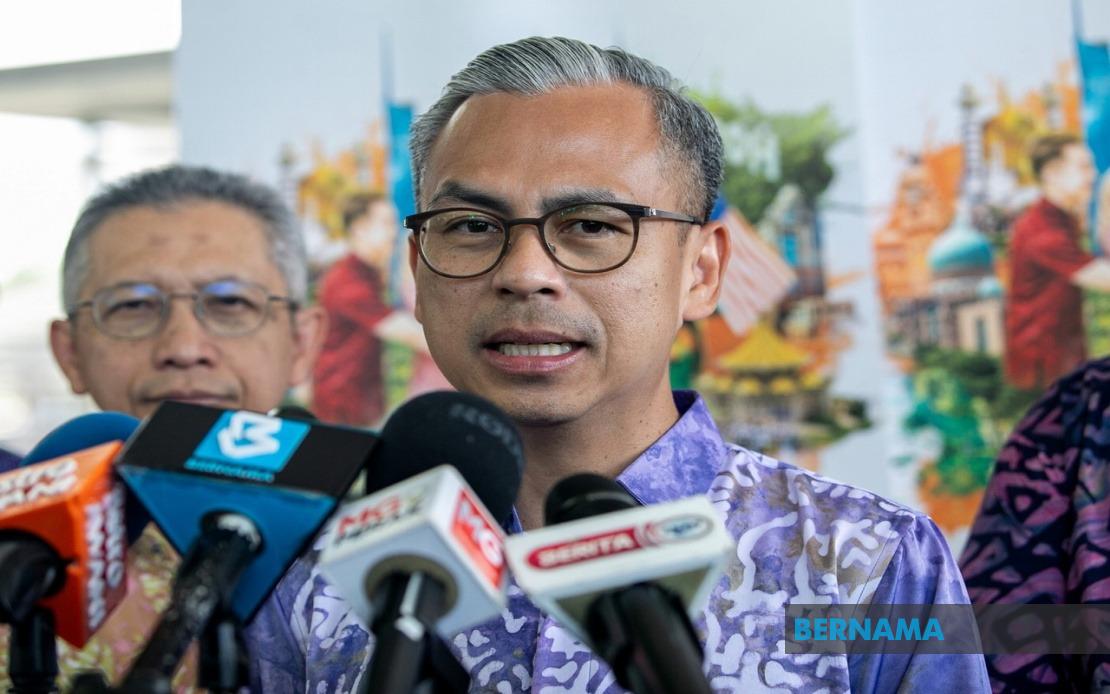
The government has selected 'Malaysia MADANI: Kesejahteraan Dinikmati' (Malaysia MADANI: Shared Prosperity) as the central theme for next year's National Day and Malaysia Day celebrations, positioning it as a declaration of the administration's commitment to ensuring development gains reach all segments of Malaysian society. Communications Minister Datuk Seri Fahmi Fadzil unveiled the theme during the launch of the 2026 National Month campaign in Ipoh, where Prime Minister Datuk Seri Anwar Ibrahim presided over the official ceremony held at the Sultan Azlan Shah Ministry of Health Training Institute in Tanjung Rambutan.
The selection reflects a deliberate policy messaging strategy that extends beyond conventional national day rhetoric. Fahmi explained that the prosperity concept encompasses far more than aggregate economic indicators or gross domestic product growth figures. Instead, the government frames shared prosperity as a multi-dimensional development approach that prioritises improvements in living standards, ensures fair access to opportunities, and guarantees that wealth creation benefits flow equitably throughout the population. This formulation suggests the administration views its economic agenda through a social equity lens, addressing persistent concerns about unequal development outcomes across different regions and demographic groups.
The emphasis on inclusivity carries particular significance for Malaysia's regional standing and internal cohesion. By explicitly committing to a framework where "no one is left behind in the nation's development, regardless of race, religion, region or background," the government stakes a claim to tackling structural inequalities that have periodically strained national unity. For Malaysian readers, this language signals an intent to move beyond growth-centric policies toward a model that acknowledges how development unevenly distributes benefits. The message particularly resonates in contexts where rural areas, smaller towns, and less-developed states have experienced slower advancement compared to urban economic hubs.
Fahmi's articulation of the theme within Malaysia's demographic context underscores how national celebrations serve as platforms for reinforcing governmental priorities. He emphasised that the nation's multiethnic and multireligious composition represents both historical richness and a contemporary advantage, requiring continuous investment in social harmony. This framing transforms the 2026 celebrations from ceremonial occasions into occasions for reaffirming social contracts—suggesting that prosperity gains should strengthen rather than fracture communal bonds. For Southeast Asian observers, this approach demonstrates how Malaysia attempts to navigate the tensions between rapid economic growth and social stability in an increasingly diverse and competitive region.
The practical rollout of the theme involves multiple engagement initiatives designed to foster grassroots patriotic sentiment. The 'One House, One Jalur Gemilang' campaign encourages households to display the national flag, while the Kembara Merdeka Jalur Gemilang convoy programme appears designed to bring national messaging to communities nationwide. These initiatives suggest the government recognises that theme adoption requires sustained public participation and visibility rather than top-down announcement alone. The geographic distribution strategy—indicated by the Ipoh launch and convoy programme—reflects acknowledgment that messaging must reach beyond urban centers and federal territory populations.
Information dissemination mechanisms have also been modernised to reflect contemporary communication preferences. The government has designated the Merdeka 360 portal as a centralised information hub, supplemented by social media engagement through the Information Department's platforms. This dual-channel approach acknowledges how Malaysians access news and official information through both dedicated government portals and mainstream social media, requiring institutions to maintain presence across multiple digital touchpoints. For media observers in the region, the approach illustrates how governments adapt to fragmented media landscapes where reliance on traditional broadcast alone proves insufficient.
The timing of the 2026 campaign announcement carries strategic implications for medium-term political messaging. With the campaign launch occurring more than a year before the actual celebrations, the government signals intent to build sustained narrative momentum around shared prosperity themes rather than concentrate messaging in the final months. This extended campaign window provides opportunity for government agencies, state administrations, and civil society organisations to develop aligned programming and communications, creating cumulative message reinforcement. The participation of National Unity Minister Datuk Aaron Ago Dagang and Perak Menteri Besar Datuk Seri Saarani Mohamad indicates that the theme enjoys buy-in across federal and state levels, suggesting relatively unified governmental commitment despite Malaysia's sometimes-fractious federalism.
The invocation of Malaysia's "peace, prosperity and respect by the international community" reflects how the government contextualises domestic development within regional and global frameworks. This positioning suggests that the administration views 2026 celebrations as opportunities to project Malaysia's stability and social cohesion to regional peers and international observers. In the context of Southeast Asia's competitive dynamics, where nations vie for investment, talent, and diplomatic influence, the emphasis on harmony and inclusive development serves as a competitive positioning statement against regional alternatives.
For Malaysian readers specifically, the theme carries implications for how development priorities will be articulated and assessed over the coming year. The shared prosperity framework establishes benchmarks against which government performance can be measured—whether specific policies demonstrably expand opportunity access, whether regional development gaps narrow, and whether community satisfaction with development outcomes improves. This explicit commitment potentially constrains government flexibility in pursuing purely growth-oriented policies that might exacerbate inequality, though implementation will ultimately determine whether the theme reflects genuine policy reorientation or primarily serves rhetorical purposes.
The broader messaging ecosystem surrounding 2026 celebrations suggests the government has identified national unity and inclusive development as priority political narratives for the coming period. By anchoring these themes to major national celebrations, the administration attempts to elevate them from partisan policy positions to matters of ostensibly national consensus. Whether this messaging strategy translates into substantive policy shifts that measurably improve conditions for Malaysia's less-advantaged populations remains to be seen, but the prominence afforded to shared prosperity themes indicates the administration recognises that contemporary political legitimacy increasingly depends on demonstrating commitment to equitable outcomes rather than growth metrics alone.

