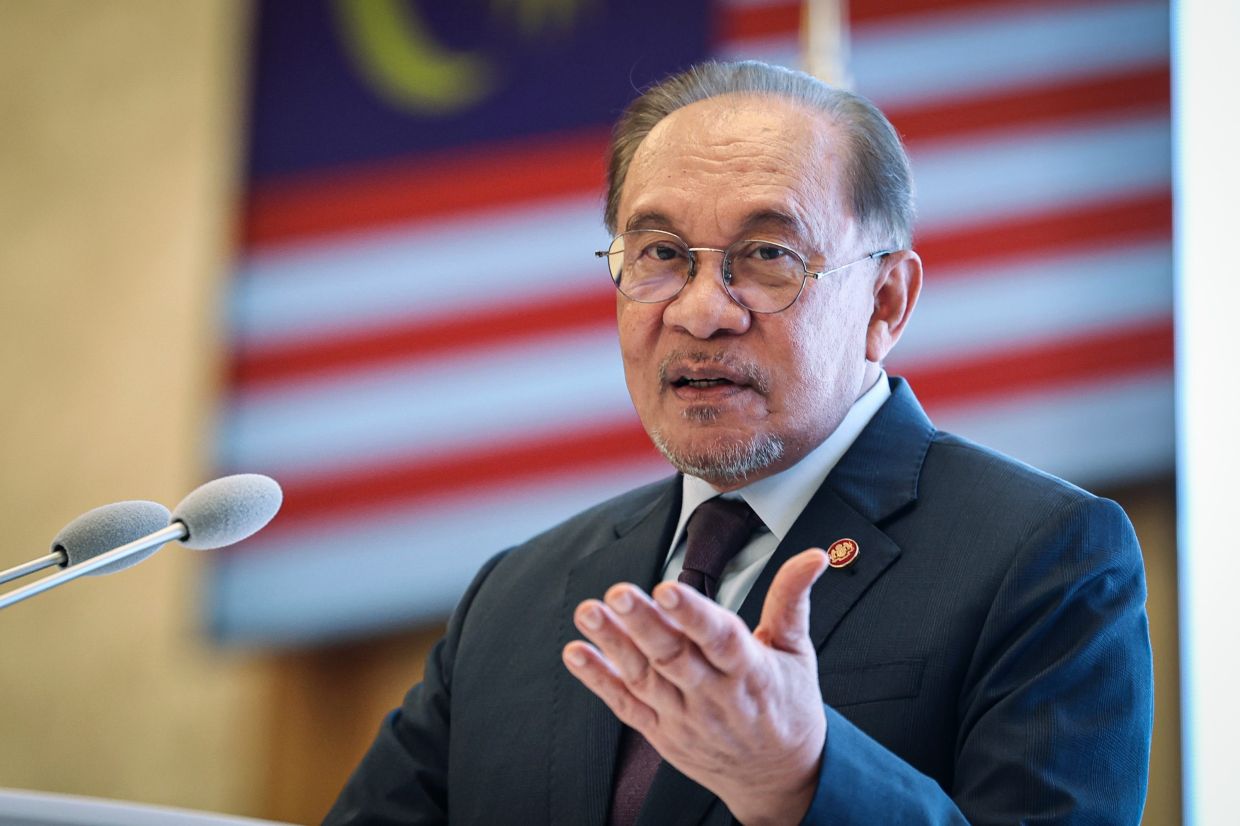
Malaysia's geographic position as a crossroads for international commerce and its integration into critical supply chains represent far more than commercial advantages—they form the backbone of the nation's broader diplomatic strategy, according to Prime Minister Datuk Seri Anwar Ibrahim. Speaking at the 39th Asia-Pacific Roundtable, the premier articulated how Malaysia's economic footprint translates into meaningful political and diplomatic influence throughout the region and beyond. This framing reflects a deliberate approach where trade relationships become instruments of statecraft, allowing smaller economies to punch above their weight in regional negotiations and international forums.
The government's sustained commitment to deepening ties with traditional economic partners demonstrates recognition that established relationships provide stability and predictability in volatile markets. Over successive administrations, Malaysia has invested considerable diplomatic capital in maintaining robust connections with longstanding trading allies, understanding that these partnerships serve as anchors during periods of geopolitical uncertainty. This foundation has proven essential as global supply chains face disruption and competing powers vie for influence across Southeast Asia. Anwar's emphasis on relationship-building underscores that Malaysia views economic engagement not as transactional but as foundational to its broader regional positioning.
Malaysia has positioned itself at the vanguard of trade liberalisation efforts across multiple frameworks that collectively reshape commerce in the Asia-Pacific region. Through the ASEAN Free Trade Area, the Regional Comprehensive Economic Partnership and the Comprehensive and Progressive Agreement for Trans-Pacific Partnership, Malaysia actively shapes the rules governing market access, tariff structures and investment protections. This involvement in successive waves of regional trade architecture allows the nation to influence outcomes that directly benefit its exporters, investors and workers. Rather than passively accepting predetermined frameworks, Malaysia participates in their design, ensuring its interests and those of Southeast Asian nations receive adequate consideration in an increasingly multipolar trading environment.
ANWAR emphasised that Malaysia's future remains inseparably bound to ASEAN as a collective entity, a perspective that carries particular weight given regional fragmentation and competing strategic pulls. Despite acknowledging legitimate concerns about the bloc's effectiveness and coherence, he argued that ASEAN centrality must remain the foundation of Malaysia's foreign policy approach. This position reflects pragmatic assessment that smaller nations within Southeast Asia derive disproportionate influence through collective action rather than individual pursuit of separate interests. For Malaysian policymakers, maintaining ASEAN's relevance and decision-making capacity represents essential insurance against being marginalised by larger regional powers.
Beyond traditional partners, Malaysia is deliberately cultivating commercial relationships in underexplored markets spanning West Asia, Central Asia, Latin America and Africa. This geographic diversification strategy acknowledges that reliance on established trading relationships creates vulnerability to shifting geopolitical alignments and economic cycles. By developing parallel networks of economic engagement across multiple regions, Malaysia reduces dependence on any single market or bloc. The approach also positions the nation as a bridge between different economic zones, enhancing its diplomatic utility to various powers seeking to expand their own regional influence and market penetration.
Energy cooperation exemplifies how economic diplomacy translates into tangible strategic outcomes, particularly evident through Malaysia's recent engagements in Central Asia. Petronas's agreements with Turkmen state entities to explore and develop major gas fields represent more than commercial transactions—they secure long-term hydrocarbon supplies critical to Malaysia's energy security and economic growth. The accompanying framework for hydrocarbon development and capacity-building strengthens institutional ties between the two nations, creating multiple channels for ongoing cooperation. Such arrangements demonstrate that modern economic diplomacy encompasses not merely trade in finished goods but strategic partnerships across entire value chains and technical domains.
Malaysia's multisector approach to economic engagement—spanning halal industries, digital transformation, agricultural development and green technology—reflects sophisticated understanding that contemporary economic competition extends far beyond traditional manufacturing and natural resources. By positioning itself as a knowledge partner and technology collaborator rather than merely a raw materials supplier, Malaysia elevates its negotiating position and captures greater value from international relationships. These sectors also align with global megatrends toward sustainability and digitalisation, ensuring Malaysia's economic model evolves rather than stagnates around commodity dependence.
The premium placed on maintaining a broad-based, resilient and forward-looking economic portfolio stems from hard-won lessons about market volatility and the unpredictable nature of geopolitical disruptions. Diversification functions simultaneously as economic strategy and national security imperative in an era when trade flows shift rapidly and political alliances realign with minimal notice. Malaysia's experience navigating previous global crises, trade tensions and regional upheavals has reinforced conviction that concentrated economic relationships invite vulnerability. By consciously spreading economic partnerships across geography, sectors and institutional formats, Malaysia builds structural redundancy that allows sustained prosperity despite inevitable international turbulence.
The 39th Asia-Pacific Roundtable, convened by the Institute of Strategic and International Studies Malaysia, provided a platform for articulating these strategic principles to a regional audience of policymakers, academics and business leaders. Such forums serve crucial functions in Southeast Asian governance, allowing leadership to test ideas, gauge regional sentiment and build consensus around policy approaches. Anwar's emphasis on ASEAN centrality, trade liberalisation and diversified partnerships reflects broader consensus among Malaysian elites about navigating contemporary strategic challenges while preserving national interests and regional stability.

