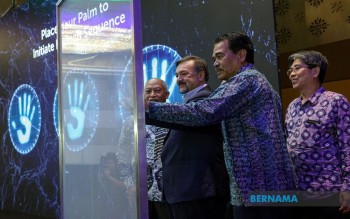
Pengurusan Aset Air Bhd (PAAB), a government-owned entity under the Ministry of Finance, formally introduced its Sustainable Islamic Finance Framework in Kuala Lumpur on June 30, establishing three pivotal national benchmarks in the process. The framework represents Malaysia's entry into blue finance within the Islamic financing sphere, while simultaneously securing platinum-rated certification for its sustainability credentials. More significantly, it stands as the nation's inaugural dedicated sustainable Islamic finance framework, positioning the country at the forefront of innovation in responsible financing for environmental and water-related initiatives.
Developed through collaboration between Maybank Investment Bank Bhd, which served as the primary sustainability structuring adviser, and RAM Sustainability Sdn Bhd, which provided independent second-party verification, the framework demonstrates how Islamic principles can harmonise with contemporary environmental stewardship. PAAB stated that the initiative reinforces institutional commitments to sustainability, transparency, governance and accountability throughout its financing operations. By establishing this comprehensive platform, PAAB has created the infrastructure necessary to channel capital towards projects that satisfy both international sustainability benchmarks and Shariah compliance requirements, a balance that remains challenging in emerging markets.
The framework's architecture specifically enables future issuances of sustainable sukuk and blue sukuk instruments designed to mobilise funding for water infrastructure development and environmentally conscious ventures. This financial innovation addresses a critical gap in Malaysia's capital markets, where traditional instruments have often fallen short in adequately financing large-scale water security programmes. Blue sukuk specifically directs capital towards aquatic ecosystems and water-related infrastructure, creating a dedicated funding stream for a sector that frequently competes unsuccessfully for investment against more profitable alternatives.
As of December 31, 2026, PAAB's cumulative migrated and committed investments across Malaysia's water services sector had reached RM46.88 billion, according to chairman Datuk Seri Jaseni Maidinsa. This substantial capital deployment has yielded measurable infrastructure improvements across the nation. The group has completed 21 water treatment facilities collectively capable of processing 2.085 billion litres daily, substantially increasing the country's capacity to provide clean water to growing populations. Additionally, 42 reservoirs with combined storage capacity of 783 million litres have been constructed to enhance water availability during dry seasons and mitigate supply disruptions.
Complementing these achievements, PAAB has installed 3,263 kilometres of pipeline infrastructure, addressing the chronic non-revenue water losses that plague Malaysian water utilities. These replacement pipelines form a critical component of broader water security improvements, as ageing distribution networks have historically wasted significant volumes through leakage before water reaches consumers. By modernising this physical infrastructure, PAAB supports both environmental sustainability and operational efficiency objectives. Maidinsa emphasised that these accomplishments reflect sustained commitment from both federal leadership and PAAB to fortify Malaysia's water infrastructure resilience for succeeding generations.
Finance Minister II Datuk Seri Amir Hamzah Azizan, who officially inaugurated the framework, disclosed that PAAB plans to issue its first blue sukuk during the third quarter of 2024. This inaugural instrument carries particular significance as it is anticipated to be the inaugural blue finance product globally adopting a specially developed taxonomy created through joint effort by Maybank, RAM Sustainability, and guidance from the Securities Commission Malaysia. This bespoke taxonomy represents a significant technical achievement, as it establishes clear classification criteria for determining which water and environmental assets qualify for blue finance mobilisation under Islamic finance parameters.
The approach to asset securitisation embedded within the framework introduces novel mechanisms for collateralising water assets to support sukuk repayment obligations. Rather than treating water infrastructure as traditional utility assets with limited financing appeal, the framework restructures how these assets function within capital markets. By establishing transparent frameworks ensuring predictable sukuk repayment schedules underpinned by water asset performance, the innovation opens avenues for substantially expanded investment flows into the water sector. Amir Hamzah highlighted that this structural innovation becomes increasingly important given Malaysia's recognition that insufficient water sector investment inevitably generates cascading problems affecting national development and public welfare.
The framework's implications extend beyond Malaysia's borders, potentially establishing a template for other Southeast Asian nations grappling with parallel water security challenges. Countries across the region face comparable infrastructure deficits, ageing distribution networks, and competing demands for limited development capital. Malaysia's experience developing this framework could inform regional approaches to mobilising Islamic finance for water security, particularly as environmental consciousness rises among investors and regulators throughout Southeast Asia increasingly emphasise sustainable development criteria.
For Malaysian investors and financial institutions, the framework opens previously unavailable opportunities within Islamic finance specialisation. Banks and investment funds seeking exposure to water infrastructure can now access sukuk instruments structured specifically around this critical sector. The platinum-rated certification provides independent validation of sustainability claims, addressing investor concerns regarding greenwashing that have emerged in global sustainable finance markets. This credibility becomes increasingly valuable as Malaysia competes internationally for capital flows and seeks to establish itself as a centre of excellence in Islamic sustainable finance.
The framework also addresses a fundamental development challenge that often goes underappreciated in public discourse: the relationship between reliable water infrastructure and broader economic competitiveness. Manufacturing sectors, agricultural production, technology parks, and residential developments all depend fundamentally on dependable water supply. By creating dedicated financing mechanisms for water infrastructure through Islamic finance channels, PAAB removes artificial constraints that previously limited investment capacity. This should accelerate the pace at which Malaysia can modernise its water systems, with positive implications for economic growth, public health, and environmental sustainability.
Looking forward, the success of PAAB's inaugural blue sukuk issuance will likely determine whether this framework becomes a permanent fixture of Malaysia's sustainable finance landscape or remains a specialised niche instrument. Investor appetite for water-secured sukuk remains uncertain, though the growing emphasis on environmental, social and governance criteria among global institutional investors suggests strong potential demand. The framework's emphasis on transparency and governance addresses primary investor concerns, positioning the inaugural issuance favourably for market reception.

