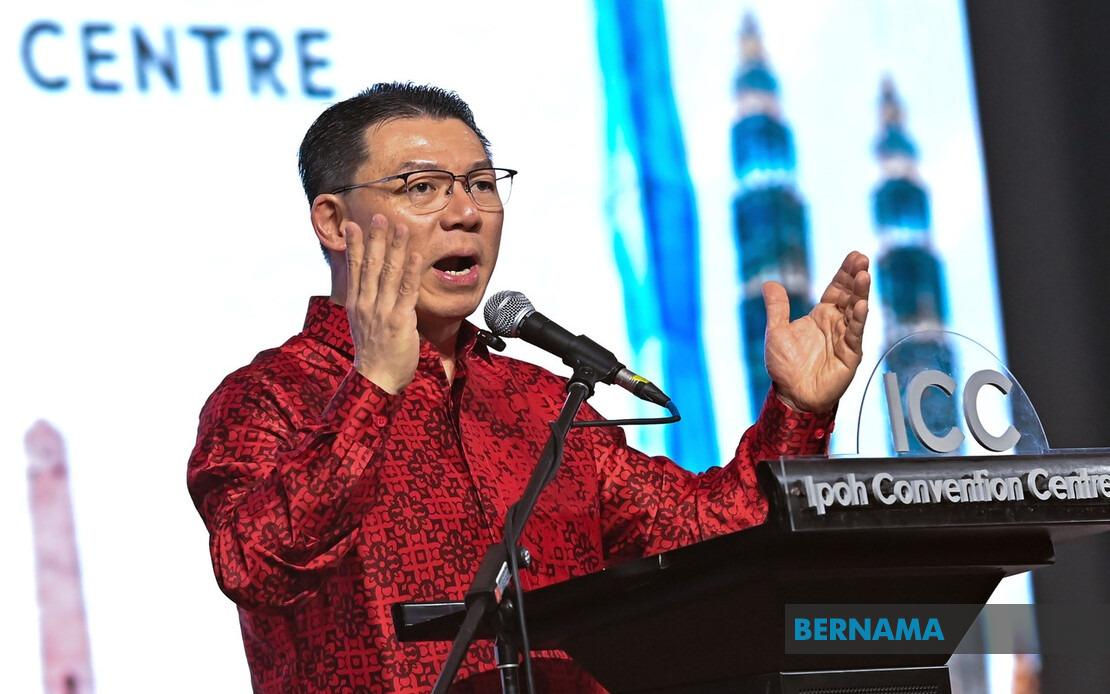
The Ministry of Housing and Local Government has rolled out an ambitious programme to reshape Malaysia's public spaces through the MY Public Space initiative, announced during the 2026 National Landscape Day Celebration in Melaka. The scheme represents a structured approach to reimagining how communities access and utilise common grounds, partnering with UN-Habitat to embed global standards into local contexts. Minister Nga Kor Ming outlined the vision at the Hang Jebat Stadium event, which was inaugurated by Prime Minister Datuk Seri Anwar Ibrahim and attended by Melaka Chief Minister Datuk Seri Ab Rauf Yusoh, signalling high-level government commitment to the initiative.
The initiative addresses a growing recognition across Southeast Asia that quality public spaces are essential infrastructure for liveable cities. Rather than impose external models, the MY Public Space framework tailors international best practices to Malaysian urban development needs and community expectations. The programme rests on ensuring that every developed space meets standards for inclusivity, safety, resilience, and accessibility—criteria that resonate with Malaysia's evolving social and environmental goals. By anchoring the initiative to these four pillars, the government aims to move beyond ad-hoc park development toward systematic quality improvement across the country's public realm.
Implementation will unfold through four interconnected strategies. First, the government will establish a national recognition framework aligned with the Rosa Sinensis Award, creating a benchmark system for evaluating public space quality. Second, pilot projects will introduce the MY Public Space Toolkit, a practical guide for designing and managing spaces. Third, the focus turns to strengthening how communities and local authorities manage existing public spaces. Fourth, the toolkit will be integrated into national landscape guidelines and policies as a formal standard, embedding quality criteria into future development. This layered approach reflects lessons from international urban development, where recognition frameworks, practical toolkits, and policy integration drive systemic change rather than isolated projects.
The UN-Habitat partnership carries particular significance for Malaysia's regional positioning. As the current President of the UN-Habitat Assembly, Malaysia is positioned to showcase how developing nations can advance sustainable development goals through localised urban solutions. The collaboration signals that Malaysia intends to leverage its international standing to elevate domestic standards while contributing to global urban development discourse. For the region, this approach offers a template: demonstrating how international cooperation can enhance local capacity without simply exporting Western-centric urban models. The initiative directly supports Malaysia's commitment to accelerating the Sustainable Development Goals through more effective international engagement and capacity-building.
Parallel to this framework overhaul, the government is pursuing an aggressive expansion of green recreational spaces. The MADANI Parks initiative targets 1,000 parks nationwide by 2035, ensuring that every community has reasonable access to quality green environments. This target reflects the government's acknowledgement that rapid urbanisation has left many neighbourhoods without adequate recreational facilities. Between 2024 and 2025, the programme delivered 217 parks across Malaysia, nearly doubling the original target of 100 parks annually. This acceleration demonstrates both improved execution capacity and heightened political priority. Melaka alone hosts ten of these parks, with plans to add three more in Ayer Keroh and Masjid Tanah this year, bringing recreational infrastructure closer to residents in both urban and semi-rural areas.
The economic dimensions of this push are substantial. The landscape industry is targeted to contribute up to RM40 billion to Malaysia's GDP by 2035 through expanded domestic investment and international trade. Current performance provides a foundation: Malaysia recorded landscape product exports valued at RM534.3 million in 2025, reaching markets including Singapore, Japan, Australia, and the United States. These figures underscore that public space development generates measurable economic activity through employment, manufacturing, and service provision. As the regional economic powerhouse, Malaysia's investment in landscape services creates demonstration effects for neighbouring countries considering similar infrastructure programmes.
To sustain this economic trajectory and ensure quality improvements, the National Landscape Department is preparing a comprehensive Malaysian Landscape Industry Blueprint. This strategic document will guide long-term development across multiple dimensions: building workforce capacity in landscape design and management, establishing industry standards, accelerating green technology innovation, strengthening the value chain from production to implementation, and enhancing competitiveness for Malaysian firms competing internationally. The blueprint recognises that public space quality depends not just on individual projects but on a mature, capable industry ecosystem. By investing in workforce development and standard-setting, Malaysia aims to ensure that future park expansion and space improvement reflect growing expertise rather than relying on imported solutions.
For Malaysian cities and municipalities, the initiative represents a shift toward evidence-based, internationally-informed public space management. Local authorities will gain access to the MY Public Space Toolkit, providing practical guidance on design, safety, inclusivity, and resilience. This democratisation of best practices helps smaller cities and towns aspire to standards previously associated with wealthier municipalities. The recognition framework creates incentive structures, encouraging competition and innovation among local governments. Communities themselves benefit from spaces designed with their needs in mind, rather than spaces that merely fill geographical gaps. This participatory dimension—ensuring that public spaces reflect community aspirations—addresses a common criticism of top-down urban development in the region.
The initiative also positions Malaysia as a regional leader in sustainable urban development at a time when Southeast Asia faces intensifying urbanisation pressures. Rapid city growth across Indonesia, Thailand, Vietnam, and the Philippines has strained public infrastructure. Malaysia's structured approach to public space quality offers lessons for neighbouring governments facing similar challenges. By combining international standards with local adaptation, pursuing aggressive expansion targets, and building industry capacity, Malaysia demonstrates a holistic strategy. For property developers, urban planners, and landscaping professionals across the region, Malaysia's example provides a template for integrating quality public spaces into urban development rather than treating them as afterthoughts.
The timing of the announcement, coinciding with National Landscape Day, elevates public awareness of what are often overlooked infrastructure elements. Parks, plazas, and green corridors shape daily life for millions of Malaysians, influencing physical health, mental wellbeing, social cohesion, and environmental quality. By making landscape development a national priority with dedicated celebrations and high-profile ministerial announcements, the government signals that these spaces merit the same attention as transportation or utilities. For residents, this means better maintenance, safer environments, and more inclusive design. For businesses, it creates opportunities in green infrastructure, landscape services, and related industries.
Looking ahead, success depends on consistent funding, skilled workforce availability, and sustained political support across election cycles. The target of 1,000 parks by 2035 requires annual delivery of around 70-75 parks, a pace that demands institutional reliability. The Malaysian Landscape Industry Blueprint must ensure that workforce capacity matches ambition, preventing implementation delays or quality compromises. Community engagement remains critical—spaces developed without understanding local needs risk underutilisation or maintenance challenges. International partnerships with UN-Habitat provide technical expertise, but local ownership and long-term stewardship determine whether these spaces thrive over decades. If executed effectively, MY Public Space could become a regional model, demonstrating how developing nations can simultaneously pursue inclusive urban development, environmental sustainability, and economic growth through strategic public investment.

