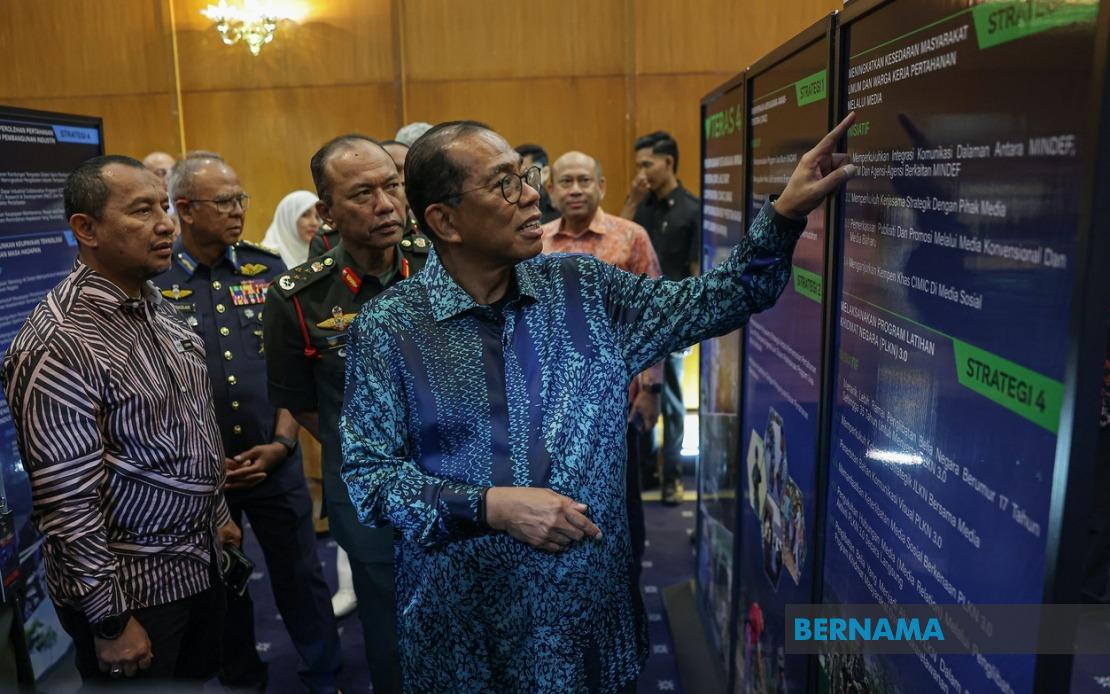
Malaysia's Defence Ministry has formally unveiled two critical planning documents intended to reshape how the nation approaches military security over the coming five years. The National Defence Strategic Plan (PSPN) and the Defence Capacity Blueprint (RTKP) 2026-2030 were presented as complementary frameworks designed to work in tandem with the existing Defence White Paper, creating a coherent strategic architecture for addressing contemporary and future security challenges.
Defence Minister Datuk Seri Mohamed Khaled Nordin explained that the initiative responds to a fundamentally altered security environment. The world now contends with intensifying geopolitical rivalries, rapid technological upheaval driven by artificial intelligence and automation, and a broadening spectrum of non-traditional security threats that extend far beyond conventional military concerns. These realities prompted officials to conduct a mid-term assessment of the Defence White Paper, identifying shortcomings and designing more flexible mechanisms capable of accommodating unpredictable developments.
The PSPN establishes seven strategic pillars that will guide Malaysia's defence approach through the remainder of this decade. These pillars encompass the operational effectiveness of the Malaysian Armed Forces, systematic strengthening of defence capabilities, comprehensive care for military personnel and veterans, and crucially, the advancement of defence-related technology and research innovation. This multi-faceted approach reflects recognition that military strength extends beyond hardware and training to encompass human capital management and technological edge.
While the PSPN establishes the destination and direction for Malaysia's defence efforts, the RTKP addresses the practical means of reaching those objectives. Minister Mohamed Khaled characterised the relationship between the two documents as directional versus implementational—the plan shows where the nation intends to go, while the blueprint ensures the nation possesses sufficient resources and capabilities to arrive there. This delineation proves important for Malaysian defence planners and policymakers seeking clarity on strategic intent versus operational execution.
The capacity blueprint operates across multiple dimensions simultaneously. Financial resources form the foundation, but the framework extends to human capital development, cultivation of technological expertise, and perhaps most significantly, enhanced coordination between different government agencies and the broader defence sector. This cross-institutional emphasis acknowledges that modern security challenges rarely conform to bureaucratic boundaries. The most effective responses require seamless collaboration between the Defence Ministry, armed services, civilian government bodies, and private sector defence contractors.
Minister Mohamed Khaled's remarks emphasised that national defence constitutes a whole-of-government and whole-of-society proposition rather than the exclusive purview of the Defence Ministry. This framing carries substantial implications for how Malaysia approaches security planning and resource allocation. It suggests that defence considerations should influence infrastructure development, research institution priorities, educational curricula, and private sector investment strategies—a genuinely integrated approach to national security that moves beyond military budgeting into broader governance.
The timing of this launch coincides with Malaysia's active modernisation of its defence hardware. In March, the Malaysian Armed Forces received three ANKA Medium Altitude Long Endurance Unmanned Aircraft Systems, which have since become operational at Labuan Air Base. These surveillance assets provide critical intelligence-gathering capacity across Malaysia's extensive maritime domain, a persistent requirement given the nation's geographic position and economic dependence on sea lanes. The deployment represents concrete manifestation of the strategic principles outlined in the new frameworks.
Looking forward, Malaysia anticipates receiving additional critical military systems within the timeframe covered by the new plans. The FA-50M light combat aircraft acquisition will enhance air combat capabilities, while maritime patrol aircraft will extend reconnaissance reach across regional waters. Perhaps most significantly for a nation with extensive coastlines and maritime interests, the second batch of Littoral Mission Ships will bolster Malaysia's ability to operate effectively in coastal and near-shore environments where many contemporary threats manifest. These acquisitions were scheduled prior to the new frameworks' launch but gain strategic coherence through explicit incorporation into the PSPN and RTKP.
For Malaysian stakeholders, the strategic documents represent more than bureaucratic reorganisation. They signal commitment to systematic, long-term defence planning that acknowledges both traditional and emerging threats. For Southeast Asian neighbours and international partners, they demonstrate Malaysia's determination to maintain credible defence capabilities and foster stable regional security. The emphasis on technological innovation and inter-agency coordination also suggests openness to defence partnerships and technology transfer arrangements that could enhance Malaysian capabilities while contributing to regional defence architecture.
The dual-document approach reveals sophisticated defence planning thinking. Rather than presenting a monolithic strategy, Malaysian officials have created a framework where strategic direction remains stable while implementation mechanisms retain flexibility. This architecture allows the nation to adapt specific programmes and resource allocations as circumstances evolve, without requiring constant revision of fundamental strategic doctrine. In an era of rapid technological change and geopolitical flux, this adaptive capacity may prove as valuable as any individual military system.
For defence industry participants, policymakers, and military personnel, the new frameworks provide essential guidance on priorities and resource directions. Malaysian defence contractors can align long-term business planning with the outlined strategic pillars, while armed forces personnel understand the institutional priorities shaping career development and operational emphasis. Educational institutions can adjust programmes to produce graduates possessing the technical expertise and professional competencies identified in the capacity blueprint.
The launch also reflects Malaysia's evolving approach to regional security. Rather than viewing defence as a zero-sum competition, the frameworks emphasise capability development and preparedness as stabilising factors. A well-equipped, properly trained, technologically advanced Malaysian military contributes to regional balance and supports the maritime security architecture essential for Southeast Asian prosperity. The integration of civilian and military perspectives in the planning process further suggests that Malaysia recognises the inseparable links between defence, economic security, and social stability.
As Malaysia navigates the remainder of this decade, these strategic documents will likely prove instrumental in shaping defence outcomes. The frameworks provide clarity on long-term direction while maintaining the flexibility necessary to respond to unforeseen developments. Whether the resources materialise to fully implement the plans, whether inter-agency coordination functions effectively in practice, and whether technological objectives materialise on schedule remain to be seen. Nevertheless, the publication of the PSPN and RTKP 2026-2030 signals sophisticated, forward-thinking defence planning appropriate to Malaysia's strategic circumstances and regional responsibilities.

