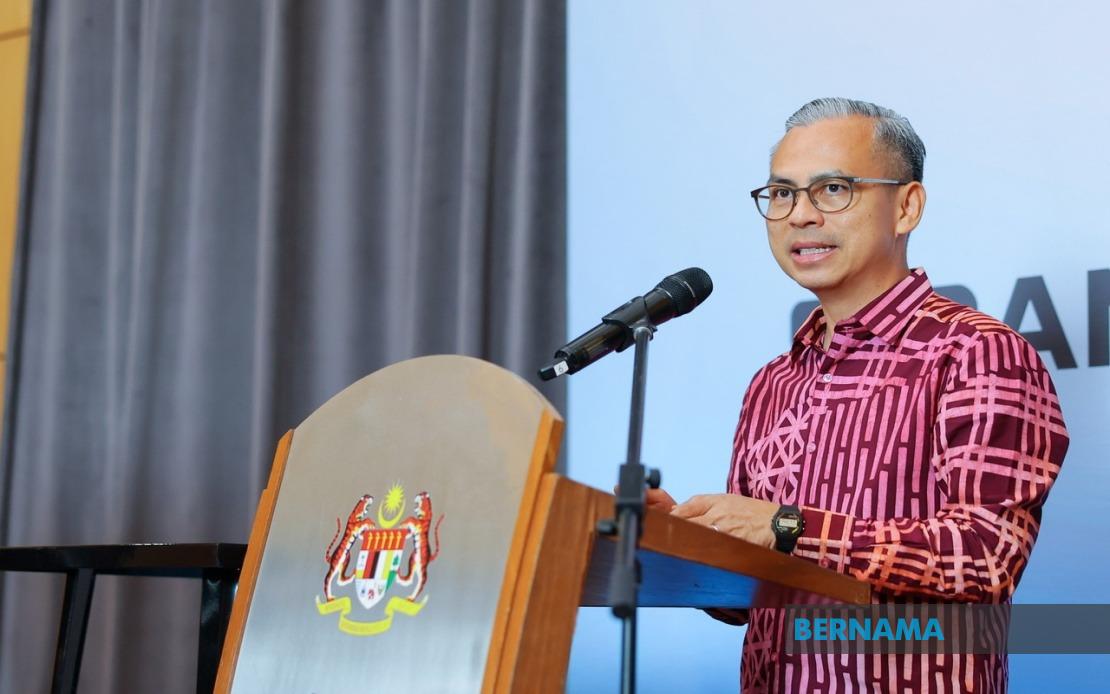
Malaysia's government is intensifying its fight against online fraud through the establishment of a specialised cross-agency committee, announced Communications Minister Datuk Fahmi Fadzil on July 2. The initiative, formally established on June 18 following a Cabinet retreat that addressed the mounting prevalence of digital scam-related offences, marks a significant escalation in the country's response to cybercriminal activity that has increasingly victimised Malaysian citizens and eroded trust in digital platforms.
The committee represents a substantial departure from conventional government approaches to digital crime by assembling stakeholders across multiple sectors under one coordinated framework. Beyond the expected participation of various government ministries, agencies and departments, the initiative uniquely incorporates the private sector—including banks, telecommunications providers and major technology platforms alongside social media companies. This inclusive structure acknowledges that online fraud operates across fragmented ecosystems where no single agency possesses sufficient visibility or authority to mount an effective response.
Fahmi, speaking at the weekly government press conference at Angkasapuri, articulated the committee's three-pronged strategic focus: strengthening enforcement mechanisms to prosecute offenders more aggressively, updating legal frameworks to address evolving scam methodologies, and enhancing investigative capabilities to identify criminals faster. Each element addresses distinct bottlenecks that have allowed scammers to operate with relative impunity. Enforcement has historically been hampered by jurisdictional ambiguities, inadequate digital forensics capacity and limited resources; legal frameworks struggle to keep pace with innovation in deception tactics; and investigation teams lack real-time access to critical data held by financial and telecommunications sectors.
The private sector's participation fundamentally alters the government's capacity to detect and intercept fraudulent activity. Banks can identify suspicious transaction patterns indicative of money laundering; telecommunications companies can track SIM card registration fraud and spoofed calls; technology platforms can remove scam content and share metadata about coordinated operations. By bringing these entities into regular consultation with law enforcement, the committee establishes information-sharing channels that previously operated on an ad-hoc basis, if at all. This represents a maturation of Malaysia's approach to cybercrime governance.
The government has declined to publicly detail specific strategies emerging from the committee's deliberations, a decision Fahmi justified on security grounds. Revealing tactical approaches to scammers themselves would enable criminals to adapt their methods preemptively, potentially negating months of coordination work. This calculated opacity contrasts with the public transparency many Malaysians expect from government initiatives, yet reflects a sophisticated understanding of adversarial dynamics in cybersecurity. The committee's first meeting, which Fahmi indicated would occur imminently, is where detailed operational protocols will be finalised.
The government points to the committee's structural precedent in Malaysia's prior response to child sexual exploitation crimes, where similar multi-agency coordination yielded demonstrable results through targeted special operations. That experience suggests the framework can translate into concrete achievements against online fraud. However, the comparison carries important caveats—child protection commands broader moral consensus and resources, whereas scam prevention requires sustained funding and political attention amid competing priorities.
The timing of this announcement carries significance for Malaysian digital citizens. Online fraud has metastasised into Malaysia's most prevalent cybercrime category, with victims spanning all demographics and income levels. Scams increasingly target vulnerable populations, including elderly citizens with limited digital literacy and small business owners unfamiliar with sophisticated phishing techniques. The psychological and financial toll extends beyond immediate losses; successful scams undermine confidence in legitimate digital transactions, suppressing e-commerce adoption and digital financial inclusion. A government response at this scale signals acknowledgment that the problem has exceeded incremental policy adjustments.
For Malaysia's banking and fintech sectors, the committee's formation introduces both opportunities and responsibilities. Financial institutions gain law enforcement collaboration that expedites fraud investigations and strengthens their own security protocols, yet they shoulder increased obligations to share transaction data and comply with new regulatory directives. The telecommunications sector faces similar dynamics—cooperation enhances their ability to combat SIM-swap fraud and spoofing, but demands organisational investment in compliance infrastructure.
Regionally, Malaysia's initiative positions the country as a thought leader in governance responses to organised cybercrime. Singapore, Indonesia and Thailand face similar scam epidemics; Malaysia's structured approach may influence how neighbouring nations design their own inter-agency frameworks. However, the initiative's success ultimately depends on implementation fidelity and sustained resource allocation. Cross-agency committees frequently struggle with institutional coordination challenges, conflicting priorities and bureaucratic inertia. The committee's effectiveness will be measured not by its formation, but by arrest rates, prosecution velocity and demonstrable reductions in victim numbers over subsequent quarters.
The establishment of this committee signals that Malaysian policymakers recognise online fraud as a structural problem requiring structural solutions. Fragmented responses from isolated government agencies have proven insufficient; coordinated action across public and private sectors represents the necessary evolution. Whether this committee translates coordination into tangible protection for Malaysian digital users will depend on how decisively it addresses enforcement, legal and investigative capacity gaps.

