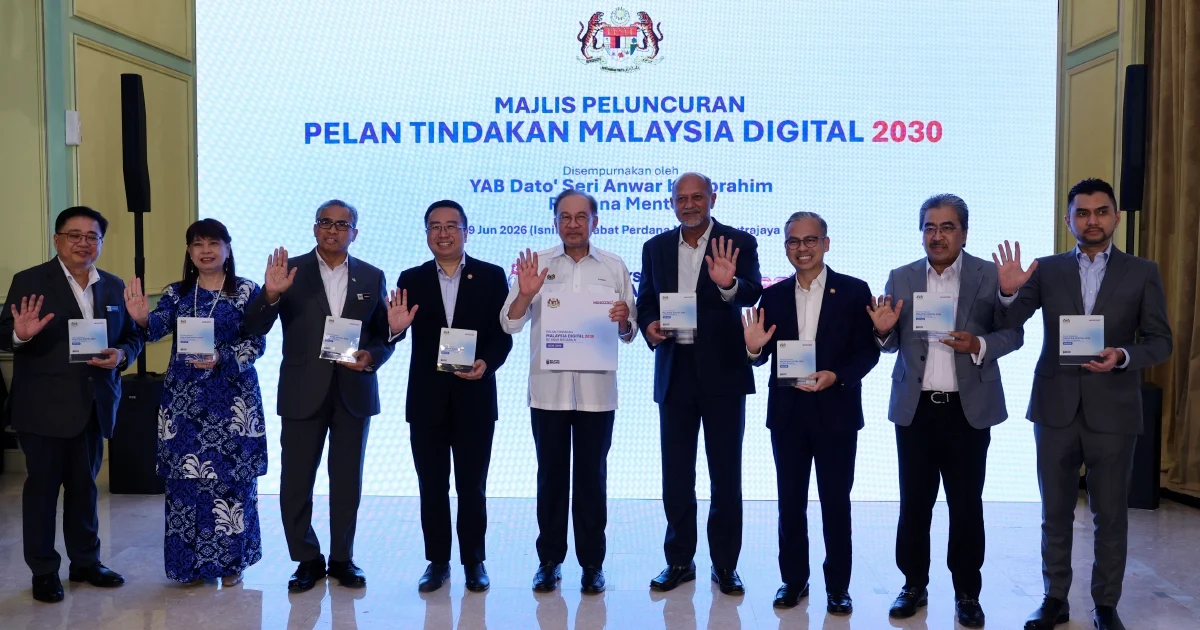
Prime Minister Datuk Seri Anwar Ibrahim has launched Malaysia Digital 2030 (MD2030), a comprehensive national roadmap spanning 2026 to 2030 that represents a fundamental reorientation of how Malaysia approaches technological development and economic competitiveness. The initiative signals an intentional pivot away from the country's historic positioning as primarily a consumer and adopter of foreign technologies, instead positioning Malaysia to become a generator of indigenous digital solutions and artificial intelligence capabilities that could reshape the nation's economic future.
The timing of the launch carries strategic significance for Malaysia's regional standing in Southeast Asia. As countries across the region race to establish themselves as technology hubs—from Singapore's Smart Nation initiatives to Vietnam's digital transformation efforts—Malaysia's MD2030 represents a deliberate attempt to carve out distinctive competitive advantages in the rapidly expanding digital economy. By anchoring the plan explicitly around artificial intelligence and innovation, the government is signalling that it recognises the existential importance of these technologies for future economic prosperity and employment creation.
The shift from consumer to producer status reflects deeper structural challenges Malaysia has faced in recent decades. Despite significant investments in the technology sector and the presence of multinational tech companies, much of Malaysia's digital economy has remained dependent on foreign expertise, capital, and intellectual property. The new framework acknowledges that sustainable economic growth requires developing local talent, fostering indigenous research and development capabilities, and creating pathways for Malaysian entrepreneurs and researchers to lead technological innovation rather than merely implement solutions designed elsewhere.
Artificial intelligence stands as the centrepiece of this transformation strategy, and rightfully so given its pervasive impact across virtually every economic sector. From manufacturing and financial services to healthcare and agriculture, AI applications are reshaping productivity and value creation globally. By positioning Malaysia as an AI nation, the government is betting that developing strong domestic AI capabilities now will position the country advantageously as these technologies mature and become essential infrastructure for competitive economies. This approach parallels similar commitments made by regional competitors and reflects international consensus about AI's centrality to 21st-century economic development.
The five-year timeframe embedded in the plan's structure matters considerably for implementation. A 2026-2030 framework provides sufficient duration to meaningfully build capacity while remaining ambitious enough to drive urgency and maintain political momentum. For Malaysian policymakers, investors, and businesses, this window represents the critical period during which foundations must be laid—whether through education initiatives, research infrastructure development, regulatory frameworks that encourage innovation, or venture capital ecosystems that can nurture homegrown startups with global ambitions.
Successfully executing such an agenda requires coordinated action across multiple domains that traditionally operate in silos. Educational institutions must align curricula to produce graduates with advanced digital and AI competencies. Government procurement policies can incentivise local technology adoption and development. Research institutions require sustained funding and autonomy to pursue cutting-edge work. Regulatory sandboxes and intellectual property protections need strengthening. Meanwhile, financial infrastructure must be developed to channel capital toward promising Malaysian technology ventures at various stages of maturity. The coherence and synchronisation of these efforts will ultimately determine whether MD2030 becomes a transformative national achievement or remains aspirational rhetoric.
The announcement also reflects evolving geopolitical dimensions of technological sovereignty. In an era where technology supply chains carry strategic implications and digital capabilities influence national security, Malaysia's desire to develop indigenous innovation capacity aligns with broader regional trends toward reducing dependency on any single external technology provider. Countries throughout Asia are increasingly viewing technology self-sufficiency not merely as an economic advantage but as a fundamental matter of national interest and strategic autonomy.
For Malaysia's business community, MD2030 presents both opportunities and imperatives. Established Malaysian companies must determine how to evolve beyond their current roles as technology implementers to become innovators and exporters of digital solutions. Simultaneously, the plan creates space for new ventures and entrepreneurs to emerge, particularly if supporting ecosystems—venture capital, technical expertise networks, market access pathways—develop appropriately. The private sector's responsiveness to these opportunities will substantially influence whether the plan achieves its transformative objectives.
International collaboration will almost certainly prove necessary despite the emphasis on homegrown innovation. The most successful technology ecosystems globally involve productive partnerships between domestic and international actors. Malaysia's experience in attracting foreign investment and talent can be leveraged to accelerate capacity building, provided that such collaboration is structured to facilitate genuine knowledge transfer and capability development rather than perpetuating traditional consumer-producer relationships.
The launch of MD2030 also suggests growing recognition within Malaysia's political leadership that digital transformation extends far beyond infrastructure investment or corporate initiatives. It represents a whole-of-society undertaking affecting education, research, business culture, regulatory environments, and talent development. This holistic framing indicates understanding that sustainable technology-led development requires systemic change rather than isolated interventions.
Looking ahead, the success of Malaysia Digital 2030 will be measured not merely by policy announcements or funding allocations but by concrete outcomes: Malaysian-developed AI applications solving real problems, homegrown technology companies achieving meaningful scale and international competitiveness, growing numbers of researchers and entrepreneurs identifying Malaysia as an environment where innovation can flourish. For a nation seeking to transition toward higher value-added economic activities and reduce dependency on commodities and labour-intensive manufacturing, building genuine innovation capacity represents one of the most consequential strategic choices policymakers can make.

