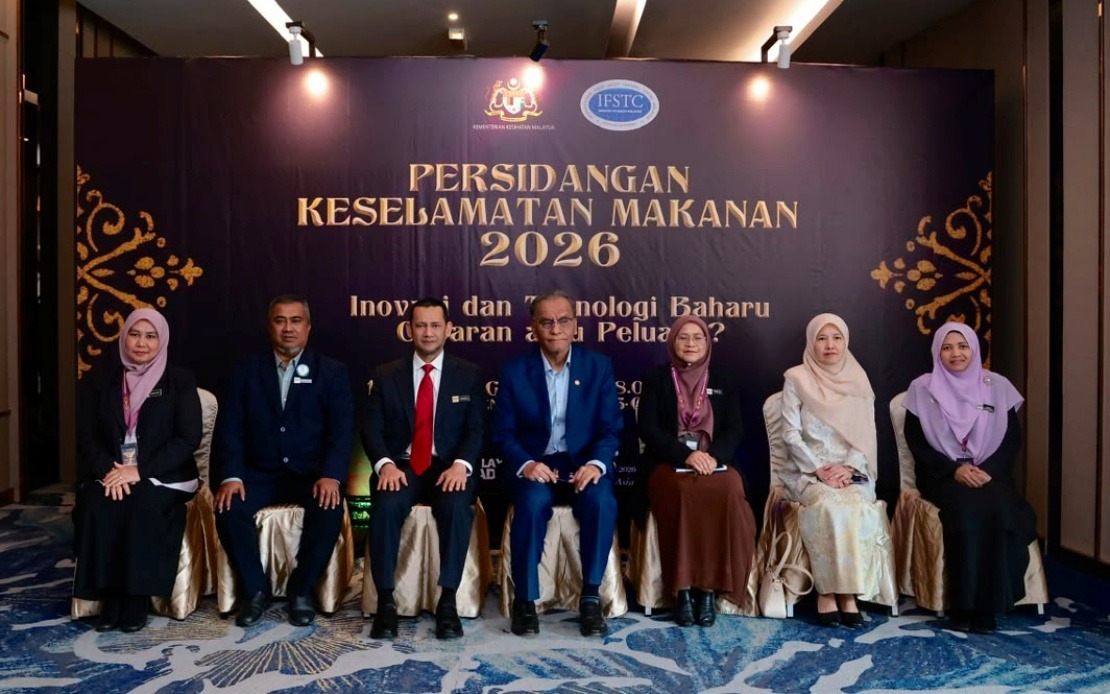
Malaysia has taken a significant step in regional food security by formally joining the Asia-Pacific Food Regulatory Authority Summit, a move that reflects growing concerns about the nation's dependency on imported food. Health Minister Datuk Seri Dr Dzulkefly Ahmad announced the Cabinet's approval of Malaysia's membership at a signing ceremony in Putrajaya, underscoring the government's commitment to modernising food safety standards across the region and within domestic borders.
The scale of Malaysia's food import challenge cannot be overstated. Over the past decade, the country's reliance on imported food products has nearly doubled, with purchases climbing from RM42.6 billion in 2013 to RM78.9 billion in 2023—an 85 per cent increase that illustrates how deeply Malaysia depends on global supply chains for feeding its population. This dramatic surge reflects both population growth and rising consumption patterns, but it also exposes the nation to significant food safety risks as products traverse multiple international borders and complex distribution networks before reaching Malaysian consumers.
By joining APFRAS, Malaysia positions itself as what the Health Ministry describes as a "Smart Gatekeeper" within the Asia-Pacific region. This designation carries both responsibility and opportunity. The country aims to lead digital transformation in food safety governance, a critical ambition given that the majority of food consumed by Malaysians now travels through intricate global supply chains involving numerous jurisdictions and regulatory systems. APFRAS membership enables Malaysia to harmonise standards with regional partners while simultaneously driving innovation in how authorities monitor and control food safety at entry points.
The government's strategy extends beyond passive compliance with international standards. Dr Dzulkefly outlined three concrete objectives for Malaysia's role within the summit framework. First, the nation will lead efforts in digitising food safety governance across the region, moving away from manual, paper-based systems toward integrated digital platforms that enable real-time monitoring. Second, Malaysia will work on regulating biodegradable packaging materials, an emerging concern as the food industry seeks environmentally sustainable alternatives without compromising product safety. Third, the country will champion harmonisation of legislative frameworks for new food innovations, ensuring that emerging technologies and food products meet consistent safety standards across APFRAS member economies.
These initiatives directly support two flagship government policies: the National Food Safety Policy and the National Food Security Policy. By aligning APFRAS membership with these domestic frameworks, Malaysia demonstrates a coherent approach to food governance that addresses both internal safety concerns and external supply chain vulnerabilities. The timing of this membership proves particularly strategic as regional food trade continues to expand and consumer expectations for transparent, safe food sourcing intensify.
Technology forms the cornerstone of Malaysia's modernisation agenda. The Health Ministry is actively exploring artificial intelligence and predictive analytics to enhance monitoring capabilities at the country's critical entry points—ports, airports, and land borders where the vast majority of imported food arrives. These technologies can identify risk patterns in supply chains, flag potential contamination threats before products reach consumers, and streamline inspection processes that currently struggle under the volume of incoming shipments. By implementing such systems, Malaysia hopes to transform food safety from a reactive, incident-driven function into a proactive, data-informed discipline.
The 2026 Food Safety Conference, which coincided with the APFRAS membership signing, brought together over 300 food safety professionals, regulators, industry representatives, and researchers. The conference theme, "New Innovations and Technologies – Challenges or Opportunities?", reflects the central tension facing food safety authorities worldwide. Innovations in food production, preservation, and packaging create exciting possibilities for efficiency and sustainability, yet they simultaneously introduce novel risks that existing regulatory frameworks may not adequately address. Malaysia's participation in this dialogue positions the nation as an active contributor to regional problem-solving rather than a passive recipient of international standards.
For Malaysian consumers and the food industry, APFRAS membership carries tangible implications. Stricter, more consistently applied safety standards—harmonised across the region—will likely increase compliance costs for importers and domestic producers. However, this raises the baseline for food safety, reducing the risk of contaminated or substandard products entering the market. The digital transformation of monitoring systems promises faster responses to contamination incidents, potentially limiting health impacts and economic disruption when problems do emerge.
The initiative also addresses a critical gap in Malaysia's food security infrastructure. As the country becomes increasingly dependent on imports, the ability to verify the safety and authenticity of incoming products becomes paramount. Malicious actors, poor handling practices in distant supply chains, and inadvertent contamination all pose threats. By leveraging APFRAS partnerships and technology, Malaysia gains access to shared intelligence, best-practice frameworks, and collaborative problem-solving mechanisms that a single nation cannot provide alone.
Regional cooperation through APFRAS also carries geopolitical advantages. Malaysia can shape food safety standards in partnership with other Southeast Asian nations, ensuring that regulations reflect regional priorities and economic realities rather than being imposed by distant, economically dominant trading partners. This cooperative approach builds trust among ASEAN members and facilitates smoother trade flows while maintaining rigorous safety benchmarks.
Looking forward, Malaysia's success in APFRAS will be measured by concrete outcomes: the degree to which digital systems reduce inspection times, the effectiveness of AI-powered risk prediction in preventing contamination incidents, and the extent to which harmonised regulations simplify trade while maintaining safety. The government's willingness to tackle packaging regulation and food innovation frameworks demonstrates ambition beyond incremental improvements.
Ultimately, Malaysia's APFRAS membership reflects a mature recognition that in an interconnected food system, no nation can ensure safety alone. As imports continue rising and supply chains grow more complex, institutional cooperation becomes not merely advantageous but essential. The path forward requires sustained investment in technology, expertise, and regional coordination—commitments the government appears prepared to make.

