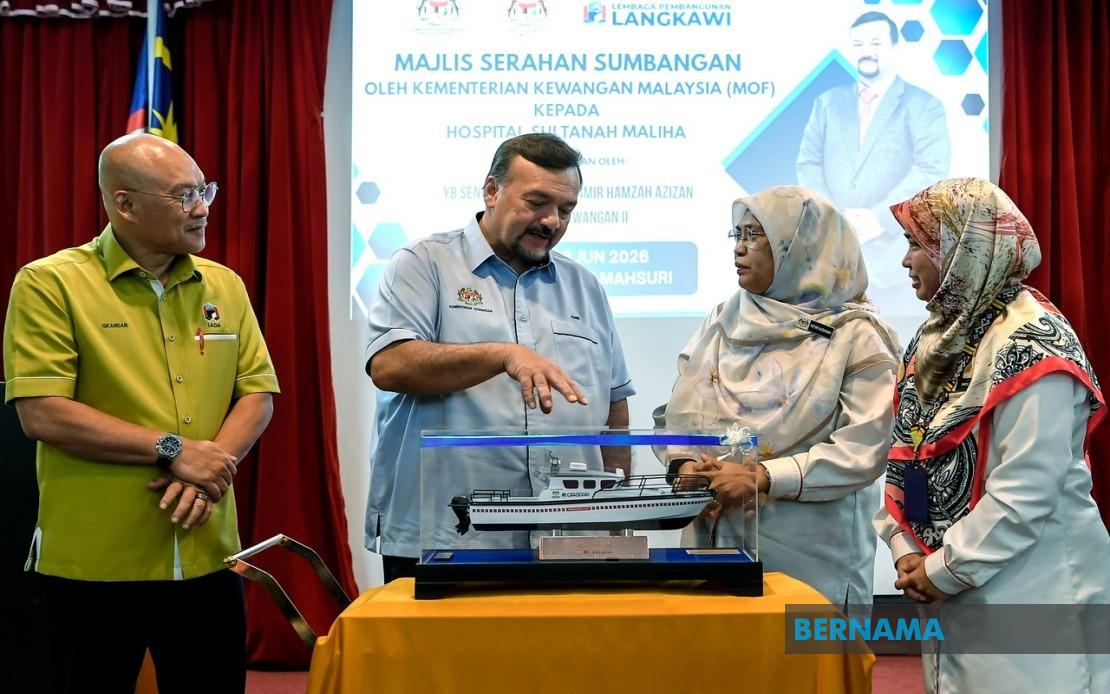
Malaysia's Ministry of Finance has committed RM5.5 million to establish a dedicated sea ambulance service serving Langkawi, addressing longstanding challenges in transporting patients requiring urgent medical care to mainland referral hospitals. The initiative, which Finance Minister II Datuk Seri Amir Hamzah Azizan announced during a visit to Hospital Sultanah Maliha, represents a significant investment in island healthcare infrastructure and reflects growing recognition of the unique logistical barriers facing remote communities.
The newly procured vessel will be operated directly by Hospital Sultanah Maliha and is scheduled to commence operations in early 2024. By establishing a dedicated emergency transport service, the government aims to eliminate dependence on conventional passenger ferry operations, which have historically served as the primary mechanism for moving critically ill patients to the mainland. This arrangement has created substantial vulnerabilities, particularly during periods when ferry schedules are reduced or when weather conditions prevent regular service, leaving Langkawi residents and tourists dependent on unreliable transport options during medical emergencies.
The challenges of patient evacuation from the island are substantial and multifaceted. Langkawi's geographic isolation means that individuals suffering acute conditions requiring specialised treatment unavailable locally face uncertain and potentially life-threatening delays in reaching appropriate medical facilities. During monsoon seasons or unforeseen disruptions to ferry services, emergency patients may face hours of delay waiting for transport, a delay that can prove critical in conditions such as cardiac events, severe trauma, or acute stroke. The dedicated sea ambulance addresses this vulnerability by providing immediate, predictable access to transport infrastructure designed specifically for medical emergencies.
Amir Hamzah emphasised that the vessel is purposefully equipped to maintain patient safety, comfort, and dignity throughout transfer procedures. The sea ambulance can accommodate two stretchers simultaneously alongside a medical team of up to twelve personnel, ensuring that patients receive continuous professional care during the journey to the mainland. This capacity represents a fundamental improvement over passenger ferry arrangements, where medical support during transit has been limited or absent and where the vessel environment itself may be unsuitable for critically ill individuals. The dedicated medical environment enables paramedics and nurses to monitor vital signs, administer treatments, and respond immediately to clinical deterioration.
Beyond the sea ambulance procurement, the Ministry of Finance simultaneously contributed RM700,000 in medical equipment to strengthen Hospital Sultanah Maliha's capacity to provide comprehensive acute care. This complementary investment reflects an integrated approach to improving Langkawi's healthcare system, recognising that reducing patient transfers depends partly on enhancing the hospital's ability to manage complex conditions locally. The equipment portfolio includes diagnostic devices, information technology infrastructure, clinical furniture, vehicles, and security systems, collectively designed to modernise the hospital's operational capabilities.
A particularly significant element of the broader healthcare investment involves implementation of the Electronic Medical Record system, a digitisation initiative that the Ministry of Health is prioritising across Malaysia's public hospital network. This system enables real-time documentation of patient information during clinical encounters and facilitates secure digital sharing of medical records across hospital networks. By equipping staff with mobile computers, the system allows nurses and doctors to input patient data directly during ward rounds rather than completing documentation retrospectively, accelerating clinical workflows and reducing transcription errors. For Langkawi patients referred to mainland hospitals, digital integration ensures that comprehensive medical history and test results precede the patient, enabling receiving clinicians to make informed decisions immediately upon arrival.
The Langkawi Development Authority, of which Amir Hamzah serves as co-chairman, has evidently prioritised healthcare infrastructure among its broader economic development objectives. Langkawi attracts millions of international tourists annually, and the availability of modern emergency medical services represents an important component of destination safety and reputation. Tourist-focused destinations in Southeast Asia increasingly recognise that reliable emergency healthcare strengthens their competitive position in global tourism markets. A dedicated sea ambulance service thus serves dual purposes: providing essential care for the island's permanent resident population whilst simultaneously assuring visitors that serious medical emergencies can be managed effectively.
The timing of the announcement signals accelerating government attention to healthcare equity across Malaysia's geography. Island and remote communities historically receive lower per-capita investments in health infrastructure compared to urban centres, a disparity that the current administration has identified as requiring correction. Langkawi's strategic importance as a tourism and economic hub makes it a logical priority, yet the funding commitment may foreshadow similar initiatives for other isolated populations in East Malaysia and smaller island communities. Southeast Asian governments increasingly acknowledge that geographic isolation should not predetermine healthcare access quality, a principle that extends beyond emergency transport to encompass specialist services and advanced diagnostics.
The sea ambulance service addresses particular vulnerabilities that exist nowhere else in Malaysia's healthcare system. Peninsular Malaysia's comprehensive road and coastal networks mean that most populations can reach tertiary hospitals within two to three hours, whereas Langkawi's patients previously faced indefinite delays dependent on ferry schedules. The investment represents acknowledgment that helicopter evacuation, whilst occasionally utilised in life-threatening emergencies, cannot serve as a sustainable primary transport mechanism due to cost and weather limitations. A dedicated marine ambulance provides a middle ground solution that is operationally reliable, cost-effective at scale, and suitable for the majority of patient transfers requiring mainland hospitalisation.
Implementation of the service will require developing operational protocols governing patient stabilisation, crew training, and coordination between Hospital Sultanah Maliha and receiving mainland hospitals. Crews will require certification in maritime emergency medicine, a specialisation demanding training beyond standard ambulance personnel capabilities given the unique environment of sea transport. The hospital and mainland medical centres will need to establish communication systems ensuring that transfer requests are processed rapidly and that receiving facilities prepare appropriately for incoming patients. These operational dimensions will significantly influence whether the service achieves its intended benefits.

