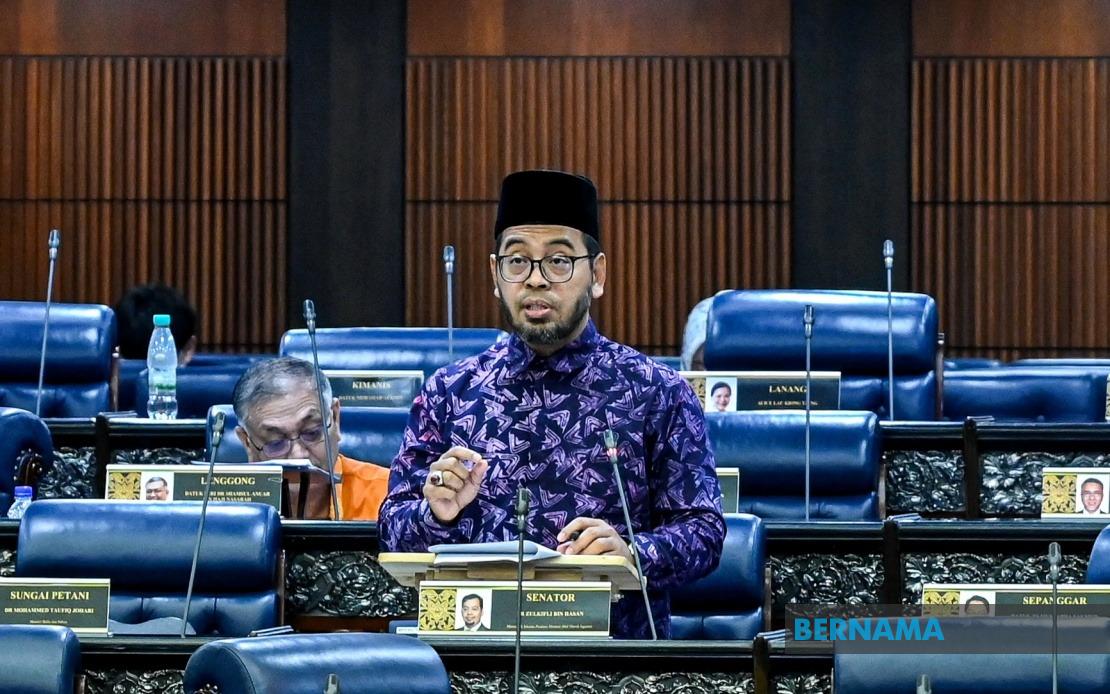
The Malaysian government has moved to strengthen its surveillance and enforcement mechanisms against the proliferation of unorthodox Islamic teachings spreading through digital channels and social media platforms. Minister in the Prime Minister's Department (Religious Affairs) Dr Zulkifli Hasan announced during parliamentary proceedings that authorities are implementing a comprehensive cross-agency strategy designed to identify and counter doctrinal interpretations that deviate from the mainstream Ahli Sunnah Wal Jamaah tradition, which represents the country's Islamic orthodoxy.
The shift towards digital platforms has fundamentally altered the enforcement landscape facing Malaysian authorities. Where deviant teachings once relied primarily on underground gatherings and face-to-face recruitment, they now operate across instant messaging applications, social media networks, and encrypted communication channels that traverse international boundaries with relative ease. This transformation presents regulatory challenges that conventional monitoring methods struggle to address, particularly when such content is deliberately obscured within seemingly innocuous messaging about self-improvement, wellness programmes, charitable work, or informal religious education.
According to Dr Zulkifli's parliamentary statement, perpetrators of these teachings employ sophisticated communication strategies that blend motivational rhetoric with spiritual narratives, psychological manipulation techniques, and unverified conspiracy theories. They frequently leverage the appeal of charismatic figures and peer influence networks to attract followers, particularly among vulnerable demographics seeking spiritual guidance or community belonging. This multifaceted approach makes identification and intervention considerably more complex than confronting openly declared heretical movements.
The government's response architecture involves the Department of Islamic Development Malaysia (JAKIM), state-level Islamic religious authorities, federal police, the Malaysian Communications and Multimedia Commission, the National Security Council, municipal authorities, immigration officials, and civil registration bodies. This sprawling coordination reflects the recognition that combating ideological movements requires simultaneous action across enforcement, prevention, rehabilitation, and community resilience domains. Recent enforcement operations demonstrate this machinery in action, including the detention of 288 Ahmadiyya Qadiani followers in Sabah during May and the apprehension of 226 foreign nationals during a raid on a Syiah centre in the Petaling Jaya area.
Beyond enforcement, the government emphasizes intervention and rehabilitation as critical components of its strategy. Affected individuals and group leaders face targeted counseling sessions designed to redirect their religious understanding toward orthodox interpretations. The Syariah courts possess authority to mandate placement in faith rehabilitation facilities, where supervised programmes aim to realign theological comprehension with state-endorsed Islamic scholarship. These interventions reflect an underlying philosophy that enforcement alone cannot sustainably address ideological challenges; sustained engagement with affected communities is essential.
A newly established National Steering Committee to Address Threats to Faith coordinates preventative efforts across educational and youth development sectors. This committee draws representation from the Ministry of Education, Ministry of Higher Education, Ministry of Home Affairs, and JAKIM, recognizing that vulnerability to unorthodox teachings often takes root during formative years when religious identity remains malleable. The committee oversees multiple youth-oriented programmes designed to fortify orthodox Islamic understanding and build psychological resilience against ideological recruitment tactics.
Institut Pemantapan dan Perkaderan Akidah Malaysia (IPHAM) operates specialized programmes targeting youth susceptibility to unorthodox doctrines. Concurrently, the My Insaniah Programme and the Rakan Masjid Programme, developed collaboratively with the Ministry of Youth and Sports, provide community-based religious engagement that emphasizes orthodox teachings within supportive peer environments. These initiatives position mainstream Islamic institutions as accessible alternatives to groups promoting heterodox interpretations, effectively competing for young people's spiritual attention and loyalty.
The government has also prioritized curriculum enhancement, specifically strengthening the KAFA 2.0 (Quran and Fardu Ain) programme to deepen students' engagement with foundational Islamic texts and practices. This educational approach aims to establish deeper doctrinal understanding that creates intellectual and spiritual defenses against misinterpretation and deviation. By investing in comprehensive religious literacy from school age onward, authorities hope to reduce vulnerability to later recruitment by movements promoting unorthodox teachings.
The Malaysian experience reflects broader Southeast Asian challenges regarding ideological influence circulating through digital networks. Countries across the region grapple with similar pressures as unorthodox Islamic movements, international missionary networks, and alternative spiritual communities exploit connectivity to reach receptive audiences. Malaysia's multi-layered response—combining traditional enforcement with rehabilitation, community engagement, and youth-focused prevention—provides a template being observed by neighbouring governments managing comparable dilemmas around digital-age religious movements.
However, the sustainability and proportionality of these efforts remain subjects of ongoing debate among civil society observers and religious scholars. Critics raise questions about definitional boundaries separating legitimate theological diversity from proscribed deviation, particularly when state authorities retain significant power in determining which interpretations constitute dangerous heterodoxy. The balance between security imperatives and individual religious freedom represents a continuing tension within Malaysia's approach to managing the intersection of Islamic authority, state power, and digital communication technologies.
Looking forward, the government's strategy appears oriented toward institutionalizing surveillance, intervention, and prevention across multiple touchpoints where citizens encounter religious messaging and community. The effectiveness of these mechanisms will depend substantially on whether rehabilitation programmes achieve genuine ideological reorientation, whether preventative education successfully inoculates youth against recruitment appeals, and whether enforcement remains proportionate to genuine security threats rather than becoming a mechanism for suppressing legitimate theological discourse.

