The Malaysian government has activated cloud seeding campaigns targeting regions grappling with severe air quality deterioration and water availability challenges, with Deputy Prime Minister Datuk Seri Dr Ahmad Zahid Hamidi confirming the multi-pronged approach during an event at the 2026 Malaysia Agriculture, Horticulture and Agrotourism Show in Serdang. The initiative reflects growing concerns about the dual crises of haze pollution and dwindling water reserves, particularly as the country enters a period of elevated temperatures and reduced rainfall.
Operations are being concentrated in areas where the Air Pollutant Index has climbed above the 150 threshold, which signals an unhealthy air quality level for the general population. Simultaneously, authorities are targeting regions where reservoir levels have been dropping noticeably, a situation that could potentially constrain water distribution if not addressed proactively. This dual-pronged approach demonstrates the interconnected nature of Malaysia's environmental challenges, where atmospheric conditions and water resource management have become increasingly intertwined during seasonal transitions.
The Deputy Prime Minister emphasised that the cloud seeding work is being executed in close partnership with the Malaysian Meteorological Department and the Royal Malaysian Air Force, underscoring the technical complexity and coordination required for such operations. The RMAF provides aerial support essential for deploying cloud seeding agents at appropriate altitudes and locations, while METMalaysia offers meteorological expertise to identify suitable atmospheric conditions for the procedure. This inter-agency collaboration has become standard practice whenever Malaysia confronts severe haze episodes or water scarcity issues.
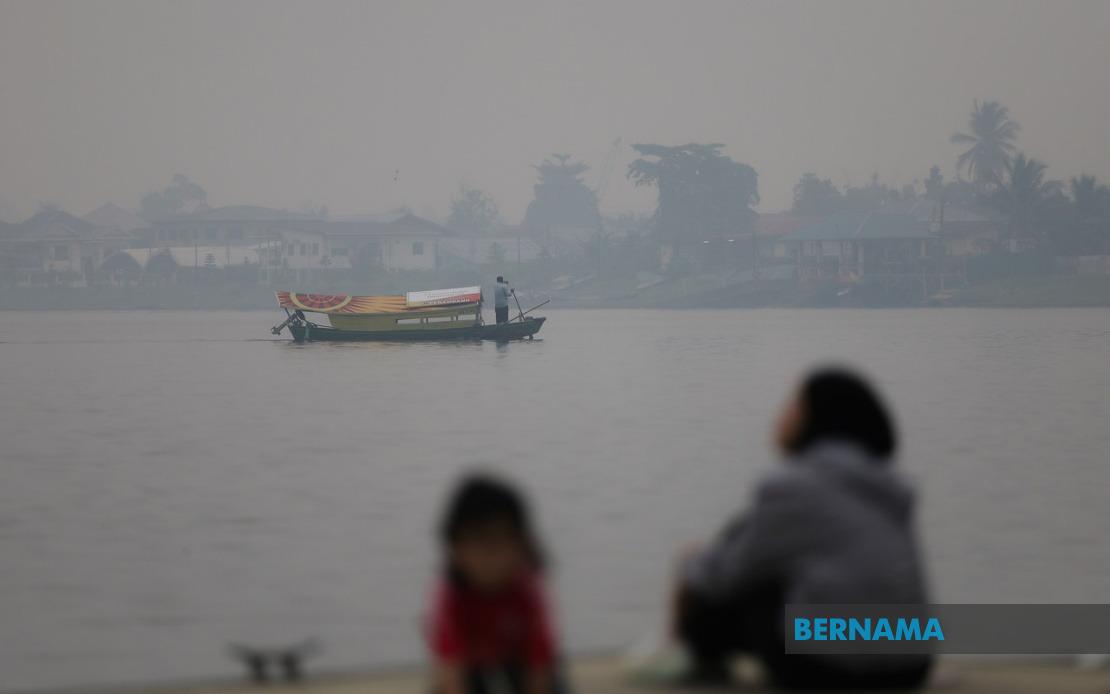
Sarawak has emerged as a particular flashpoint, with three monitoring stations recording hazardous or very unhealthy air quality levels on the day of the announcement. The Serian Police headquarters station registered an extraordinarily high reading of 412 on the Air Pollutant Index scale, placing it in the hazardous category where prolonged exposure poses significant health risks to vulnerable populations. Samarahan followed with a reading of 332, while Kuching, the state capital, recorded 304. Sri Aman presented a slightly less severe but still concerning very unhealthy reading of 228, indicating that air quality deterioration was widespread across the state.
These alarming figures in Sarawak underscore why the government has prioritised that state for immediate cloud seeding intervention, with operations scheduled to commence from September 3 to 5. The fact that multiple locations simultaneously recorded hazardous or very unhealthy readings suggests a regional atmospheric phenomenon rather than isolated pollution sources, potentially driven by transboundary haze that typically originates from agricultural burning in neighbouring regions during certain seasons. Cloud seeding offers a potential mechanism to induce rainfall that could suppress airborne particulates and replenish water resources simultaneously.
Cloud seeding operations are also being extended to Kedah and Perlis during the same period, suggesting that the haze problem has affected a broader swath of the nation than initially indicated. The Deputy Prime Minister noted that Putrajaya had already received cloud seeding treatment by the time of his statement, indicating that operations had been underway in the Federal Territory to address both air quality and water reserve concerns there. The geographical spread of affected regions—from the northern states to Sarawak in East Malaysia—demonstrates the pervasive nature of the current haze episode.
A crucial observation made by the Deputy Prime Minister highlights the technical and meteorological constraints governing cloud seeding effectiveness. He noted that while the procedure requires areas recording high API readings and low dam levels, successful implementation depends fundamentally on weather conditions cooperating with the operation. Even when visible clouds exist in the atmosphere, they must be moving in directions that would carry any induced rainfall towards targeted areas. This dependency on natural atmospheric circulation patterns means that cloud seeding cannot be deployed on demand but must be timed and positioned according to prevailing wind patterns and cloud movements—a reality that sometimes frustrates expectations for rapid resolution of haze and water availability crises.
The water supply dimension adds particular urgency to the cloud seeding campaign, as Malaysia's principal urban and industrial centres depend heavily on reservoirs that require consistent rainfall to maintain adequate reserves. The current hot weather pattern appears to have reduced precipitation while simultaneously increasing evaporation from water bodies, creating a squeeze on available freshwater supplies. If dam levels continue declining without intervention, water rationing could become necessary in affected regions, creating cascading impacts across residential, commercial, and industrial sectors that depend on reliable water distribution.
The intensification of cloud seeding operations reflects lessons learned from previous haze episodes and water crises that tested Malaysia's resilience and governance capacity. The government has invested in strengthening meteorological capabilities and aerial resources specifically to enable rapid deployment of cloud seeding whenever conditions warrant such intervention. However, the effectiveness of such measures remains contingent on addressing underlying causes, particularly transboundary haze sources and the broader challenge of long-term water security in a country experiencing variable rainfall patterns and growing competition for freshwater resources.
For Malaysian citizens and businesses, the cloud seeding campaign offers some prospect of relief from degraded air quality and potential water constraints, though outcomes remain uncertain given the meteorological variables involved. Residents in severely affected areas should nevertheless continue monitoring air quality advisories and take appropriate health precautions, as cloud seeding cannot guarantee immediate or complete improvement in air conditions. The simultaneous concern about water supplies underscores the importance of water conservation practices among households and industries, ensuring that even if cloud seeding proves successful in inducing rainfall, available resources are used efficiently to extend supply security through any extended dry period.

