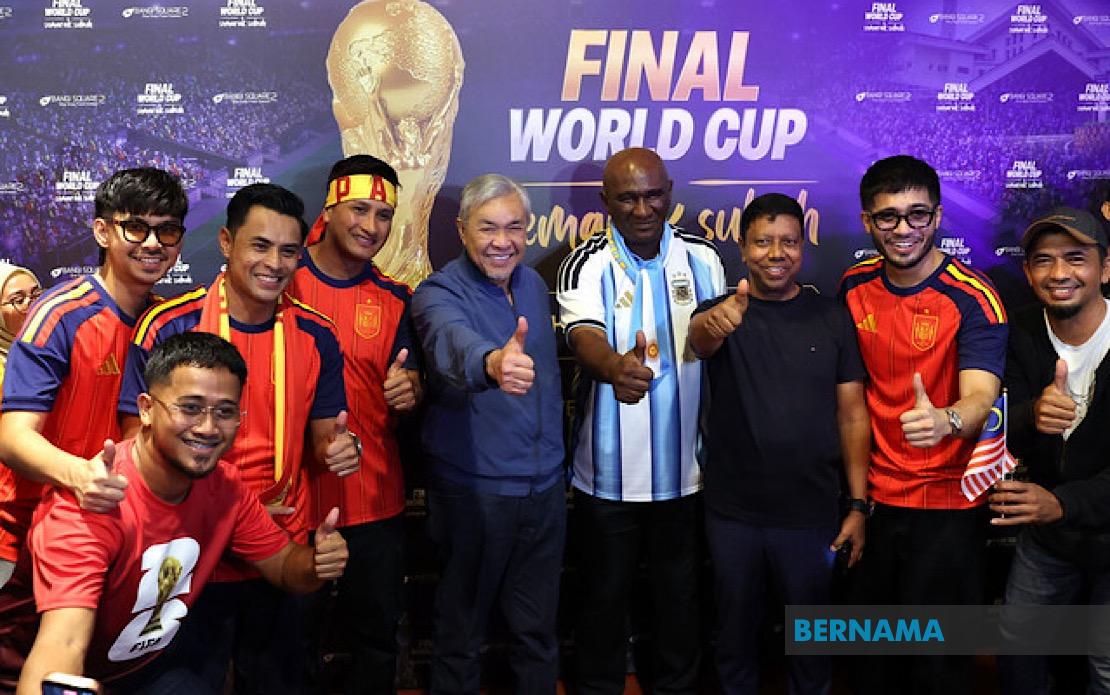
Malaysia's Deputy Prime Minister Datuk Seri Dr Ahmad Zahid Hamidi has articulated the nation's aspirational goal of hosting the FIFA World Cup, positioning the country as a potential future venue for football's most prestigious tournament. Speaking during festivities at Bangi Square 2, Ahmad Zahid, who also serves as Rural and Regional Development Minister, framed the hosting ambition within a broader vision of regional representation and domestic sporting achievement.
The deputy premier linked Malaysia's World Cup hosting aspirations directly to the performance trajectory of the national football squad, the Harimau Malaya. He expressed optimism that by the time Malaysia secured hosting rights, the national team would have elevated itself sufficiently to compete alongside other Southeast Asian nations in the tournament itself. This dual objective—simultaneously achieving tournament hosting status while fielding a competitive national side—reflects an understanding of the interconnected challenges facing Malaysian football at both grassroots and elite levels.
Recent FIFA rankings provide some context for this ambition, though the data reveals the considerable distance Malaysia must traverse. The Harimau Malaya currently occupy 136th position in the world rankings, having accumulated 1,086.22 points according to the latest assessment. The marginal upward movement of two places from their previous standing of 138th represents incremental progress, yet substantial improvement would be required to establish Malaysia as a tournament-competitive force on the global stage.
Ahmad Zahid's remarks were delivered amid a festive atmosphere as several hundred football enthusiasts gathered at Bangi Square 2 to watch the World Cup final between Argentina and Spain unfold on giant screens. The occasion underscored the substantial local appetite for world football, particularly during marquee tournaments. The convergence of public interest and official statement reflects deliberate government engagement with sporting passion as a vehicle for national aspiration.
The event programming extended beyond match viewing to incorporate educational and entertainment components featuring Malaysia's football heritage. A session titled "Borak Bola" (literally, football discussion) brought together distinguished former players including Datuk Zainal Abidin Hassan, Mohd Farizal Marlias, and Mohamad Zaquan Adha Abdul Radzak. These individuals represent different eras of Malaysian football history, their presence symbolizing continuity and connection between past achievements and future possibilities. Hafizal Hamad moderated discussions that presumably examined the national team's current standing and pathways toward improvement.
Hosting a World Cup demands extraordinary infrastructure investment, organisational capacity, and global logistical coordination. No Southeast Asian nation has previously hosted the tournament, though several regional countries have made competitive bids for various FIFA events. Malaysia's declaration of hosting ambitions enters a competitive international environment where dozens of nations harbour similar objectives. The realistic timeline for such an achievement would extend decades into the future, contingent upon numerous political, economic, and sporting developments aligning favourably.
The national team's performance improvements will fundamentally determine the credibility of Malaysia's broader sporting aspirations. Current rankings suggest the squad requires substantial strengthening across technical, tactical, and physical dimensions to compete at World Cup level. Investment in youth development systems, coaching infrastructure, and player professionalization becomes essential prerequisite work preceding any hosting consideration.
Ahmad Zahid's comments also positioned Malaysia within Southeast Asian sporting discourse. By specifically referencing regional representation, the deputy premier acknowledged that hosting ambitions carry implications beyond domestic boundaries. Neighbouring countries monitor Malaysian sporting developments as part of regional competitive dynamics. A Malaysian World Cup hosting achievement would reshape Southeast Asia's international sporting profile and potentially inspire comparable aspirations among other regional economies.
The broader context of government engagement with football reflects recognition of the sport's cultural significance within Malaysian society. Football commands substantial grassroots participation and passionate spectator followings across diverse demographic segments. Strategic government involvement in sporting development and major event hosting represents one dimension of broader nation-building efforts, signalling developmental ambition and global competitive positioning.
Ahmad Zahid concluded the Bangi Square 2 gathering by participating in the Semarak Subuh programme at nearby Surau Al-Hamidiah, integrating religious observance with civic engagement. This approach characterised the event as combining entertainment, national aspiration, and community values, reflecting how sporting occasions serve multiple social functions within Malaysian governance frameworks.
For Malaysian football to advance from contemporary 136th world ranking toward World Cup participation requires strategic, sustained commitment across multiple institutional levels. The aspirational framing provided by senior government officials establishes rhetorical foundations, yet translating such statements into competitive reality demands consistent investment, policy prioritisation, and long-term strategic focus extending well beyond electoral cycles or individual ministerial tenures.

