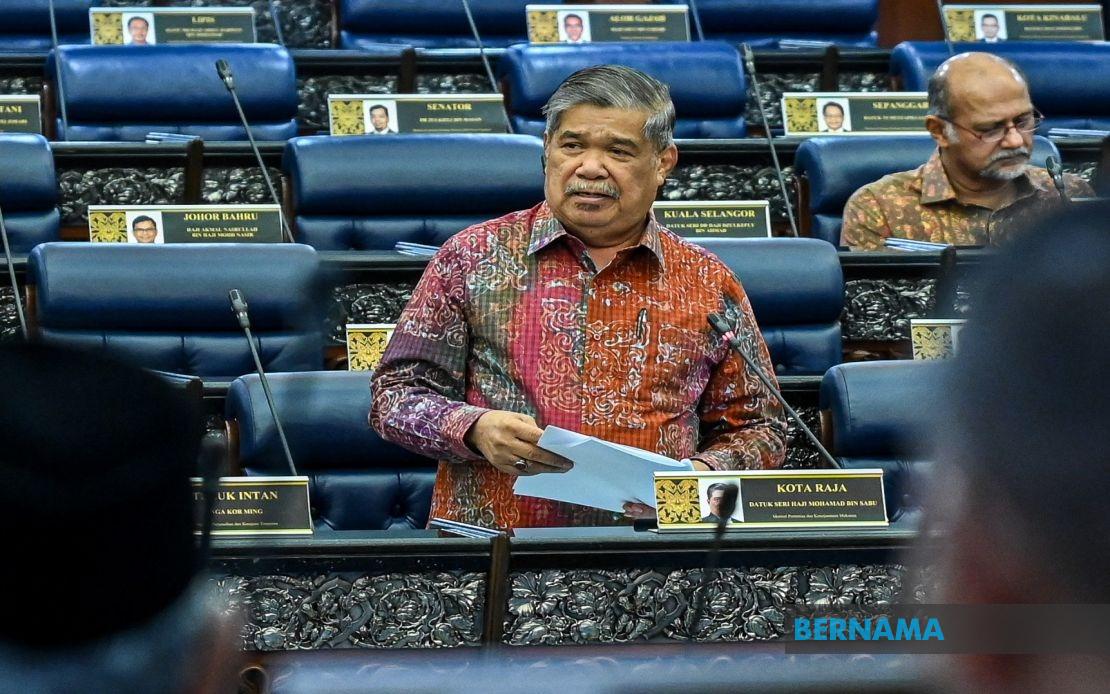
The Malaysian government is intensifying its response to El Niño's growing threat to agricultural productivity and food security, rolling out a comprehensive strategy that spans water infrastructure, technological innovation, and direct farmer support. Agriculture and Food Security Minister Datuk Seri Mohamad Sabu outlined the multi-pronged approach during parliamentary questioning, signalling the administration's recognition of climate vulnerability in a region already grappling with erratic weather patterns and competing resource demands.
The severity of El Niño's potential impact on Malaysia's rice sector cannot be overstated. As a staple crop feeding the nation and a cornerstone of rural livelihoods across the Peninsular breadbasket regions, paddy farming faces existential pressure when drought cycles intensify. The government's strategic response reflects lessons learned from previous drought episodes and growing awareness that reactive measures alone prove insufficient. Instead, the focus has shifted toward building systemic resilience through integrated resource planning and technological deployment.
Water management stands at the centre of this defensive strategy. Authorities are conducting continuous surveillance of dam levels and catchment zones, implementing what officials describe as integrated water resource management across competing agricultural, industrial, and domestic demands. This monitoring apparatus aims to provide early warning systems and enable proactive allocation decisions before scarcity becomes acute. Simultaneously, the promotion of smart irrigation and drip irrigation systems represents an attempt to squeeze maximum productivity from available moisture, reducing waste in farming operations where traditional flooding methods dominate.
The Malaysian Agricultural Research and Development Institute has been tasked with accelerating development of new rice varieties designed to withstand prolonged drought conditions. This research initiative, prioritised by the Prime Minister during food security deliberations, reflects understanding that climate adaptation requires investment in germplasm innovation. Complementing agricultural research, the government authorises cloud seeding operations when meteorological conditions permit, deploying atmospheric science as an additional tool in the moisture management arsenal.
Financial protection schemes demonstrate the government's commitment to cushioning farmers against crop failure. Since 2024, RM45.24 million has been distributed to 8,224 rice farmers through the initial assistance phase. Expanding the scope, figures through June 30, 2026 show RM38.53 million reaching 55,058 rice farmers managing 16,933 hectares across the northern and eastern Peninsular regions most vulnerable to drought. These disbursements represent meaningful intervention, though their adequacy remains subject to debate among agricultural economists concerned about the escalating frequency and intensity of climate shocks.
Rice supply security occupies a distinct position in Malaysian food policy. The government maintains strategic reserves sufficient for approximately six months of domestic consumption, supplemented by continuous import arrangements. This dual approach—domestic production combined with import diversification—reflects pragmatic recognition that domestic production alone cannot guarantee year-round availability. The maintenance of reserves and managed import flows provides insulation against short-term supply disruptions, though long-term dependence on imported staples carries geopolitical and economic implications worth monitoring closely.
Regional expansion of rice cultivation offers another avenue for increasing production resilience. The government is actively promoting large-scale paddy development initiatives in Sarawak, Pahang, and other states, betting that geographical diversification across different agro-climatic zones can spread production risk. This approach acknowledges the reality that El Niño impacts vary across regions; simultaneous drought affecting all major rice zones remains less probable than differential impacts that could be leveraged strategically.
Controlled environment agriculture represents a more radical departure from traditional farming paradigms. By employing polytunnels, greenhouse systems, and managed growing environments, farmers can substantially insulate crops from external climate variability. This technology carries higher capital and operational costs, making it accessible primarily to larger commercial operators or heavily subsidised smallholders. The sector's expansion suggests government willingness to fundamentally reshape agricultural practice, though questions persist about scalability and suitability across diverse farmer demographics.
Beyond rice, the government confronts immediate challenges in other agricultural sectors. Recent durian market volatility, triggered by oversupply and price deterioration, prompted ministerial intervention focused on export market expansion, particularly into China. Government efforts concentrate on penetrating smaller Chinese municipalities where awareness of Malaysian durians remains limited but consumption potential substantial. Negotiations to streamline logistics and customs clearance for fresh and frozen fruit aim to reduce transaction costs and enhance competitiveness. Successfully expanding durian exports could stabilise domestic prices and sustain farm incomes, indirectly strengthening rural communities' capacity to weather agricultural shocks.
The coherence of Malaysia's food security strategy depends partly on effective coordination across multiple agencies and competing priorities. Water resource allocation between agricultural and urban demands frequently generates tension, particularly in drought years when competing constituencies voice urgent claims. Implementing integrated water resource management requires institutional mechanisms capable of mediating these conflicts transparently, based on transparent data and clear prioritisation frameworks. Similarly, agricultural research commercialisation and technology transfer to smallholder farmers require sustained funding and extension systems that reach dispersed rural communities effectively.
Regional context amplifies the significance of Malaysia's approach. Southeast Asia collectively faces increasing climate volatility, with Thailand, Vietnam, and other regional rice exporters simultaneously experiencing production pressures. Should multiple regional suppliers face simultaneous drought-induced shortfalls, regional price spikes and export restrictions could severely constrain Malaysian food security despite domestic mitigation efforts. This interconnectedness suggests that unilateral national measures, however comprehensive, remain incomplete without regional cooperation on supply coordination and mutual assistance protocols.
Looking forward, the sustainability of Malaysia's agricultural sector depends on whether current investments in drought resistance, efficient irrigation, and production diversification can outpace the accelerating pace of climate change. Scientists increasingly suggest that El Niño events may intensify and become more frequent under anthropogenic warming scenarios. If this projection materialises, the adequacy of current measures warrants reassessment. Policy frameworks that proved sufficient for historical climate variability may prove inadequate for emerging conditions, necessitating continued institutional learning and adaptive management approaches.

