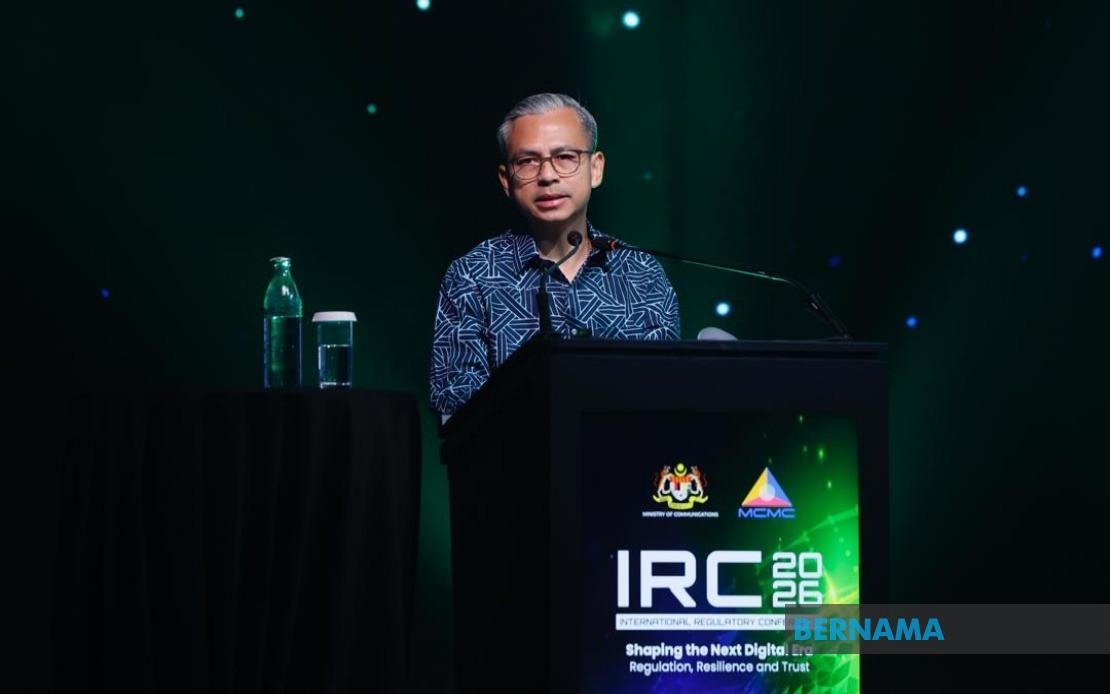
Malaysia is taking deliberate steps to modernise its digital governance framework, recognising that technological progress must be matched by equally robust regulatory oversight to protect citizens and maintain confidence in digital systems. Communications Minister Datuk Seri Fahmi Fadzil articulated this vision while opening the International Regulators Conference 2026 in Kuala Lumpur, positioning digital trust as the cornerstone of effective governance in an increasingly interconnected world where technology shapes citizens' daily interactions and access to information.
The rapid proliferation of digital platforms and services has outpaced the development of regulatory mechanisms designed to govern them, creating vulnerabilities that demand urgent attention. Fahmi highlighted this critical gap, noting that frameworks governing technology must evolve with the same agility and speed as the innovations themselves. Rather than pursuing overly restrictive approaches that stifle development, Malaysia is pursuing a balanced strategy that encourages technological advancement while ensuring industry actors remain accountable for their platforms' impact on users and society.
Central to Malaysia's modernisation efforts are several interconnected initiatives that collectively strengthen the nation's digital infrastructure and governance capacity. The National Digital Network Plan, known as Jendela, provides the strategic blueprint for digital advancement, while the nationwide 5G rollout expands connectivity across the country. Complementing these infrastructure investments, Malaysia has prioritised submarine cable development to enhance international data transmission capabilities and reduce dependency on singular connectivity pathways. These investments reflect recognition that resilient digital ecosystems require both physical infrastructure and strong governance foundations.
The Online Safety Act 2025 represents a significant policy shift in how Malaysia approaches digital regulation, moving beyond reactive measures that address harms after they occur. Instead, the legislation prioritises prevention by establishing clearer accountability standards for online platforms while providing enhanced protections specifically targeting children and marginalised communities who face disproportionate risks in digital spaces. This preventative orientation aligns with evolving international best practices and acknowledges that certain population segments require tailored safeguards given their vulnerability to exploitation and misinformation.
Fahmi emphasised that regulatory frameworks must maintain proportionality—striking equilibrium between protecting users and providing industry participants sufficient operational certainty to invest and innovate. Overly punitive or prescriptive regulations risk driving legitimate businesses away or creating compliance costs that disadvantage smaller players, thereby potentially consolidating market power among multinational giants. Conversely, regulatory vacuums invite bad-faith actors to exploit gaps and harm vulnerable users. Malaysia's approach attempts to navigate this delicate balance by establishing clear expectations while allowing flexibility in implementation methods.
The International Regulators Conference 2026, now entering its third iteration, reflects Malaysia's growing prominence in global telecommunications policy discussions. The event originated when Malaysia transitioned its 5G deployment from a single wholesale network model to a dual network structure, garnering international attention for this innovative approach to infrastructure competition. What began as a venue for explaining Malaysia's own experience has evolved into a genuine platform for cross-jurisdictional dialogue, enabling regulators from diverse national contexts to share insights, compare approaches and identify common challenges requiring coordinated solutions.
This year's conference will address several critical issues shaping the future of digital ecosystems globally. Online safety and content governance remain primary concerns, particularly as platforms struggle to balance free expression with responsibility for preventing harmful material. Data governance frameworks are increasingly urgent as citizens generate unprecedented volumes of personal information through digital interactions, raising questions about collection practices, storage security and usage rights. Artificial intelligence presents novel regulatory challenges, as the technology's opaque decision-making processes and potential biases demand new forms of oversight. Quantum communications and autonomous systems represent emerging frontiers requiring proactive regulatory thinking before widespread deployment creates entrenched problems.
Fahmi articulated the importance of drawing lessons from neighbouring countries and distant regulatory jurisdictions, allowing Malaysia to identify legislative gaps and design preventative policy responses rather than managing crises reactively. Southeast Asian nations face particular interdependencies given regional integration of telecommunications infrastructure and digital services, making regulatory coordination increasingly necessary. When one jurisdiction's lax standards create vulnerabilities affecting adjacent nations, or when differing rules fragment digital markets inefficiently, the case for harmonised approaches strengthens. The IRC provides forums where such coordination discussions occur.
The conference outcomes carry significance extending beyond Malaysia's borders, as the Communications Ministry has committed to sharing findings with the International Telecommunication Union, where Malaysia holds Council Member status. This commitment amplifies the IRC's impact, ensuring that insights from regional discussions contribute to international telecommunications discourse and potentially influence standards-setting processes benefiting developing nations. For Malaysia specifically, hosting such discussions positions the country as a serious participant in shaping global digital governance norms rather than merely adopting standards formulated elsewhere.
The Malaysian Communications and Multimedia Commission's central role in hosting and facilitating these discussions reinforces its position as a serious regulatory actor capable of convening high-level international engagement. This visibility enhances the MCMC's credibility both domestically and internationally, potentially facilitating better cooperation with foreign regulators when addressing transnational digital issues. Deputy Communications Minister Teo Nie Ching's presence, alongside senior ministry and commission officials, underscores government commitment to these governance priorities extending beyond ceremonial endorsement.
For Malaysian businesses operating in digital sectors, these governance initiatives carry both compliance obligations and opportunities. Clearer regulatory frameworks reduce uncertainty around operational requirements, enabling companies to invest confidently in local markets. Platform accountability standards create competitive conditions where compliance becomes less of a cost burden and more of a baseline expectation, theoretically levelling playing fields. However, businesses must understand that regulations like the Online Safety Act will require genuine operational adjustments, particularly regarding content moderation, user protection mechanisms and data handling practices.
Citizens encountering Malaysia's digital ecosystem will gradually experience changes reflecting these governance improvements. Enhanced child protection measures, stronger protections against online scams and exploitation, and greater transparency regarding algorithmic decision-making should gradually build confidence in digital platforms and services. Success requires sustained implementation commitment and ongoing refinement as technologies evolve and unintended consequences emerge. The IRC discussions themselves represent acknowledgment that digital governance remains an ongoing process requiring continuous learning and adaptation rather than a fixed endpoint.

