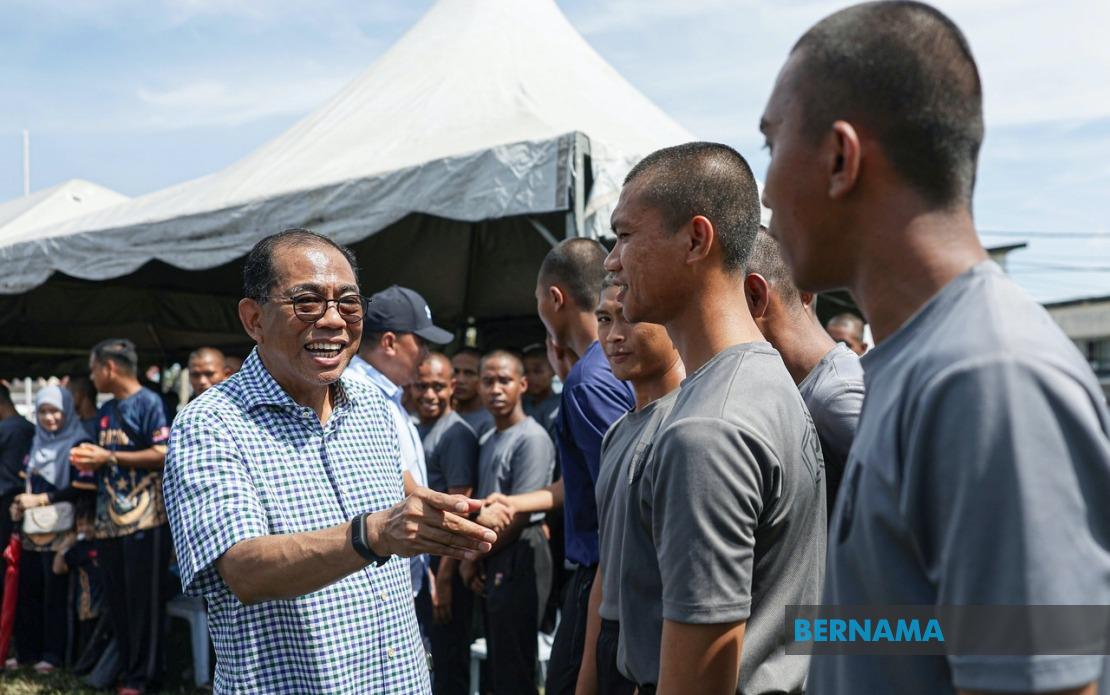
Malaysia has taken a significant step in restructuring its defence acquisition strategy by signing government-to-government (G2G) memoranda of understanding with Turkey and South Korea, marking a departure from the traditional competitive tendering approach that has long characterised military procurement across the region. Defence Minister Datuk Seri Mohamed Khaled Nordin made the announcement at Port Dickson, emphasising that this bilateral arrangement represents a new paradigm designed to enhance value for money while strengthening strategic partnerships with key defence suppliers.
The shift towards G2G procurement reflects growing frustration within Malaysia's defence establishment over the inflated costs associated with agent-mediated defence transactions. Prime Minister Datuk Seri Anwar Ibrahim highlighted this issue last week when he disclosed that direct negotiations between Kuala Lumpur and Ankara had yielded a 15 per cent reduction in the price of Littoral Mission Ships, a tangible demonstration of the financial benefits achievable through eliminating intermediaries. This cost-saving mechanism addresses a longstanding vulnerability in Malaysia's acquisition process where layers of agents and brokers have historically widened the gap between actual equipment costs and the prices paid by the Defence Ministry.
Beyond immediate financial considerations, the G2G framework prioritises technology transfer and domestic industrial development, reflecting Malaysia's broader ambition to build self-sufficiency in defence manufacturing. By working directly with government suppliers in Turkey and South Korea—both nations with substantial defence industrial bases—Malaysia creates pathways for knowledge sharing and collaborative development that would be impossible under traditional open-tender arrangements. This approach aligns with regional trends across Southeast Asia, where countries increasingly seek to develop indigenous defence capabilities rather than remaining perpetually dependent on foreign acquisitions.
The Defence Ministry has signalled that Italy and France have also expressed interest in undertaking procurements through the G2G mechanism, suggesting that Malaysia may expand this network of bilateral defence relationships beyond its initial Turkish and South Korean agreements. Such expansion would diversify Malaysia's supplier base while consolidating diplomatic ties with multiple strategic partners. The selectivity inherent in G2G arrangements—whereby only specific, pre-identified projects proceed through government channels—distinguishes this model from the previous system where original equipment manufacturers, licensed agents, and other commercial entities competed in open tenders for defence contracts.
Mohamed Khaled emphasised that the introduction of G2G procurement does not represent a departure from rigorous planning or professional military assessment. Rather, the armed services themselves—the Army, Navy, and Air Force—retain responsibility for defining technical specifications and determining operational requirements, ensuring that procurement decisions remain anchored to genuine defence needs rather than administrative convenience. This structure ostensibly preserves the integrity of the military's role in capability development while channelling the subsequent acquisition process through governmental channels designed to deliver greater transparency and accountability.
The Defence Ministry's confidence in the G2G approach rests partly on the expectation that direct government-to-government arrangements provide stronger assurances regarding supply reliability and long-term support. When a foreign government stands behind the supply commitment rather than a commercial intermediary seeking profit, the incentive structure shifts to prioritise sustained bilateral relations and strategic partnership. This is particularly valuable for sophisticated defence equipment requiring sustained logistics, spare parts availability, and technical support over decades of operational service.
Beyond procurement efficiency, Mohamed Khaled articulated a broader reimagining of Malaysia's security posture in an era of evolving threats. He emphasised that contemporary challenges to national security have transcended traditional definitions centred on armed conflict, extending instead into hybrid domains encompassing social media-based information warfare, cyber attacks targeting critical infrastructure, and coordinated campaigns designed to manipulate public perception. Water and electricity supplies, identified as particularly vulnerable points, represent critical infrastructure whose disruption could trigger cascading consequences affecting public safety and economic stability far more rapidly than conventional military threats.
This expanded threat conception provides strategic context for Malaysia's defence spending and acquisition philosophy. The integration of modern defence technologies through G2G arrangements must address not merely conventional military capabilities but also cyber-defence systems, information security infrastructure, and resilience mechanisms protecting essential services. Turkey and South Korea, both nations with experience managing complex security environments and hybrid threats, possess relevant expertise and technologies applicable to Malaysia's emerging security challenges.
The government has introduced the Whole-of-Nation Defence (HANRUH) concept to cultivate broader societal awareness that national security responsibility extends beyond uniformed services to encompass public participation, vigilance, and resilience-building. This conceptual framework recognises that contemporary security challenges often originate in non-military domains and cannot be addressed through military instruments alone. By emphasising shared responsibility, the government seeks to mobilise public consciousness around emerging threats and foster individual and community-level preparedness.
From a regional perspective, Malaysia's G2G defence partnerships with Turkey and South Korea signal important diplomatic moves. Turkey's growing military-industrial prominence in Southeast Asia, evidenced through LMS acquisitions and other defence technology exports, positions Ankara as an alternative supplier to traditional Western sources. South Korea brings both advanced technological capabilities and experience managing a contested security environment, offering relevance to Malaysia's strategic considerations. These partnerships may also reflect subtle recalibration of Malaysia's defence relationships amid shifting geopolitical dynamics in the Indo-Pacific region.
The transparency gains promised by G2G procurement represent a significant institutional reform, addressing perennial concerns about opacity and potential corruption in defence spending. Open tendering systems, while theoretically promoting competition, frequently became vehicles for opaque dealing when agents exploited information asymmetries and bureaucratic complexity. Direct government engagement, subject to greater public and parliamentary scrutiny, potentially improves accountability and resource stewardship, particularly important given defence spending's substantial claims on the national budget.
Implementation challenges remain, however. Limiting G2G procurement to selected projects requires clear governance frameworks distinguishing which acquisitions qualify for this pathway, creating potential bureaucratic complexity. Additionally, the selective nature of G2G arrangements may generate concerns among suppliers excluded from this preferred-partner mechanism, potentially creating diplomatic friction if domestic defence industries perceive themselves disadvantaged. Malaysia will require careful communication regarding the rationale and scope of G2G procurement to maintain stakeholder confidence.
Looking forward, Malaysia's G2G defence procurement strategy represents pragmatic adjustment to the realities of contemporary defence acquisition, balancing cost efficiency with capability development and strategic partnership cultivation. As implementation proceeds and additional bilateral agreements potentially materialise, the framework's effectiveness in delivering promised savings and technology transfer will become measurable. The initiative also sets precedent for other Southeast Asian nations contemplating similar reforms to their defence procurement mechanisms, potentially influencing regional acquisition practices.

