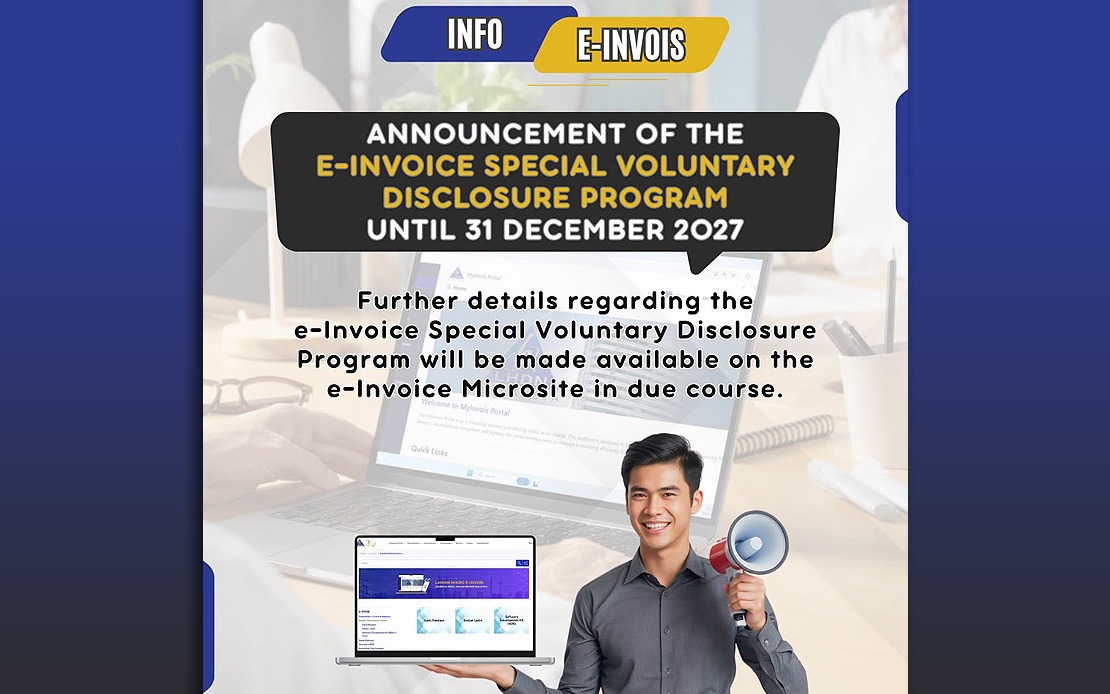
Prime Minister Datuk Seri Anwar Ibrahim announced a significant administrative concession for Malaysia's business community: the e-Invoice Special Voluntary Disclosure Programme will remain open until December 31, 2027. The initiative, unveiled as part of the government's broader effort to ease compliance burdens on enterprises, particularly smaller operators struggling with digital transformation demands, represents a tangible recognition of the practical difficulties facing businesses during the transition to mandatory electronic invoicing.
The Inland Revenue Board has clarified that the voluntary disclosure window encompasses three distinct taxpayer categories, each facing different compliance challenges under Malaysia's e-invoicing mandate. The first group comprises those who simply failed to lodge e-Invoices for qualifying transactions—a situation that may arise from administrative oversight or incomplete system implementation within a business. The second category covers taxpayers who did submit e-Invoices but with material errors or defects that breach the stipulated technical or content requirements. The third segment includes all enterprises that missed the initial mandatory implementation deadline entirely, having failed to submit any e-Invoices for any relevant periods since the system went live.
What distinguishes this voluntary disclosure framework is its fundamental orientation toward remediation rather than punishment. During the programme period, the IRB has committed to forgoing penalties on any corrections, revisions, or updates that taxpayers voluntarily submit through the proper channels. This represents a deliberate policy shift—acknowledging that the transition to digital invoicing systems involves technical complexities that cannot reasonably be resolved through punitive measures alone. For businesses already stretched thin managing operational costs, the absence of financial penalties provides genuine breathing room to conduct comprehensive audits and bring their records into compliance.
The government has sweetened this opportunity with accelerated tax incentives designed to defray the costs of digital transformation. Taxpayers who fully comply with e-Invoice implementation requirements can now claim capital allowances on a faster schedule: specifically, they may deduct the entire cost of information and communication technology equipment purchased for e-Invoice purposes within a single fiscal year, rather than spreading depreciation across multiple years. Similarly, expenses related to developing or modifying computer software systems to facilitate e-Invoice functionality qualify for full-year write-off treatment. These incentives directly address a significant pain point for MSMEs—the upfront capital burden of upgrading business systems to meet regulatory requirements.
The voluntary disclosure programme underscores a broader philosophical shift in Malaysian tax administration. Rather than treating taxpayers as adversaries requiring maximum pressure to comply, the IRB now explicitly frames this initiative as supporting the government's aspiration to digitalise business operations more comprehensively. This language signals recognition that digital transformation represents a shared objective for both government and business sectors, not merely a regulatory imposition. By removing the fear of retrospective penalties, the programme encourages transparency and creates conditions where businesses can focus resources on actually implementing compliant systems rather than managing compliance risks.
Practical access to assistance has also been prioritised. The IRB maintains dedicated e-Invoice support channels across all nationwide offices, operates a specialised helpdesk accessible at 03-8682 8000, and offers real-time guidance through the MyInvois Live Chat facility. Email support has been established specifically for e-Invoice queries. This multi-channel approach acknowledges that different businesses have different communication preferences and that technical support must be genuinely accessible, not merely nominally available.
For Malaysian business operators—particularly MSME owners and finance professionals managing compliance obligations—this extended timeline carries several practical implications. The December 31, 2027 deadline provides four years from the announcement to conduct a thorough review of e-Invoice submission history, identify any gaps or errors, and lodge corrections without financial consequence. Businesses should treat this window as an opportunity to conduct comprehensive audits of their invoicing systems and rectify any deficiencies systematically, rather than waiting until the deadline approaches. The penalty-free environment means that good-faith errors discovered through internal review can be corrected without damaging the business's compliance record.
The programme also holds significance within Southeast Asia's broader digital tax ecosystem. As regional governments increasingly mandate electronic invoicing and real-time reporting systems, Malaysia's approach—balancing enforcement with pragmatic support—offers a model alternative to purely punitive compliance regimes. The provision of accelerated capital allowances for digitisation expenses demonstrates how tax policy can actively support rather than merely regulate the transition to digital commerce, a pattern potentially relevant for other ASEAN nations implementing similar systems.
Businesses currently uncertain about their e-Invoice compliance status should view this announcement as a clear signal to engage with the IRB immediately. Rather than hoping undetected errors remain unnoticed, proactive voluntary correction eliminates compliance risk entirely and may even generate tax benefits through the accelerated allowance provisions. The offer explicitly includes taxpayers with historical non-compliance—there is no requirement to demonstrate long-standing exemplary conduct to benefit from the programme.
The extended timeline through end-2027 also provides flexibility for businesses undertaking phased system implementations. Companies replacing legacy invoicing software or upgrading accounting systems have multiple years to complete modernisation cycles while maintaining compliance through voluntary updates. This recognises the reality that system transitions, particularly for larger enterprises with complex transaction volumes, often require careful planning and staged rollouts rather than immediate cutover implementations.
For finance teams and tax compliance professionals in Malaysian corporations, this development warrants immediate action: audit historical e-Invoice submissions against the General and Specific e-Invoice Guidelines, document any discrepancies, and prepare voluntary disclosure submissions for any gaps identified. Given that the government has explicitly framed this as appreciating taxpayers who come forward voluntarily, early engagement likely positions businesses more favourably than last-minute submissions approaching the 2027 deadline. The programme represents genuine relief from what might otherwise become a substantial compliance liability—an opportunity that prudent business operators should not defer.

