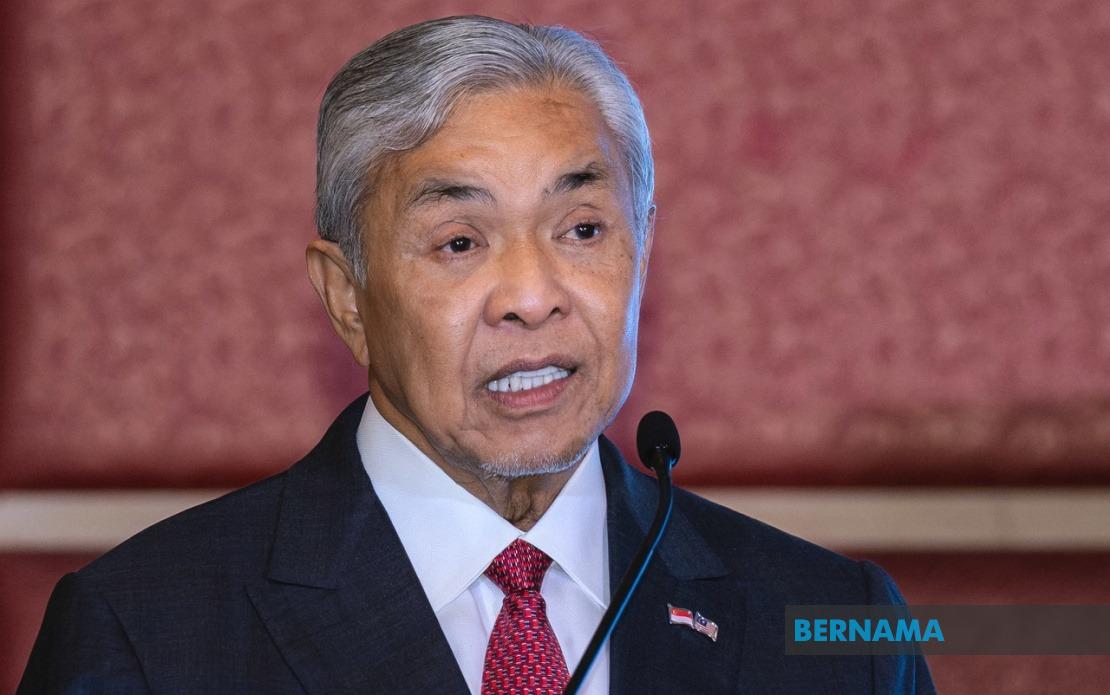
Malaysia is moving towards a self-reliant approach to managing its refugee population, developing an indigenous framework that prioritizes both humanitarian assistance and national security concerns. Deputy Prime Minister Datuk Seri Dr Ahmad Zahid Hamidi outlined the government's strategy during parliamentary proceedings, emphasizing that the country will no longer depend heavily on external entities in addressing the complex challenge of refugee and asylum seeker management. This shift reflects Malaysia's determination to take full ownership of policy implementation while navigating one of Southeast Asia's most pressing humanitarian issues.
The foundation for this independent framework rests on National Security Council Directive No. 23, which was formally endorsed by Prime Minister Datuk Seri Anwar Ibrahim on June 14, 2023. This comprehensive directive underwent revision in 2023 to address contemporary challenges and establish clearer protocols for government agencies involved in refugee affairs. The framework represents a substantial evolution from previous approaches, incorporating lessons learned from managing a refugee population that has grown significantly over the past decade. By consolidating responsibilities under the NSC, the government seeks to eliminate overlapping jurisdictions and create a unified response mechanism.
According to Ahmad Zahid, who also serves as Rural and Regional Development Minister, the new mechanism prioritizes three interconnected objectives: efficient administrative management and law enforcement, coordinated policy implementation, and rigorous safeguarding of national interests. The approach acknowledges that effective refugee management requires more than border security and registration systems; it demands a sophisticated balance between humanitarian obligations and state sovereignty. This philosophical alignment represents a maturation in Malaysia's understanding that sustainable refugee policies must address root causes of irregular migration while providing dignified living conditions for those already in the country.
The framework specifically allocates resources and authority to provide eligible refugees with essential services including healthcare, education, and employment opportunities. This commitment reflects recognition that confined or marginalized refugee populations create secondary challenges for host communities. By enabling economic participation and access to education, the government aims to reduce desperation-driven irregular activities and criminal involvement. Healthcare access, particularly critical given disease prevalence concerns, becomes both a humanitarian imperative and a public health necessity for broader Malaysian society. These provisions underscore that refugee management extends beyond administrative processing to encompass genuine integration mechanisms.
A particularly candid aspect of Ahmad Zahid's parliamentary statement addresses systemic obstacles to effective policy implementation. He identified what he termed "enablers among local residents" as undermining government enforcement efforts. These individuals, motivated by personal financial gain through rental income or access to cheap labor, create informal economy networks that sustain irregular migration patterns and complicate registration initiatives. This acknowledgment signals that the government recognizes policy failure often stems not from formal restrictions but from grassroots economic incentives that reward non-compliance. Addressing these structural incentives requires community engagement beyond punitive measures, suggesting the framework includes educational and awareness components targeting Malaysian residents who benefit from unregulated refugee labor.
The context for this policy development includes Malaysia's hosting of more than 126,000 registered Rohingya refugees, concentrated primarily in the Klang Valley and Kuala Lumpur. This population represents the largest refugee community in Southeast Asia relative to host country capacity, creating substantial administrative, security, and resource allocation challenges. The Rohingya crisis, stemming from Myanmar's persecution of the Muslim minority, has created a long-term humanitarian emergency that no neighboring nation can resolve unilaterally. Malaysia's sustained commitment to hosting this population, despite significant economic and social pressures, has positioned the country as a key actor in regional refugee politics and humanitarian responses.
The Refugee Registration Document, mentioned as part of the implementation framework, serves as a critical tool for distinguishing registered refugees from undocumented migrants. This distinction carries profound implications for access to services and legal protections. By creating transparent registration mechanisms, the government aims to reduce vulnerability to exploitation while generating data essential for effective resource allocation and security assessments. The DPP represents Malaysia's effort to bring informal refugee populations into formal administrative systems where protections and obligations can be clearly defined and monitored.
Central to the new mechanism is clarification of institutional roles and responsibilities across multiple government agencies. The NSC framework requires each relevant ministry—ranging from health and education to interior security and labor—to understand its specific obligations in refugee management. This departmental coordination becomes essential when considering that refugee issues intersect with immigration, public health, security, social welfare, and labor market regulations. Previous fragmentation created gaps where vulnerable populations fell through administrative cracks or where inconsistent policies generated corruption opportunities. The directive's emphasis on defining functions reduces these coordination failures.
The Malaysian approach contrasts notably with alternatives available in the region. Unlike some Southeast Asian nations that have pursued predominantly restrictive policies, Malaysia's framework attempts to balance security imperatives with humanitarian commitments. However, the emphasis on national sovereignty and self-reliance also signals limits to international burden-sharing expectations. This positioning reflects Malaysia's historical role as both a developing nation with limited resources and a regional power with strategic interests in maintaining stable borders. The independent framework declaration essentially communicates that while Malaysia recognizes international humanitarian norms, it will define its own implementation pathways according to domestic priorities.
Looking forward, the success of this mechanism depends substantially on implementation capacity and sustained political commitment. Government directives establish frameworks, but operational effectiveness requires adequate budgeting, trained personnel, and inter-agency cooperation. The challenge of enforcement, as Ahmad Zahid acknowledged, involves changing behavior patterns among both refugee communities and Malaysian residents who profit from informal arrangements. Building these behavioral changes requires time, resources, and strategies that extend beyond the traditional law enforcement approaches that have sometimes characterized previous refugee management efforts. Community education initiatives and economic alternatives for Malaysians currently benefiting from unregulated refugee employment may prove as important as border controls or registration campaigns.

